

Complete Guide to Shared Calendars for Families
Did you know that over 72 percent of parents say family calendars reduce stress and improve communication at home? Busy families juggle dozens of appointments, sports practices, and school deadlines each week. Without one central hub for schedules, chaos is almost guaranteed. Shared family calendars put everyone’s plans in one place so parents and kids stay in sync, appointments are never missed, and even hectic weeks start to feel a little more manageable.
Key Takeaways
| Point | Details |
|---|---|
| Shared Family Calendars Enhance Coordination | A digital shared family calendar serves as a centralized hub for managing and tracking family schedules, improving organization and communication. |
| Diverse Tool Options Available | Various family calendar tools offer unique features and functionalities, allowing families to choose based on their specific needs and comfort with technology. |
| Enable Real-Time Access | Real-time synchronization across devices eliminates confusion and scheduling conflicts, keeping all family members informed about events and commitments. |
| Potential Challenges Exist | While beneficial, shared calendars may face obstacles such as platform restrictions and learning curves, necessitating careful selection and adaptation by families. |
Table of Contents
- Defining Shared Calendars For Families
- Types Of Shared Calendars And Tools
- Core Features And How They Work
- Real-World Uses For Busy Families
- Benefits And Common Challenges Explained
- Comparing Shared Calendars With Alternatives
Defining Shared Calendars for Families
A shared family calendar is your secret weapon for keeping everyone on the same page – literally and figuratively. Think of it as a digital command center where every family member can see, track, and manage their schedules in one convenient spot.
These digital calendars do way more than traditional paper planners. According to Outlook.com’s support documentation, they can automatically create group calendars when you add family members. This means you can instantly share important events like:
- School activities
- Sports practices
- Doctor appointments
- Family vacations
- Homework deadlines
As research from Cozi shows, modern family calendars aren’t just about scheduling. They often include powerful features like:
- Color-coded entries per family member
- Shared shopping lists
- Meal planning tools
- Integrated messaging
The magic happens when everyone has real-time access. No more missed soccer practices or forgotten dentist appointments. One central hub means less confusion, more coordination, and smoother family operations.
Types of Shared Calendars and Tools
Family calendar tools come in all shapes and sizes, designed to match different family needs and tech comfort levels. From simple digital platforms to feature-rich apps, there’s something for every household dynamic.
According to research from FocusBox, popular tools in the US include several robust options:
Here’s a comparison of popular family shared calendar tools and their key features:
| Calendar Tool | Key Features | Platform Support |
|---|---|---|
| Cozi | Color coding Shared lists Messaging |
iOS Android Web |
| TimeTree | Group editing Shared events |
iOS Android Web |
| FamCal | Family-specific Chores tracking |
iOS Android |
| Apple Calendar | Built-in for Apple Group sharing |
iOS macOS |
| Microsoft Outlook | Family groups Event notifications |
iOS Android Windows Web |
| SkedPal | AI scheduling Task prioritization |
Web Desktop Mobile |
- Cozi: A freemium family calendar app with color-coding and messaging features
- TimeTree: Collaborative calendar platform for multiple users
- FamCal: Streamlined family scheduling application
- Apple Calendar: Built-in option for Apple ecosystem users
- Microsoft Outlook: Enterprise-level calendar with family sharing capabilities
- SkedPal: AI-driven scheduling tool tailored for family needs
Learn more about organizing your family’s schedule with our time blocking guide, which complements these digital calendar tools perfectly.
As detailed in Cozi’s Wikipedia entry, the most effective family calendars offer more than just date tracking. Look for tools that provide:
- Intuitive color-coding per family member
- Integrated messaging systems
- Shared list functionality (grocery, chores, etc.)
- Cross-platform accessibility
- Real-time synchronization
Choosing the right shared calendar is about finding a tool that fits your family’s unique rhythm and communication style. Test a few options to discover which one makes coordinating your busy household feel effortless.
Core Features and How They Work
Shared family calendars aren’t just digital date trackers – they’re sophisticated coordination machines designed to simplify family life. Synchronization is the magic that makes these tools work seamlessly across multiple devices and family members.
According to Microsoft’s Outlook support documentation, family calendars offer powerful event management capabilities:
- Create shared events accessible to all family members
- Send invitations to family or external users
- Automatically manage calendar membership
- Integrate across web and mobile platforms
Explore our time management strategies to maximize your shared calendar’s potential.
Research from Google Calendar’s documentation reveals additional advanced features that make family scheduling a breeze:
- Color-coding for individual family members
- Recurring event scheduling
- Automatic email notifications
- Integration with other digital services
- Customizable reminder settings
The best shared calendars function like a digital family assistant. They don’t just track time – they proactively help your household stay organized, communicate effectively, and keep everyone on the same page.
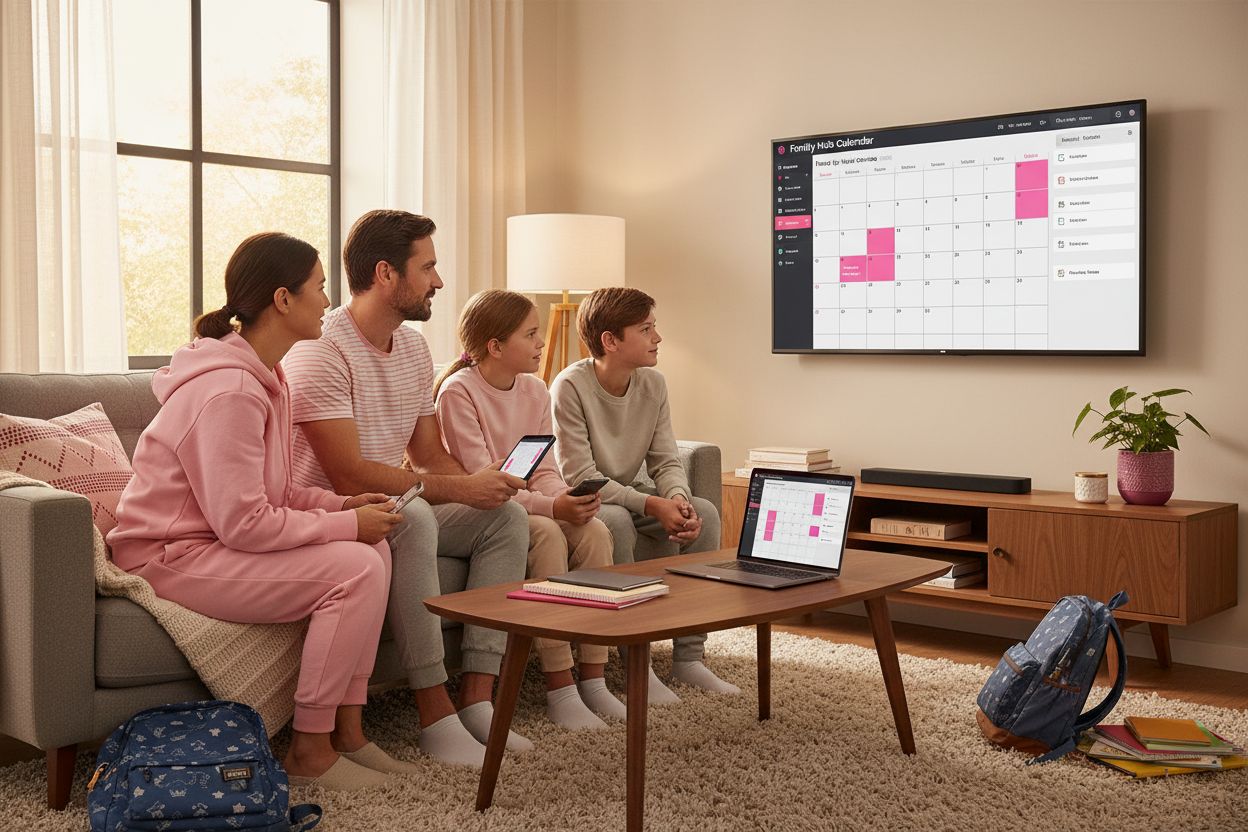 Smart families use these tools to transform chaos into coordinated harmony.
Real-World Uses for Busy Families
Shared family calendars transform from simple scheduling tools to life management powerhouses. Family coordination becomes dramatically easier when everyone has real-time access to a central planning hub.
Practical Everyday Applications
These digital calendars shine in managing complex family dynamics. Typical use cases include:
- Tracking school schedules and homework deadlines
- Coordinating after-school activities and sports practices
- Managing medical appointments for multiple family members
- Planning family vacations and weekend getaways
- Organizing household chores and responsibilities
Strategic Family Planning
Discover additional time management strategies for families that complement shared calendar systems. The most effective families use these tools to:
- Reduce scheduling conflicts
- Improve communication
- Distribute household responsibilities
- Create transparency around family commitments
- Minimize last-minute scheduling surprises
Your shared calendar becomes more than just a tool – it’s a communication platform that keeps everyone connected. Parents can track kids’ activities, teenagers can coordinate their own schedules, and everyone stays informed without constant text messages or phone calls.
The real magic happens when your family transitions from reactive scheduling to proactive planning. A well-maintained shared calendar doesn’t just track time – it creates harmony, reduces stress, and helps your family move through life’s complexities with grace and coordination.
Benefits and Common Challenges Explained
Family calendar systems represent more than just digital scheduling – they’re complex communication platforms with significant advantages and potential pitfalls. Understanding these nuances helps families make informed technology choices.
According to research from FocusBox, shared calendar tools offer remarkable benefits:
- Consolidated scheduling across family members
- Task integration capabilities
- Simplified event and commitment sharing
- Centralized family communication hub
Potential Challenges
However, these tools aren’t without limitations. Common challenges include:
- Platform ecosystem restrictions
- Advertisements in free versions
- Steep learning curves for complex applications
- Potential privacy concerns
Learn more about managing family time effectively to complement your calendar strategy.
As detailed by Microsoft’s support documentation, some platforms have specific ecosystem limitations:
- Restricted visibility outside native apps
- Potential synchronization challenges
- Limited cross-platform functionality
Successful family calendar adoption requires patience, open communication, and willingness to experiment. The right tool transforms from a potential source of frustration to an indispensable family management asset.
Comparing Shared Calendars With Alternatives
Family scheduling technology has evolved dramatically, offering multiple approaches beyond traditional paper planners and individual digital calendars. Understanding the landscape helps families choose the most effective solution.
Digital vs. Traditional Options
Traditional calendars rely on manual updates and physical proximity, while digital shared calendars provide real-time synchronization. According to Microsoft’s support documentation, platform-specific calendars like Outlook offer unique group management features:
- Native family group creation
- Automatic membership management
- Integrated communication tools
- Ecosystem-specific functionality
Platform Integration Insights
Explore our comprehensive time management strategies to complement your calendar selection.
Research from Google Calendar’s documentation highlights how modern shared calendars differ from standalone alternatives:
- Collaborative scheduling capabilities
- Seamless event invitation systems
- Integration with broader productivity suites
- Multi-device synchronization
Where traditional methods fail, digital shared calendars excel. They transform scheduling from a static, disconnected process into a dynamic, interactive family communication tool.
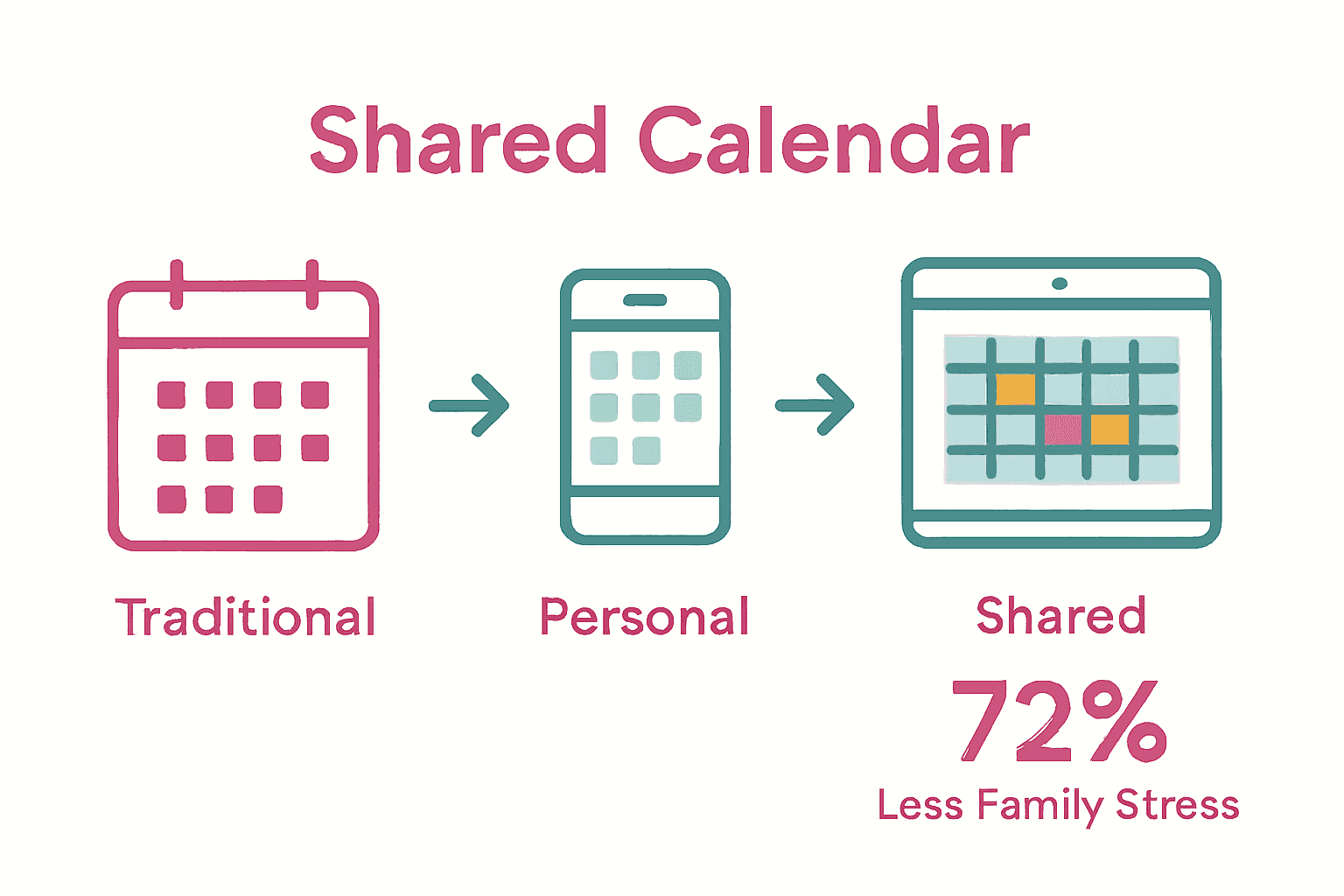 The right platform doesn’t just track time – it creates a connected family ecosystem.
Take Control of Your Family’s Schedule – Experience True Peace at Home
Are you tired of missing appointments or feeling stressed by constant scheduling conflicts? If keeping your family’s calendar in sync leaves you feeling overwhelmed, you are not alone. Many families struggle to turn shared calendars into a working solution. Coordination breaks down when you are juggling school events, practices, and household responsibilities across busy schedules. That stress is real, but the solution does not have to be complicated.
Start building a harmonious, organized home life right now. At It’s a Southern Life Y’all, you will discover powerful organization hacks and time management tools designed for families just like yours. Use our time blocking guide to make the most of your shared calendar. Tackle busy weeks with confidence by exploring our proven time management strategies. Do not wait until stress takes over. Visit It’s a Southern Life Y’all today and unlock your family’s path to a more peaceful and productive life.
Frequently Asked Questions
What is a shared family calendar?
A shared family calendar is a digital tool that allows all family members to view, track, and manage their schedules in one central location, helping to coordinate activities and appointments effectively.
What features should I look for in a family calendar tool?
When choosing a family calendar, consider features like color-coding for different family members, integrated messaging, shared lists for shopping or chores, real-time synchronization, and cross-platform accessibility.
How can shared family calendars improve family coordination?
Shared family calendars enhance coordination by providing real-time access to schedules, reducing the chances of missed appointments or conflicting activities, and promoting better communication among family members.
What are some common challenges when using shared calendars?
Common challenges include potential learning curves for complex applications, privacy concerns, limitations related to platform ecosystems, and advertisement issues in free versions of calendar tools.
Recommended
- 7 Time Management Tips for Families to Balance Life –
- Time Management Step by Step for Family Success –
- How to Plan Family Activities for Memorable Fun –
- How to Track Family Expenses: A Simple Guide for 2025 –
Want a little more help with this? The Home Rhythm Planner gives the family calendar a shape, so the week is planned once instead of renegotiated every morning.