

How to Manage Family Schedules for Stress-Free Days
More than 60 percent of families say they struggle to keep everyone’s schedule organized. Juggling work, school, activities, and downtime can turn even simple plans into a headache. When everyone’s needs are different, finding a system that truly works feels out of reach. This guide shows step by step how to build a flexible family schedule that brings clarity and cuts down daily stress for good.
Table of Contents
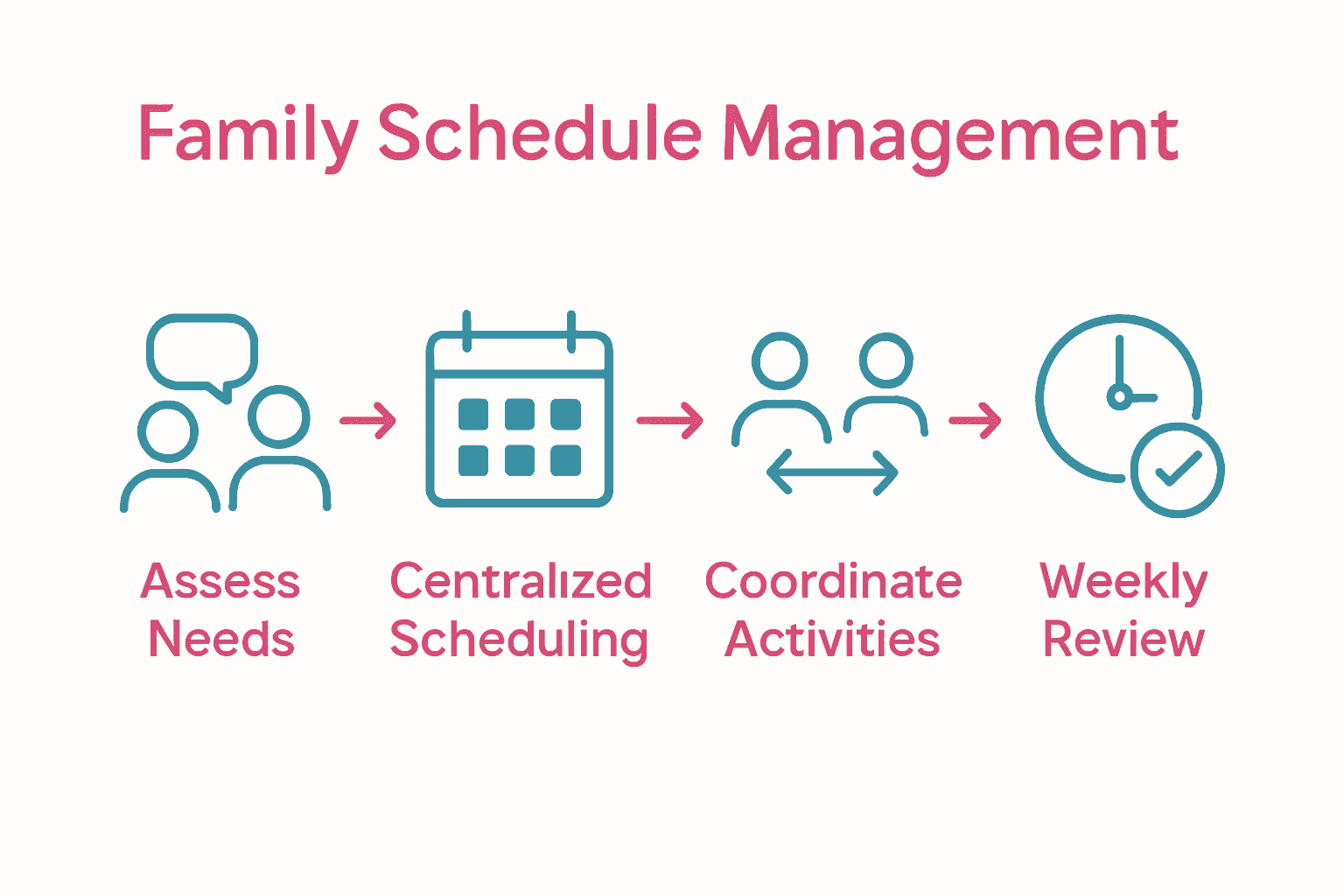
- Step 1: Assess Family Needs And Priorities
- Step 2: Set Up A Centralized Scheduling System
- Step 3: Coordinate Individual And Shared Activities
- Step 4: Review And Adjust Weekly For Improvements
Quick Summary
| Key Point | Explanation |
|---|---|
| 1. Assess family needs collectively | Engage all family members in discussions to understand their responsibilities and priorities. This ensures a schedule that reflects everyone’s unique needs. |
| 2. Establish a centralized scheduling system | Use digital tools or shared calendars to create a single source of truth for family commitments, reducing confusion and making updates easier. |
| 3. Coordinate individual and family activities | Find opportunities for shared family time while respecting individual schedules. This fosters connection and balances personal commitments with family bonding. |
| 4. Conduct weekly schedule reviews | Set a regular time to reflect on the past week’s schedule, discussing successes and challenges to adjust as needed for improvement. |
| 5. Adapt schedules consistently over time | Recognize that family needs change and be willing to modify the schedule to ensure it supports everyone’s well-being effectively. |
Step 1: Assess Family Needs and Priorities
Getting your family schedule right starts with understanding everyone’s unique needs and priorities. This critical step helps create a harmonious household where everyone feels heard and supported WSU Scheduling Home Environment.
To effectively assess your family’s needs, start by gathering everyone together for an open conversation. Ask each family member to share their daily responsibilities, goals, and time requirements. This might include work schedules, school activities, extracurricular commitments, personal hobbies, and rest times. According to the CUNY Home Environment Assessment, involving all family members in the planning process ensures that the final schedule reflects everyone’s cultural values and developmental needs.
Create a large visual chart or spreadsheet where you can map out everyone’s commitments. Color code different types of activities and look for potential conflicts or overlaps. The goal isn’t perfection but understanding. Are there times when family members need extra support? Where can you build in flexibility? Remember that a great family schedule adapts and grows with your family.
Pro tip: Schedule a monthly family meeting to review and adjust your schedule. Needs change quickly, and staying responsive keeps everyone aligned and reduces stress. Your next step will be translating these insights into a workable family schedule that supports everyone’s success.
Step 2: Set Up a Centralized Scheduling System
Creating a centralized scheduling system transforms family chaos into coordinated harmony. This step helps everyone stay on the same page and reduces the mental load of tracking multiple individual schedules SFU LINC Project.
Choose a platform that works for your family. Digital tools like shared online calendars make tracking activities super easy. According to Family Care Bridge, a centralized system provides a single source of truth that keeps everyone informed and involved. Select an option everyone can access easily smartphone, tablet, or computer. Color code different family members activities to make the calendar visually intuitive. Each person can input their commitments while everyone else gets real time updates.

Consider creating different layers or categories in your calendar. Work schedules, school events, extracurricular activities, medical appointments, and personal commitments can each have their own color or tag. This helps family members quickly scan and understand whats happening. Make sure everyone knows how to add and modify entries to keep the system current and useful.
Pro tip: Choose a calendar app with notification features so key events get automatic reminders. Your next step will be establishing clear communication protocols around your new scheduling system.
Step 3: Coordinate Individual and Shared Activities
Balancing individual schedules with family time requires strategic planning and open communication. This step helps you create harmony between personal commitments and family connections 7 Time Management Tips for Families.
Start by identifying each family members core commitments work shifts, school hours, recurring classes, and essential personal activities. Then look for opportunities to align these schedules and create shared moments. Weekly family dinners, weekend activities, or morning routines can become anchoring points that bring everyone together. Consider creating a shared activity block where everyone commits to being present and engaged. This might mean setting aside specific times where phones are put away and the family focuses on connecting.
Be flexible and realistic about coordination. Some weeks will flow smoothly while others might feel more chaotic. Build buffer time into your schedule to accommodate unexpected changes. Talk openly about priorities and be willing to adjust. If one family member has a big project or exam coming up, others can step in to help manage household responsibilities. The goal is supporting each other while maintaining individual growth and family unity.
Pro tip: Create a weekly family huddle where everyone reviews the upcoming schedule and discusses potential challenges or needed support. This proactive approach helps everyone feel heard and prevents last minute scheduling conflicts. Your next step will be establishing clear communication strategies to keep your family schedule running smoothly.
Step 4: Review and Adjust Weekly for Improvements
Creating a successful family schedule is an ongoing process of reflection and adaptation. According to Bright Horizons Solutions, managing expectations and being prepared for trial and error is crucial when developing a family scheduling system Understanding the Weekly Meal Prep Guide.
Set aside a specific time each week for your family schedule review meeting. This could be Sunday evening or Monday morning when everyone can reflect on the past week and plan for the upcoming one. During this meeting, discuss what worked well and what felt challenging. Were there moments of stress or confusion? Did everyone feel supported? Encourage each family member to share their perspective honestly. Look for patterns in scheduling conflicts, overcommitment, or areas where communication broke down.
Be willing to make real time adjustments. Maybe youll discover that soccer practice conflicts with dinner time or that work deadlines create unexpected stress. The goal isnt perfect scheduling but creating a flexible system that supports your familys overall well being. Consider rotating responsibilities, building in more buffer time, or redistributing tasks to create more balance. Remember that schedules are living documents that should evolve with your familys changing needs.
Pro tip: Keep a running note on your shared calendar or communication platform where family members can quickly log scheduling observations throughout the week. This makes your weekly review meeting more productive and ensures no important insights are forgotten. Your next step is to implement the adjustments and continue refining your family scheduling approach.
Simplify Your Family Schedule and Find Peace at Home
Managing a busy family schedule can often feel overwhelming with endless commitments and unexpected changes The article highlighted key challenges like balancing individual activities with shared family time and maintaining a flexible, centralized system to reduce stress These pain points strike a chord with every busy household striving for harmony and order while keeping everyone’s needs in focus
If you are ready to move from chaos to calm and create stress-free days with more family connection then explore proven strategies at Its A Southern Life Our site offers simple living strategies, powerful time management tools, and home management systems tailored for busy families Looking for ways to keep your calendar coordinated and accessible Check out expert tips on organization and scheduling solutions that can make a real difference Start transforming your family routine today and embrace a peaceful, well-balanced home environment Visit Its A Southern Life now to uncover tools and tips that will help you build and maintain a seamless family schedule while reducing stress for everyone
Frequently Asked Questions
How can I assess my family’s needs and priorities for scheduling?
Start by gathering everyone for a conversation about their daily responsibilities, goals, and time requirements. Create a visual chart to map out these commitments, ensuring each family member feels heard and supported.
What is the best way to set up a centralized scheduling system for my family?
Choose a digital format for your family’s schedule, like a shared online calendar, to keep everyone informed. Color-code activities for clarity, and ensure everyone knows how to access and update the calendar regularly.
How can I coordinate individual and shared activities in my family’s schedule?
Identify each family member’s core commitments and look for opportunities to align them with shared family time. Establish specific times for family activities, such as weekly dinners or weekend outings, to strengthen connections despite busy schedules.
How often should we review and adjust our family schedule?
Schedule a weekly review meeting to reflect on the past week and make necessary adjustments based on what worked and what didn’t. This ongoing check-in process allows you to adapt your schedule flexibly as your family’s needs evolve.
What steps can we take to keep everyone engaged in the family scheduling process?
Involve all family members in planning discussions and solicit their input regularly. Create an environment where everyone feels comfortable sharing their thoughts, making scheduling a collaborative effort that everyone is invested in.
Recommended
- 7 Time Management Tips for Families to Balance Life – It’s a Southern Life Ya’ll
- Time Blocking Guide for Parents – It’s a Southern Life Ya’ll
- Effective Ways to Manage Homework Time for Families – It’s a Southern Life Ya’ll
- Essential Tips for Simplifying Schedules in 2025 – It’s a Southern Life Ya’ll
- 7 Common Scheduling Challenges and How to Overcome Them – WhenNOT Blog
- Stress bei Kindern reduzieren: Praktische Schritte für Eltern
Want a little more help with this? The Home Rhythm Planner gives everybody one calendar to look at instead of five.