

Instituting Chores for your Children and Teens Easily
Assigning chores helps children learn responsibility and teamwork from an early age. Everyday tasks may seem small, but these routines lay the groundwork for valuable life skills and smoother family life. With conflicting advice and different needs for each household, it can be hard to know where to start. This guide breaks down each step needed to create a household chore system that truly works for your family.
Table of Contents
- Step 1: Assess Your Family’s Household Needs
- Step 2: Define Age-Appropriate Chores
- Step 3: Establish Clear Expectations And Routines
- Step 4: Introduce Chore Systems And Tools
- Step 5: Motivate Kids And Teens With Rewards
- Step 6: Review Progress And Adjust As Needed
Quick Summary
| Primary Insight | Explanation |
|---|---|
| 1. Assess household needs first | Evaluate your home to identify chores required for each room and appropriate tasks for kids’ ages. |
| 2. Use age-appropriate chores | Assign tasks that match children’s developmental stages to help them build skills and confidence. |
| 3. Set clear expectations and routines | Create a chore schedule together, defining tasks and deadlines to ensure accountability and consistency. |
| 4. Implement engaging chore systems | Use visually appealing tools like charts or apps to help children track their chores effectively. |
| 5. Regularly review and adapt | Hold monthly family meetings to discuss progress, adjusting tasks for appropriateness and motivation. |
Step 1: Assess your family’s household needs
Assessing your family’s household needs is the critical first step in successfully instituting chores for your children and teens. According to aacap.org, involving children in household tasks helps them develop essential time management and organizational skills from an early age.
Start by taking a comprehensive walkthrough of your home and creating a detailed list of tasks that require regular attention. Consider each room and the specific maintenance requirements. Break down tasks by complexity and time investment. For younger children, simple tasks like making their bed or putting away toys work well. For teens, more complex responsibilities such as doing laundry, vacuuming, or helping with meal preparation become appropriate.
Research from evidencebasedliving.human.cornell.edu suggests starting with simple tasks and gradually increasing complexity as children grow. This approach ensures chores remain age appropriate and build confidence. Remember that the goal is not just completing tasks but teaching responsibility and contributing to family teamwork.
Pro tip: Create a visual chart or spreadsheet that outlines potential chores, matching them with appropriate age groups. This helps you track assignments and gives children a clear understanding of expectations. Your next step will be designing a fair and motivating chore allocation system that keeps everyone engaged and accountable.
Step 2: Define age-appropriate chores
Defining age-appropriate chores is crucial for successfully engaging children in household responsibilities while building their confidence and skills. Cleveland Clinic emphasizes that even young children can participate in simple tasks that foster autonomy and self-confidence.
Start by categorizing chores based on developmental stages. For preschoolers (ages 3-5), focus on basic tasks like putting away toys, helping to make their bed, or sorting laundry by color. Elementary school children (ages 6-9) can handle more complex responsibilities such as setting the table, helping with meal preparation, or watering plants. According to HealthyChildren.org, these activities help children develop a sense of responsibility and contribute to their overall development.
For tweens and teens (ages 10-17), introduce more advanced chores that require critical thinking and greater independence.
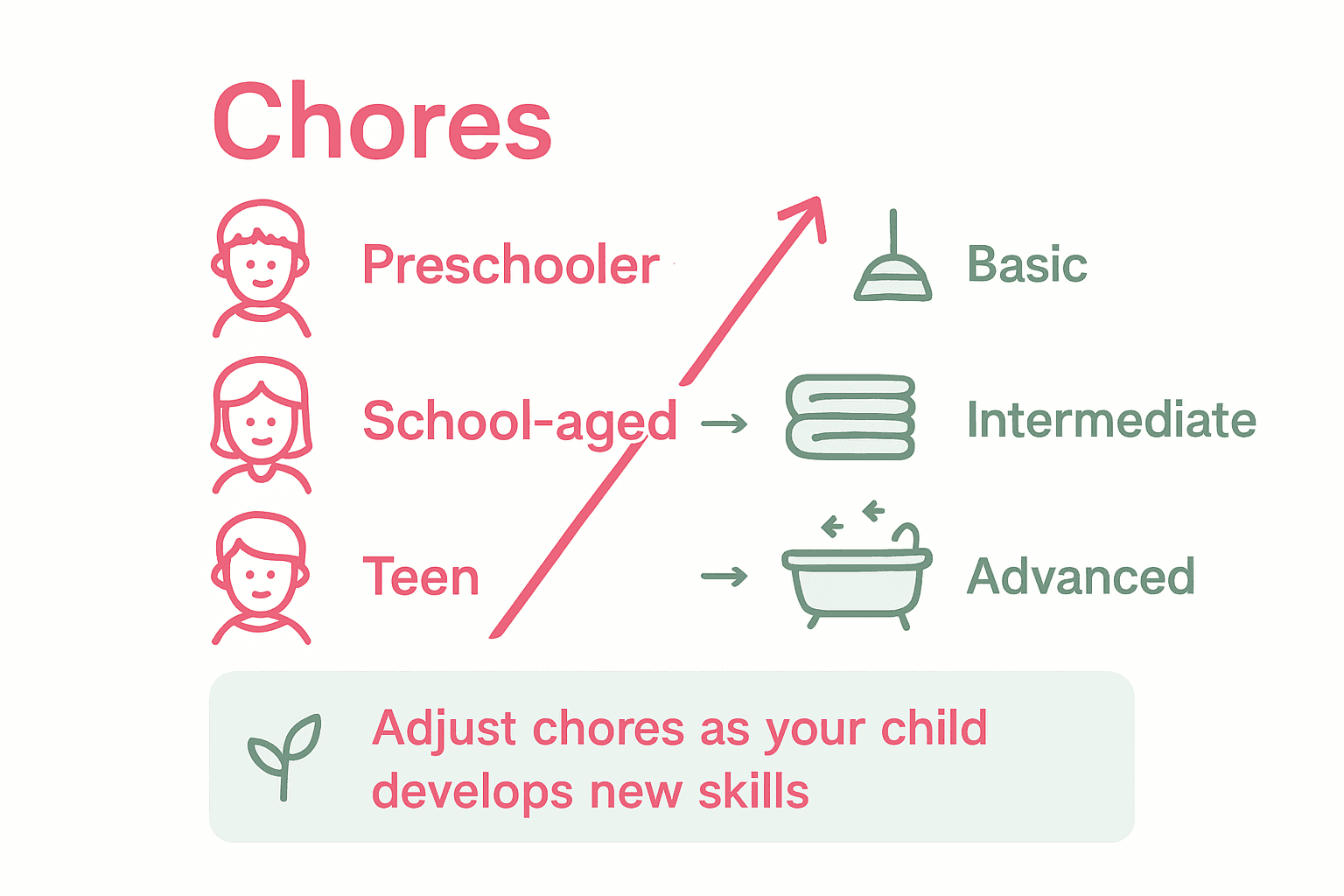
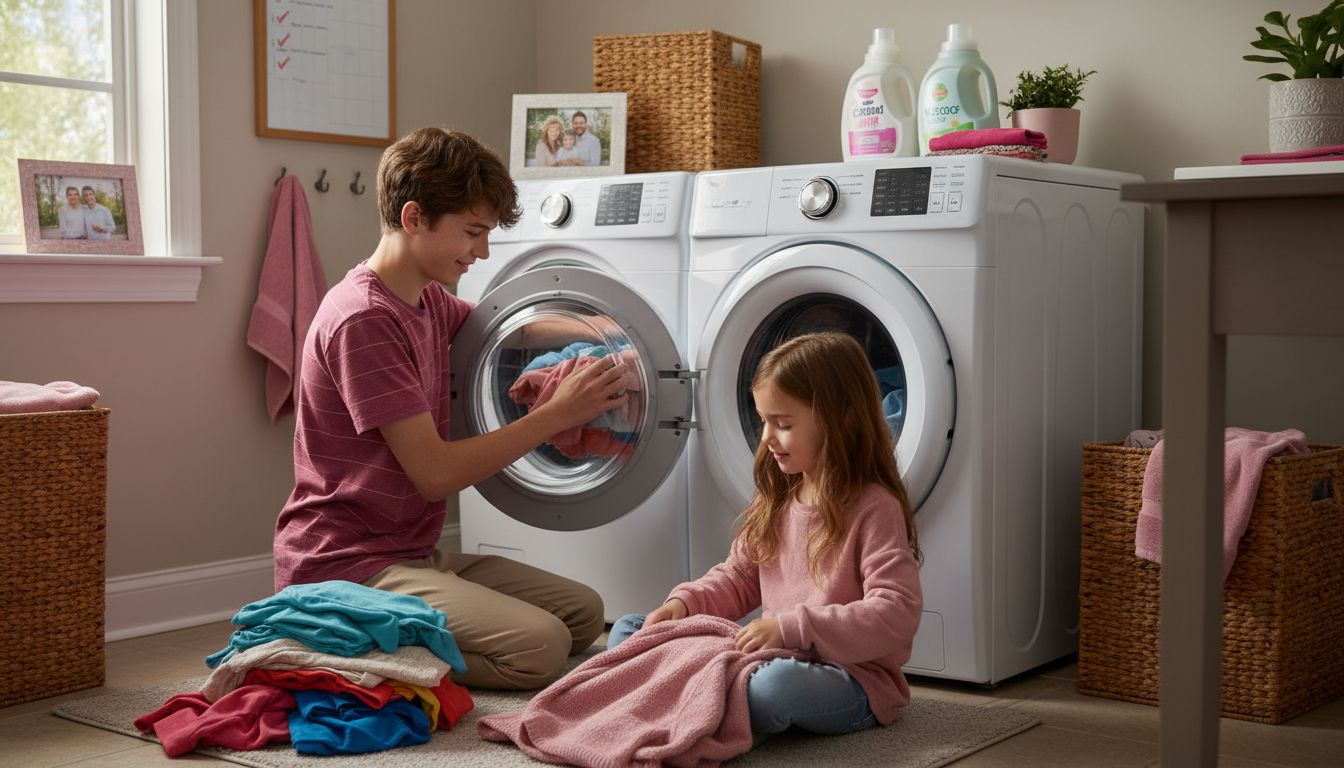 These might include doing their own laundry, preparing simple meals, cleaning bathrooms, vacuuming, or helping with yard work. When assigning chores, consider each child’s individual capabilities, maturity level, and schedule.
Pro tip: Create a visual chore chart that clearly outlines age appropriate tasks. This helps children understand expectations and allows you to adjust responsibilities as they grow and develop new skills. 7 Effective Tips on How to Get Your Teen to Do Chores Without Nagging can provide additional strategies for making chore management smoother and more collaborative.
Step 3: Establish clear expectations and routines
Establishing clear expectations and routines is the foundation of successful chore management for your family. HealthyChildren.org emphasizes the importance of consistency in creating family routines and recommends using visual tools like chore charts to help children understand their responsibilities.
Begin by holding a family meeting where you discuss and collaborate on chore assignments. Clearly explain what each chore entails and set specific times for completion. According to the Raising Children Network, involving children in creating their own chore schedule can increase their commitment and motivation. Create a detailed chart that outlines each family member’s tasks, including specific instructions for how each chore should be completed.
Design a reward system that motivates and recognizes effort. This could include earning points, weekly allowance, or special privileges for consistent and thorough chore completion. Some families use sticker charts for younger children or digital tracking apps for teens. Be sure to provide clear feedback and praise for jobs well done, which helps reinforce positive behavior and makes chores feel less like a burden.
Pro tip: When introducing a new routine, start small and be patient. Consistency is key in helping children develop lasting habits. Expect some resistance and be prepared to adjust your approach as your children grow and their capabilities change. Your next step will be implementing a fair tracking and accountability system that keeps everyone engaged and motivated.
Step 4: Introduce chore systems and tools
Introducing effective chore systems and tools is crucial for transforming household responsibilities from a dreaded task to an organized family activity. HealthyChildren.org recommends using visual tools like chore charts and checklists that help children keep track of their responsibilities and provide a sense of accomplishment.
Consider multiple approaches to tracking chores based on your family’s unique needs and your children’s ages. For younger children, colorful magnetic boards or sticker charts can make tracking feel like a fun game. Digital apps work well for tech savvy teens who enjoy using their smartphones. The Raising Children Network suggests involving children in creating their own tracking systems to increase engagement and ownership of their responsibilities.
Select a system that allows for clear documentation and easy tracking. This might mean using a shared digital spreadsheet for older kids, a laminated weekly chart for younger children, or a combination of methods that keeps everyone motivated. Some families create elaborate point systems where completed chores earn privileges or monetary rewards, while others prefer simple checkmark systems that focus on building responsibility.
Pro tip: Whichever system you choose, make it visually appealing and easy to understand. Place the chore tracking tool in a central location where everyone can see their progress. Create a routine that involves weekly family check ins to review the chore system and make adjustments as needed. Your next step will be maintaining consistency and providing positive reinforcement to keep the system running smoothly.
Step 5: Motivate kids and teens with rewards
Motivating children and teens to complete chores requires a strategic approach that balances external incentives with internal satisfaction. WebMD highlights the ongoing debate about tying allowances to chores, noting that while some experts caution against this method, others see it as an effective motivator for older children to take on additional responsibilities.
Design a reward system that goes beyond monetary compensation. While some families use allowances as a direct reward for completed chores, others focus on alternative motivators. HealthyChildren.org suggests that praise and encouragement can be just as powerful as financial rewards. Consider creating a points system where children can earn privileges like extra screen time, special outings, or choice of family movie night. For younger children, sticker charts or small tokens can provide immediate gratification, while teens might appreciate more substantial rewards like increased independence or special experiences.
Remember that the ultimate goal is teaching responsibility and contributing to family teamwork. Some rewards can be intrinsic rather than material. Acknowledge their efforts with genuine praise, show appreciation for their contributions, and help them understand how their work makes a real difference in the household. Rotate chores periodically to keep things interesting and prevent boredom.

Pro tip: When designing your reward system, involve your children in the process. 7 Ways to Handle What to Do if Your Teen Refuses to Take Responsibility can provide additional insights into creating a collaborative approach. Be flexible and willing to adjust your strategy as your children grow and their motivations change. Your next step is to consistently implement and periodically review your reward system to ensure it remains effective and engaging.
Step 6: Review progress and adjust as needed
Regularly reviewing and adjusting your family’s chore system ensures its long term success and keeps everyone motivated. American Academy of Child and Adolescent Psychiatry recommends that if a child struggles with chores, parents should first try to understand the underlying reasons and be prepared to provide supportive guidance.
Schedule monthly family meetings to discuss the current chore system openly and honestly. During these conversations, allow each family member to share their perspective. Are the chores feeling too challenging? Are some tasks taking longer than expected? Raising Children Network suggests being flexible and assessing whether assigned tasks match each child’s age and current abilities. This might mean redistributing tasks, breaking down complex chores into smaller steps, or providing additional training and support for more difficult responsibilities.
Watch for signs that your current system needs modification. These could include consistent procrastination, frequent incomplete tasks, visible frustration, or decreased motivation. Some children might need more frequent praise, while others might require more structured accountability. Be willing to experiment with different approaches and remember that what works today might need adjustment as your children grow and develop new skills.
Pro tip: When making adjustments, involve your children in the process to maintain their buy in. 7 Ways to Handle What to Do if Your Teen Refuses to Take Responsibility can provide additional strategies for collaborative problem solving. Your ultimate goal is creating a system that feels fair, manageable, and actually helps your family function more smoothly.
Make Chores a Team Effort for a More Organized Home
Struggling to get your children and teens to take on chores without constant reminders can feel overwhelming and frustrating. This article highlights key challenges like setting clear expectations, creating age-appropriate tasks, and maintaining motivation through rewards. If you want to move beyond the struggle of chore battles and build a harmonious family routine that everyone participates in willingly you need practical strategies that fit your busy life.
At Its A Southern Life we offer proven organization hacks and home management systems designed to help busy families like yours. Discover easy tools to create chore charts, establish effective routines, and foster responsibility without nagging. Our create a routine tips and motivation techniques empower you to keep kids engaged so chores become a natural part of your household rhythm. Why wait to build peaceful, organized spaces with less stress?
Frequently Asked Questions
How do I determine what chores are appropriate for my child’s age?
To determine age-appropriate chores, assess your child’s developmental stage. For younger children, simple tasks like putting away toys are suitable, while older kids can handle more complex chores like doing laundry. Create a chore chart that matches tasks with age groups to visualize expectations.
What steps can I take to motivate my kids to do chores?
Motivate kids by establishing a reward system that includes praise and privileges for completed chores. Consider incorporating a points system for earning rewards such as extra screen time or special outings. Regularly review this system to keep it engaging and effective.
How can I make chore routines more consistent?
To establish consistency, create a visual chore chart that clearly outlines each family member’s responsibilities. Involve your children in developing the schedule, and hold monthly family meetings to reassess and make necessary adjustments. Starting small with routines can help build lasting habits.
What should I do if my child refuses to do their chores?
If a child refuses to do chores, hold an open discussion to understand their concerns and challenges. Be willing to adjust responsibilities if tasks seem too difficult or overwhelming. Encourage collaborative problem-solving to find solutions together.
How can I track my children’s progress with chores?
Use a chore tracking system that aligns with your family’s preferences, such as a sticker chart for younger kids or a digital app for teens. Wherever you decide to place the tracking tool, ensure it’s visible to everyone so they can monitor their progress and accomplishments.
How often should I review our chore system?
Aim to review your chore system monthly to address any challenges and assess effectiveness. During these meetings, gather feedback from all family members to ensure tasks are manageable and motivation remains high. Adjust responsibilities and rewards as needed based on the discussions.