

Family Finance Organization Guide
Family finance organization sounds straightforward. It is about managing income, expenses, and planning for the future, right? But check this out. Families who put structured financial plans in place are 78 percent more likely to reach their monetary goals, yet most households still tackle money matters on the fly. The biggest surprise is that the secret to financial peace is less about strict budgeting and more about making every family member part of the money conversation from day one.
The short answer: Organizing family finances means knowing what comes in, what goes out, and where it’s all kept — then putting that somewhere the whole household can see it. Start with one list of every account and every recurring bill. Families who write the plan down are far more likely to reach their goals than families who keep it in their heads.
Table of Contents
- Defining Family Finance Organization: What It Is
- The Importance of Family Finance Management
- Key Components of Organizing Family Finances
- How Family Finance Tools Enhance Budgeting
- Creating a Financial Roadmap for Your Family
Quick Summary
| Takeaway | Explanation |
|---|---|
| Effective tracking is essential for financial clarity. | Documenting income and expenses helps families understand their financial situation and make informed decisions. |
| Set clear financial goals for success. | Defined short-term and long-term objectives improve the likelihood of achieving financial stability and wealth-building. |
| Communicate finances openly among family members. | Encouraging open discussions about money fosters understanding and collective responsibility for financial wellness. |
| Utilize technological tools for budgeting. | Advanced digital tools enhance tracking and analysis, offering actionable insights to better manage finances. |
| Create a flexible financial roadmap. | A dynamic plan aligned with family values helps navigate uncertainties while pursuing shared financial goals. |
Defining Family Finance Organization: What It Is
Family finance organization represents a strategic approach to managing your household’s financial resources comprehensively and systematically. Think of it as creating a financial roadmap that guides your entire family toward financial stability and success.
The Core Concept of Family Finance Management
At its heart, family finance organization means developing a coordinated system for tracking, planning, and optimizing your family’s financial activities. It goes beyond simple budgeting by creating a holistic framework that considers income, expenses, savings, investments, and long term financial goals. Our guide on understanding family budgets can provide additional context for these foundational financial strategies.
The process involves several key components that work together to create financial clarity:
- Tracking all sources of family income
- Monitoring and categorizing household expenses
- Setting clear financial goals
- Creating strategic saving and investment plans
- Establishing financial communication among family members
Why Family Finance Organization Matters
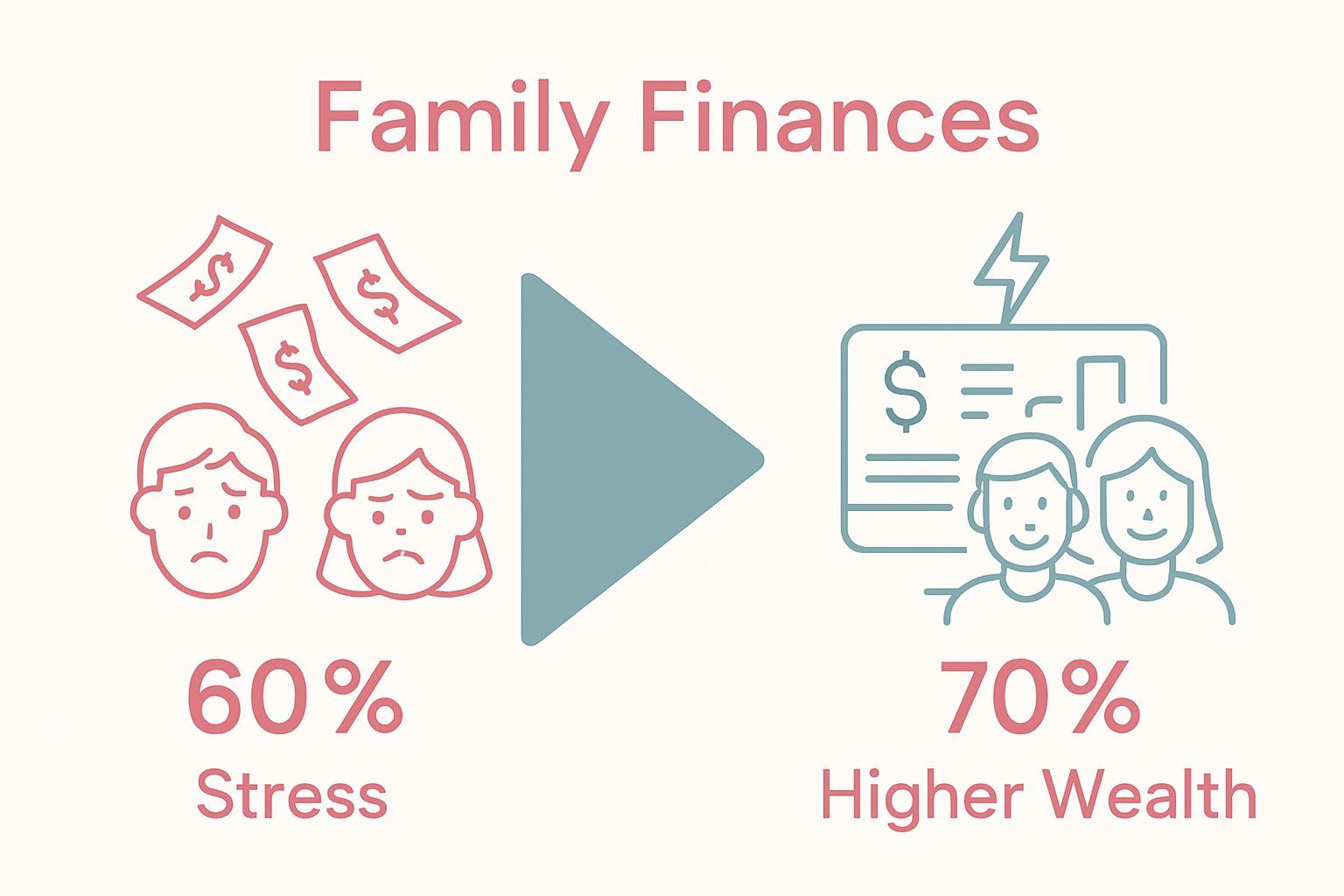
Without a structured approach, families often experience financial stress, unexpected challenges, and missed opportunities. According to Northwestern Mutual’s 2023 Planning & Progress Study, 60% of Americans report feeling anxious about their financial situation. A robust family finance organization system can dramatically reduce this stress by providing:
- Predictability in financial planning
- Greater transparency about household financial health
- Improved decision making
- Enhanced ability to achieve long term financial objectives
By creating a systematic approach to managing money, families can transform financial uncertainty into confident, intentional financial management. The goal isn’t just about tracking numbers but empowering every family member to understand and contribute to financial wellness.
The Importance of Family Finance Management
Family finance management is not just about crunching numbers it’s about creating a sustainable financial ecosystem that supports your family’s current needs and future aspirations. Understanding its profound importance can transform how you approach money and financial decision making.
Building Financial Resilience
Financial resilience means having the ability to withstand economic challenges and unexpected events. Our guide on understanding financial literacy emphasizes that proactive financial management is crucial for long term stability. By developing a robust financial strategy, families can protect themselves against potential economic disruptions.
Key aspects of financial resilience include:
- Creating emergency funds
- Diversifying income streams
- Developing flexible financial plans
- Understanding risk management
- Maintaining consistent financial education
Long Term Family Wealth Building
Effective finance management goes beyond immediate survival it’s about strategic wealth accumulation. According to Fidelity’s Generational Wealth Research, families that implement consistent financial planning are 70% more likely to build sustainable wealth across generations.
The research highlights several critical strategies for successful long term wealth building:
- Regular investment in diversified portfolios
- Minimizing unnecessary expenses
- Teaching financial literacy to children
- Creating multiple passive income sources
- Strategic retirement planning
By viewing finance management as a comprehensive family strategy rather than an individual task, you create a powerful framework for financial success. The goal is not just monetary gain but developing a shared understanding of financial responsibility and opportunity that can benefit every family member.

Key Components of Organizing Family Finances
Organizing family finances is a multifaceted process that requires strategic planning, consistent tracking, and collaborative decision making. Effective financial organization transforms complex money management into a clear, manageable system.
Income and Expense Tracking
Accurate financial tracking forms the foundation of family finance organization. Our comprehensive guide on tracking family expenses provides insights into creating a robust monitoring system. Understanding where money comes from and where it goes helps families make informed financial decisions.
Key elements of comprehensive income and expense tracking include:
- Documenting all income sources
- Categorizing monthly expenses
- Identifying discretionary spending patterns
- Monitoring recurring bills
- Understanding cash flow dynamics
Financial Goal Setting and Strategy
Successful family finance organization requires clear, measurable financial objectives. According to Gallup’s Personal Finance Research, families with well defined financial goals are 65% more likely to achieve long term financial stability.
Strategic goal setting involves:
- Establishing short term and long term financial objectives
- Creating realistic savings targets
- Developing investment strategies
- Planning for major life expenses
- Regularly reviewing and adjusting financial plans
By breaking down financial management into structured components, families can transform their approach from reactive spending to proactive financial planning. The ultimate goal is creating a flexible system that adapts to changing family needs while maintaining financial health and pursuing collective financial dreams.
The following table summarizes the key components of organizing family finances along with a brief explanation of each to help readers quickly grasp their roles.
| Component | Explanation |
|---|---|
| Income Tracking | Monitoring and documenting all sources of family income for accurate financial planning. |
| Expense Tracking | Categorizing and recording monthly expenses to identify spending patterns and cash flow. |
| Financial Goal Setting | Establishing clear short- and long-term objectives to guide saving, investment, and plans. |
| Strategic Saving and Investing | Creating plans for savings and diversified investment to build financial security. |
| Financial Communication | Facilitating open discussions among family members for shared responsibility and clarity. |
How Family Finance Tools Enhance Budgeting
Family finance tools represent a technological revolution in personal financial management, transforming how households track, analyze, and optimize their financial resources. These digital solutions offer unprecedented visibility and control over family finances.
Digital Budgeting Platforms
Modern finance tools go far beyond traditional spreadsheets, providing comprehensive financial insights and automation. Our budget tracking guide for families highlights the importance of choosing the right technological solutions for effective financial management.
Key capabilities of advanced budgeting tools include:
- Real time expense tracking
- Automated categorization of spending
- Visual financial dashboards
- Predictive spending analysis
- Customizable budget alerts
Technological Integration and Financial Intelligence
According to Pew Research Center’s Digital Finance Report, 72% of families using integrated financial technologies report significant improvements in financial decision making. These tools provide more than just number tracking they offer actionable insights and intelligent recommendations.
Advanced features that enhance financial intelligence include:
- Machine learning expense predictions
- Cross platform financial synchronization
- Personalized financial health scoring
- Goal based savings recommendations
- Investment opportunity suggestions
By leveraging sophisticated finance tools, families can transform complex financial data into clear, actionable strategies. The goal is not just tracking money but empowering families to make smarter, more informed financial choices that align with their unique goals and lifestyle.
Below is a table highlighting useful digital budgeting tool features and how each function contributes to efficient family finance management.
| Feature | Benefit |
|---|---|
| Real-time Expense Tracking | Provides up-to-the-minute accounting of spending to prevent budget overruns. |
| Automated Expense Categorization | Saves time and improves clarity by sorting costs into appropriate categories automatically. |
| Financial Dashboards | Displays visual summaries that enhance understanding of overall financial health. |
| Predictive Spending Analysis | Uses historical data to anticipate future spending trends for better planning. |
| Customizable Budget Alerts | Sends notifications about budget limits, encouraging timely financial adjustments. |
Creating a Financial Roadmap for Your Family
A financial roadmap serves as a strategic blueprint that guides your family’s monetary journey, transforming abstract financial goals into concrete, achievable milestones. This comprehensive plan acts as a navigational tool for your family’s financial future.

Establishing Clear Financial Objectives
Developing a meaningful financial roadmap begins with setting precise, measurable goals that reflect your family’s unique aspirations and challenges. Our guide on understanding family budgets provides essential insights into creating targeted financial strategies.
Key considerations when defining financial objectives include:
- Identifying short term and long term financial goals
- Assessing current financial health
- Understanding family lifestyle requirements
- Evaluating potential financial constraints
- Aligning goals with family values
Implementing Strategic Financial Planning
According to Vanguard’s Research on Family Financial Planning, families with structured financial roadmaps are 78% more likely to achieve their monetary objectives. Strategic planning involves creating a dynamic framework that adapts to changing family circumstances.
Critical elements of effective financial road-mapping include:
- Creating flexible budget allocations
- Developing emergency fund strategies
- Planning for major life transitions
- Establishing investment diversification
- Regularly reviewing and adjusting financial plans
By treating your financial roadmap as a living document, your family can navigate economic uncertainties with confidence, turning financial aspirations into tangible achievements that support your collective growth and stability.
Turn Family Finance Challenges Into Organized Solutions
Struggling to find clarity in your household finances? Feeling overwhelmed by the constant need to track expenses, set goals, and create a financial roadmap for your family? If the need for structure and peace of mind around money sounds familiar, you are not alone. Many families face this struggle when juggling multiple income sources, unpredictable bills, and the pressure to secure long-term stability. This is where concepts like income tracking, goal setting, and digital budgeting from the Family Finance Organization Guide make all the difference.
Imagine shifting from uncertainty to control. Here, you will find more than just financial advice. Explore actionable budgeting systems and practical home management systems that turn family finance management into an achievable daily routine. Now is the perfect time to take your first step and transform your family’s finances into a source of confidence instead of anxiety. Visit It’s a Southern Life Y’all today and create lasting financial peace for your home.
Frequently Asked Questions
What is family finance organization?
Family finance organization is a strategic approach to managing household financial resources, aiming to create a comprehensive financial roadmap that guides families toward stability and success.
Why is family finance management important?
Effective family finance management is crucial for building financial resilience, achieving long-term wealth accumulation, and reducing financial stress by providing a structured approach to decision-making and financial planning.
How can families track their income and expenses effectively?
Families can track their income and expenses effectively by documenting all sources of income, categorizing monthly expenses, monitoring recurring bills, and understanding discretionary spending patterns to make informed financial decisions.
What tools can enhance family finance organization?
Digital budgeting platforms and financial tracking tools can enhance family finance organization by offering features such as real-time expense tracking, machine learning predictions, customizable alerts, and visual financial dashboards to help families manage their finances more efficiently.
Recommended
Want a little more help with this? I made a free Mental Load Kit that pairs right up with this post — y’all can grab it over on my Free Resources page.