
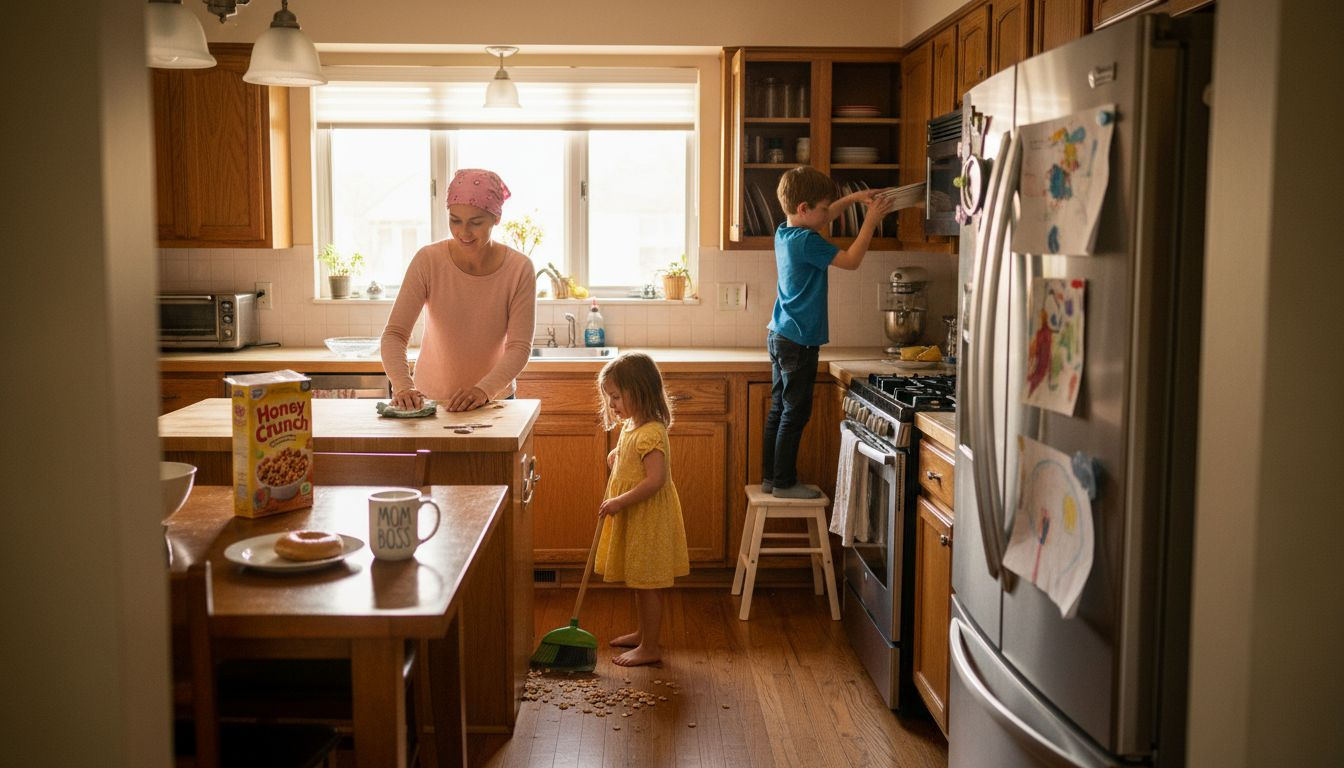
The Ultimate Guide to Age-Appropriate Chores for Kids (Printable Chart Included) for a More Organized Family
Every parent faces the challenge of encouraging kids to help out at home while juggling a packed schedule. The right approach to assigning chores can make daily life feel smoother, while also teaching important skills like responsibility and teamwork. Research shows that children who regularly take on household tasks develop better executive function and stronger family connections. This guide helps you match chores to your child’s unique abilities, making family life both more organized and rewarding.
Table of Contents
- Step 1: Assess Your Children’s Abilities And Needs
- Step 2: Select Suitable Chores By Age Group
- Step 3: Create A Personalized Family Chore Chart
- Step 4: Implement Chores With Simple Routines
- Step 5: Review Progress And Adjust As Needed
Quick Summary
| Key Insight | Explanation |
|---|---|
| 1. Assess children’s skills and needs | Understand your child’s abilities and maturity to assign appropriate chores that build confidence. |
| 2. Assign age-appropriate chores | Select tasks that match your child’s development level to gradually increase responsibility and skills. |
| 3. Create a personalized chore chart | Develop a visual chore chart that outlines family duties, fosters teamwork, and can be easily updated. |
| 4. Implement consistent routines | Establish predictable chore routines that help children manage tasks and emotions effectively. |
| 5. Review and adapt as necessary | Regularly check in on progress and adjust chores according to your child’s evolving capabilities and feedback. |
Step 1: Assess your children’s abilities and needs
Starting a family chore system is like creating a personalized roadmap that helps your kids develop crucial life skills. Knowing what tasks your children can realistically handle means understanding their unique abilities, maturity levels, and developmental stages.
Research shows that children as young as 2 can begin contributing to household tasks, with complexity increasing as they grow. Chores help develop key skills like responsibility, self-care, and executive functioning. To get started, consider these assessment strategies:
- Watch your child’s current skill levels closely
- Notice their physical capabilities and motor skills
- Observe their attention span and ability to follow instructions
- Consider their emotional maturity and sense of responsibility
Age isn’t the only factor in determining chore readiness. Some 6-year-olds might handle more complex tasks than others, while some 8-year-olds might need simpler assignments. Developing empathy and responsibility is about matching tasks to individual capabilities.
The goal isn’t perfection but gradual skill building. Start with simple, achievable tasks that boost your child’s confidence and create positive associations with helping the family.
Children who regularly participate in household chores develop stronger self-efficacy and family connection skills.
Pro tip: Create a simple skills observation chart to track your child’s developing abilities and potential chore readiness.
Step 2: Select suitable chores by age group
Picking age-appropriate chores is like matching puzzle pieces – each child has unique capabilities that evolve as they grow. The key is understanding what tasks align with their developmental stage while gradually building their skills and confidence.
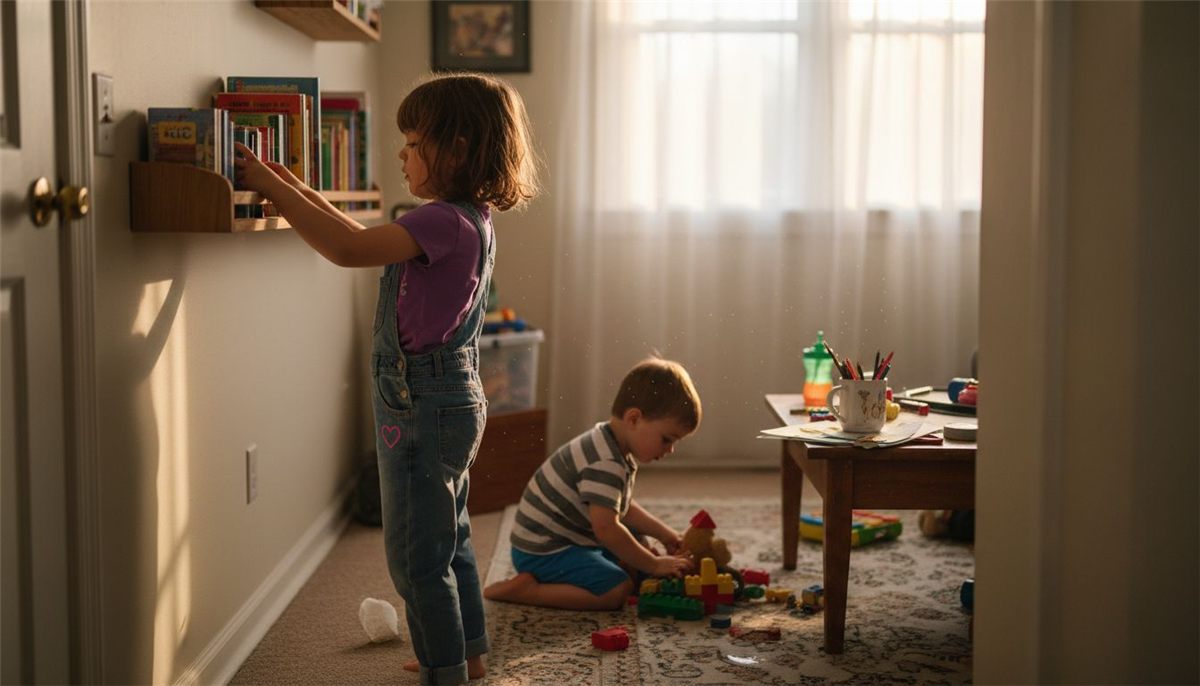
Age-appropriate chore recommendations vary widely, but generally follow a progressive complexity model. Here’s a breakdown to help you navigate chore selection:
Toddlers (2-3 years):
- Put away toys
- Help feed pets
- Toss small trash items
- Assist in simple cleanup activities
Early Elementary (4-6 years):
- Make beds
- Clear dinner plates
- Dust furniture
- Water plants
- Feed household pets
Middle Elementary (7-9 years):
- Vacuum basic areas
- Start simple laundry tasks
- Wipe kitchen counters
- Help prepare simple meals
- Take out smaller trash bags
Preteens (10-12 years):
- Mow lawns
- Clean bathrooms
- Do full laundry loads
- Prepare more complex meals
- Assist with yard work
Chore complexity increases gradually with your child’s developing skills. Remember that individual maturity matters more than strict age guidelines.
Here’s how chore type, skill level, and recommended supervision differ at various age ranges:
| Age Group | Example Chore Type | Skill Development Focus | Recommended Supervision |
|---|---|---|---|
| Toddlers (2-3 years) | Toy pickup, assist feeding pets | Basic following directions | Full adult guidance |
| Early Elementary (4-6) | Bed making, watering plants | Responsibility, fine motor skills | Initial supervision |
| Middle Elementary (7-9) | Simple meal prep, vacuuming | Independence, planning | Occasional check-in |
| Preteens (10-12 years) | Laundry, lawn mowing | Time management, leadership | Advised but more independent |
Consistent expectations and proper guidance transform chores from burdensome tasks to valuable learning experiences.
Pro tip: Create a flexible chore chart that adapts to your child’s individual growth and capabilities.
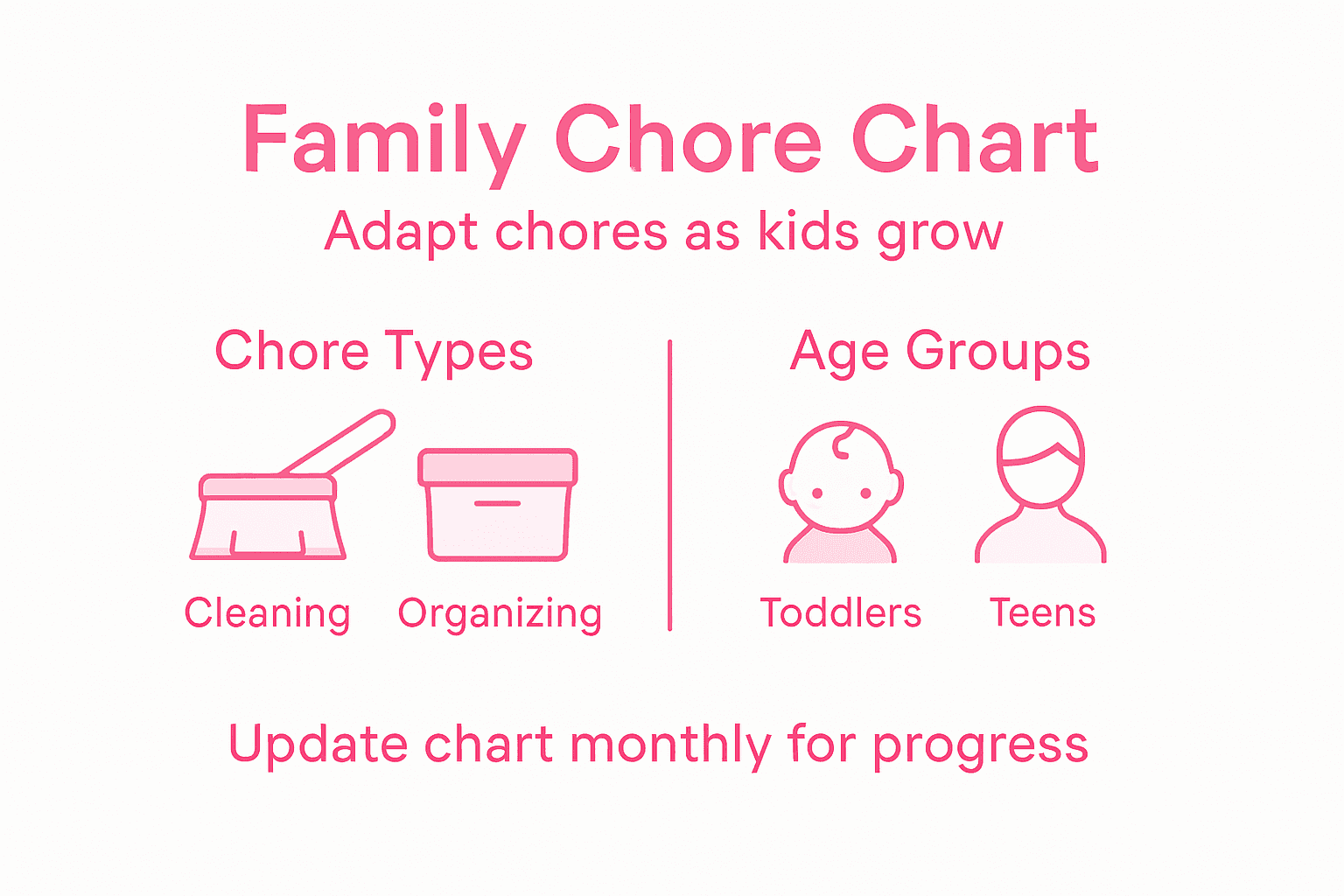
Step 3: Create a personalized family chore chart
Crafting a family chore chart transforms household management from chaotic to collaborative. Think of it as your family’s teamwork blueprint – a visual roadmap that clearly defines responsibilities and celebrates everyone’s contributions.
Effective chore tracking strategies help streamline household tasks and foster a sense of shared responsibility. Here’s how to design a chart that works for your unique family:
Chart Design Essentials:
- Create a grid with days of the week across the top
- List family members’ names down the left side
- Use different colors for each family member
- Include age-appropriate tasks for each person
Key Components to Include:
- Specific task descriptions
- Checkboxes or spaces to mark completion
- Rotating responsibilities
- Bonus point or reward tracking
Chore chart benefits extend beyond task management by building confidence and teaching valuable life skills. The chart should be flexible, visible, and easy to update.
Compare key benefits of visual chore charts versus routine-only systems below:
| System Type | Accountability | Flexibility | Family Engagement |
|---|---|---|---|
| Visual chore chart | High, easy tracking | Easily updated for growth | Promotes teamwork |
| Routinely assigned chores | Moderate, relies on memory | Less adaptable to changes | May feel less collaborative |
A well-designed chore chart transforms household work from a burden into a family bonding experience.
Pro tip: Laminate your chore chart or use a dry-erase board to make weekly adjustments quick and easy.
Step 4: Implement chores with simple routines
Turning chores from dreaded tasks into smooth family rhythms requires strategy, patience, and consistency. Your goal is creating predictable patterns that transform household responsibilities from battles into natural, shared experiences.
Family routines help children manage emotions and build a sense of shared purpose. Here’s how to establish effective chore routines:
Routine Establishment Steps:
- Start with clear, simple expectations
- Create visual task reminders
- Practice tasks together initially
- Demonstrate each chore step-by-step
- Offer immediate positive reinforcement
Key Routine Implementation Strategies:
- Choose consistent times for chores
- Break complex tasks into smaller steps
- Make routines predictable
- Adjust as children grow and skills improve
Consistent routine reinforcement transforms chores from occasional tasks to integrated family habits. Patience and modeling are your greatest tools in this process.
Successful family routines are less about perfection and more about building connections and life skills.
Pro tip: Use a timer or fun playlist to make routine transitions more engaging and help children stay focused during chore time.
Step 5: Review progress and adjust as needed
Creating a successful chore system isn’t a one-time event but an ongoing process of observation, encouragement, and gentle recalibration. Think of it like tending a garden – you’ll need to nurture, prune, and adapt as your children grow and develop.
Positive reinforcement builds confidence in children’s ability to contribute to family tasks. Here are strategies to effectively review and adjust your chore approach:
Progress Review Strategies:
- Schedule monthly family chore check-ins
- Track individual task completion
- Listen to children’s feedback
- Notice skill development and growth
- Celebrate consistent effort
Adjustment Considerations:
- Match tasks to current skill levels
- Rotate responsibilities to prevent boredom
- Increase complexity as children mature
- Be flexible with individual capabilities
Consistent expectations improve chore participation by maintaining clear, age-appropriate standards. Remember that progress isn’t about perfection, but steady improvement.
Chores are less about the task and more about teaching responsibility, teamwork, and life skills.
Pro tip: Create a simple progress tracking sheet where children can visually see their growth and achievements.
Make Family Chores a Stress-Free Success Today
Struggling to find the perfect balance between assigning age-appropriate chores and keeping your family organized is a common challenge. This guide highlights how children’s unique abilities and developmental stages call for tailored chore plans that foster responsibility without overwhelming anyone. If you want to take those simple routines and personalized charts further with proven strategies that bring peace and order to your home, you are in the right place.
At Its A Southern Life Yall you will discover easy-to-implement organization hacks, time management tools, and home management systems designed for busy families just like yours. Don’t wait to transform chores from stressful duties into smooth, empowering family habits. Get started now by exploring our actionable tips and resources on creating family routines and building efficient systems that fit your lifestyle. Take control today for a more peaceful, organized life with your kids.
Frequently Asked Questions
How do I assess my child’s abilities for chores?
To assess your child’s abilities for chores, observe their current skill levels, physical capabilities, and attention span. Start by watching them perform simple tasks and noting how well they follow instructions. This will help you identify age-appropriate chores that match their developmental stage.
What age-appropriate chores can I assign to my child?
Age-appropriate chores vary based on your child’s developmental stage. For example, toddlers (ages 2-3) can help put away toys, while preteens (ages 10-12) can mow the lawn. Refer to the included chore chart to find suitable tasks for each age group.
How can I create a family chore chart?
To create a family chore chart, design a grid with days of the week across the top and family members’ names along the left side. Include specific tasks, checkboxes for completion, and use different colors for each family member to enhance clarity and engagement.
What are effective routines to implement chores in our household?
Effective routines for chores involve setting clear expectations and designating consistent times for tasks. Establishing a predictable routine helps children develop habits, so aim to practice chores together initially to model the steps they need to follow.
How often should I review and adjust the chore system?
You should review and adjust your chore system monthly to ensure tasks align with your child’s growing abilities. During these check-ins, celebrate their accomplishments and discuss any necessary changes to keep them engaged and motivated.
How can chores help my child develop life skills?
Assigning age-appropriate chores teaches children responsibility, teamwork, and time management. By gradually increasing task complexity and providing positive reinforcement, you can foster their independence and confidence over time.
Recommended
- Instituting Chores for your Children and Teens Easily – It’s a Southern Life Ya’ll
- 7 Effective Tips on How to Get Your Teen to Do Chores Without Nagging – It’s a Southern Life Ya’ll
- 7 Family-Friendly Examples of Productivity Hacks That Work – It’s a Southern Life Ya’ll
- 7 Effective Types of Home Organization Systems – It’s a Southern Life Ya’ll
Keep reading: more parenting help
Want the chart already made for you? The Chore System Starter has the age-by-age lists, the printable chart, and the routine that keeps it going after the newness wears off.