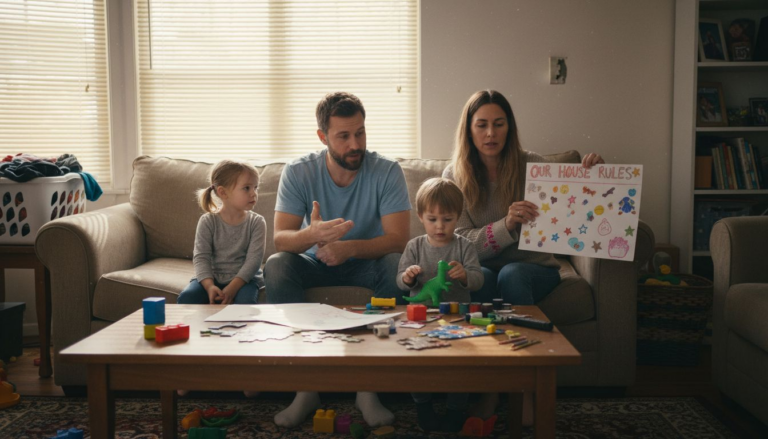

Raising Ready Teens: How to Build Responsibility One Rung at a Time
Responsible adults don’t just happen. You build them. One habit, one handoff, one “nope, you’ve got this” at a time. That’s the whole idea behind what I call the responsibility ladder — and if you’re raising preteens, teenagers, or a college kid who still expects you to do their laundry, this is for you.
Here’s the tension every mom feels: push too fast, and everything blows up. Hold on too long, and your kid stays capable on paper but completely dependent in real life. Neither one feels good. A gradual plan gives you something better — steady growth, fewer daily battles, and a kid who can actually carry their own life someday.
Just start where you are with what you already know. That goes for you and for them.
Why the Ladder Works
Think about how you taught your toddler to climb stairs. You didn’t put them on the top step and walk away. You stayed close, showed them the next move, and backed up a little when they proved they could handle it.
That same idea works at every age — for chores, school, money, time management, and all the “adulting stuff” nobody is born knowing.
Responsibility grows best in layers. First they help. Then they do it with reminders. Then they own it. You don’t flip a switch at 18 and hope for the best. You build the thing one rung at a time.
And here’s what I know from raising four kids: some of them are ready early in one area and totally behind in another. My kid at 12 could cook eggs and pack her own bag for a game but forget the library book every single week. My 17-year-old could handle AP classes but needed three reminders to clean the bathroom. That’s not failure. That’s just kids.
The question isn’t “what should a kid this age be doing?” The better question is: what’s the next rung my kid can climb with a little support from me?
Add the new rung after consistency — not after a birthday.

Start with Readiness, Not Just Age
Age matters, but it is not the whole story. Maturity, temperament, family schedule, neurodiversity, health, Age matters, but it’s not the whole story. Maturity, temperament, how packed their schedule is, neurodiversity, health — all of it plays a part.
Before you hand off a new responsibility, ask yourself: are they genuinely capable, or are they just unaware? Look for signs like these:
- They can already do a simpler version of the task most of the time.
- They know what “done” actually looks like.
- They can recover from a mistake without shutting down completely.
- They can handle a reminder without turning it into a whole thing.
Here’s a rough map (not a rulebook — because your kid isn’t a textbook):
| Stage | Main focus | Your role |
|---|---|---|
| Ages 10 to 12 | Daily habits and helping at home | Teach, model, remind often |
| Ages 13 to 15 | Consistency and self-management | Check in, reduce reminders |
| Ages 16 to 18 | Planning ahead and real consequences | Coach, then step back |
| College age | Full ownership with backup support | Advise when asked, let them manage |
Some kids move fast in money and slow in chores. Others run their own schedule but still need help planning a week. Meet them where they are.
If you want more ideas for age-based home responsibilities, this chore checklist by age is a handy starting point. Use it as inspiration, not as pressure.
The Preteen Years: Where It Gets Real
This is the season to move past “I’ll help if you ask me” and into “I know what needs to happen and I do it.” That shift matters more than people realize.
At home, a preteen can usually take on a short repeating list of chores — unloading the dishwasher, doing their own laundry, packing their bag, wiping the bathroom counter, feeding the dog, taking the trash out. Not every task has to be daily, but some need to be.
Self-management starts here too. Laying out clothes the night before. Charging devices in the right spot. Getting themselves up with an alarm. If you’re still doing every reminder and every rescue, your kid stays dependent. When things go sideways, don’t let them wait for you to fix it. Help them move from “I hope this works out” to “here’s what I’m going to do.”
School responsibility at this age is less about grades and more about process. You want them checking the assignment portal, writing down due dates, and turning work in — without you acting as their project manager. If they forget something? Let them feel a small consequence when it’s safe to do so. That’s not mean. That’s love.
Money can start small. Give them a set amount for extras. Let them track it. Let them run out sometimes. Running out of fun money at 12 is a better lesson than running up debt at 22. Trust me on that one.
A solid list of age-appropriate chores for kids and teens can help if you need examples, but the bigger win is consistency. One or two tasks done reliably beat a long list ignored by Friday.

The Teen Years: More Than Just Chores
Teenagers need responsibilities that touch real life, because real life is getting close fast.
Around 13–15, start handing off time management. Your teen should know when practice is, when the project is due, and what’s on the family calendar — not because you told them that morning, but because they checked. If you’re the only person who knows when band pictures are, that rung hasn’t been handed off yet.
Their home responsibilities should get harder too. Think full laundry start to finish, deeper cleaning, simple meal prep, mowing, or handling dinner one night a week.
Academically, you want them emailing teachers on their own, planning backward from deadlines, and studying without a parent sitting right next to them every night. Your support doesn’t go away — it just shifts. Ask “what’s your plan?” more than “did you do it?” One builds confidence. The other just checks a box.
Money lessons get more concrete here. Let them budget for gas, lunches, or going out with friends. If they have a job, they should understand a pay stub, track their spending, and save for something bigger than fast food.
When driving enters the picture — add car ownership. Tracking fuel, knowing where the insurance card is, understanding a warning light. Independence shouldn’t just float on top of your unseen labor.
What They Should Own Before Graduation
By 16–18, home responsibilities should feel normal, not optional. Room, laundry, bathroom, dishes, some meal prep — without a speech every single time. They should contribute to the household rhythm, not live in it like a guest.
This is a good time to teach appointment skills. Let them call the dentist. Refill a prescription. Show them how to manage email, because missed messages lead to missed opportunities.
If they work, they need more than a paycheck. Show up on time. Request time off the right way. Communicate with a manager. Even without a job, they can practice those habits at home — just by completing tasks by a deadline without being nagged.
And stop rescuing every preventable problem. Forgotten cleats, late assignments, spending mistakes — those things teach something when you let the consequence land. Not every consequence, not every time. But some. If you can always step in, why would they build the skill?
That’s not cold. That’s honest.
College Age: Adulting with a Safety Net
Your young adult can vote and sign a lease — but they still might need coaching on the basics. That’s not failure. That’s just the next rung.
Whether they’re home, in a dorm, or in an apartment, daily life should be theirs to manage. Laundry, groceries, waking up on time, tracking deadlines. If they move home for the summer, don’t absorb those tasks again. I know the temptation. Resist it.
Money has to level up here. They need to understand their income, know their fixed bills, and budget for the stuff that adds up fast — food, gas, subscriptions. If you’re still providing financial support, make the terms clear. Are you covering tuition only? Are they paying for dining out and rideshares? Unclear support leads to unclear behavior every time.
Life admin belongs to them now. Medical appointments. Insurance cards. Responding to official emails. If they rent, they need to read the lease and understand what happens if a payment is late. When setbacks happen — and they will — encourage them to face it and figure it out, not expect a bailout.
Your role has officially changed. You’re not the manager anymore. You’re the consultant. You ask good questions, help them think through options, and let them own the decision. Advice lands a whole lot better when it’s offered as support, not control.

Mistakes Parents Make (I Made Some of These Myself)
Most responsibility problems don’t come from bad intentions. They come from normal mom instincts applied at the wrong time.
Giving too much too soon. A kid who’s never packed their own bag shouldn’t suddenly be in charge of everything on tournament day. That’s a setup, not training.
Holding on too long. If you’re checking the school portal, tracking every deadline, and reminding them six times — you’re in the driver’s seat and they’re in the passenger seat. That has to change.
Assigning responsibility without teaching the process. “Clean the kitchen” sounds clear to you. To a 13-year-old? Not so much. Do it together first. Show them what finished looks like. Then hand it off.
Being inconsistent. If a chore matters Monday but quietly disappears by Thursday, your kid learns that waiting you out works. And they will wait you out.
Confusing support with rescue. Support sounds like: “Talk me through your plan.” Rescue sounds like: “I’ll just handle it for you.” One builds confidence. The other builds dependence.
How to Move Up Without Constant Conflict
You don’t need a big family overhaul. You need a steady, intentional approach — done in the minutes you have.
Start by picking one new responsibility in each area. Home management, self-care, school or work, money, social accountability. Then teach it like this:
- Do it together once or twice.
- Let your child do it while you watch.
- Step back and cut the reminders.
- Make it a clear, repeating expectation.
- Add the next rung only after this one sticks.
No guesswork. No dumping five new expectations after a frustrating week. One clear change, then time to make it stick.
Laundry can move from carrying the basket, to sorting, to washing, to the whole cycle, to doing bedding on a schedule. Money moves from spending an allowance, to tracking purchases, to saving for a goal, to managing gas money. School management moves from checking homework with you, to writing things down, to planning a week, to emailing a teacher on their own.
Keep expectations visible. A shared calendar or a simple list on the fridge cuts down on arguments because everyone can see what the plan is.
Praise reliability more than effort. “You remembered without being asked” means more than a generic “good job” — because you’re naming the exact habit you want to stick.
If a rung isn’t working, don’t label your kid as lazy. Step back and figure out where the process broke down. Shrink the task. Teach the missing piece. Then try again.
The Bottom Line
Responsible adults are built through ordinary repetition, not one big turning point.
Your kid doesn’t need every life skill by next Tuesday. They need a clear next step, enough practice to own it, and a parent who’s willing to loosen their grip at the right time.
Just start where you are. Ask what you can teach — and then release. That’s how you raise someone who can actually carry their own life.
And honestly? That’s the whole goal.
You CAN do it, y’all.
Keep reading
- 5 Ways to Build Unshakeable Confidence in Your Child
- Raising Grateful Kids in an Entitled World: A Mom's Practical Guide
- The Ultimate Guide to Intentional Parenting: Everything You Need to Succeed in Raising Responsible Humans
Want a little more help with this? The Chore System Starter is an age-by-age system you can set up in fifteen minutes, and it lets the chart do the asking.