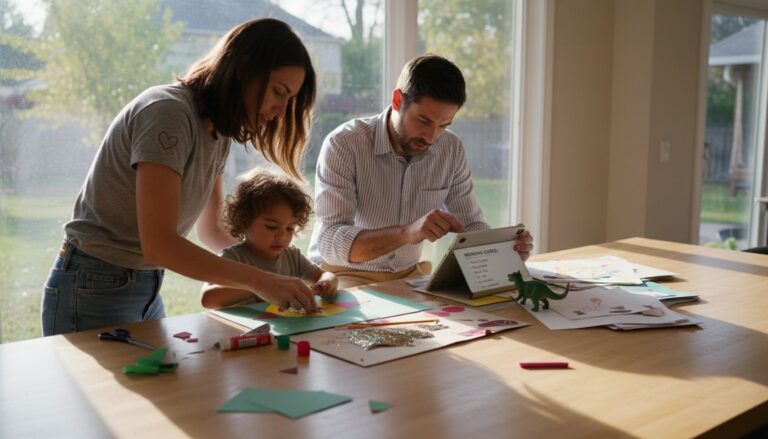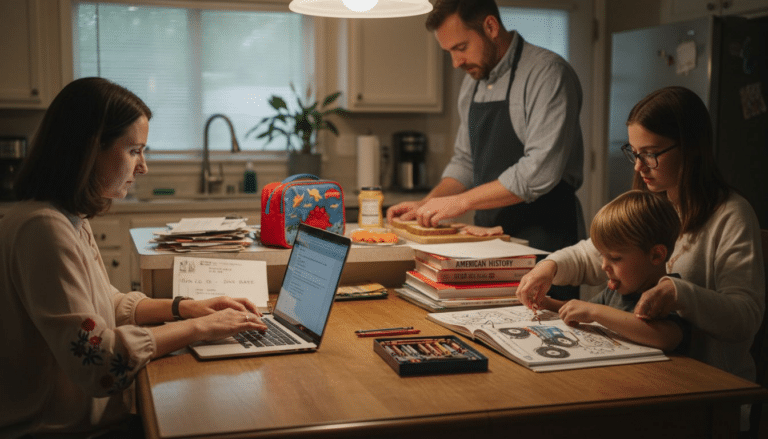
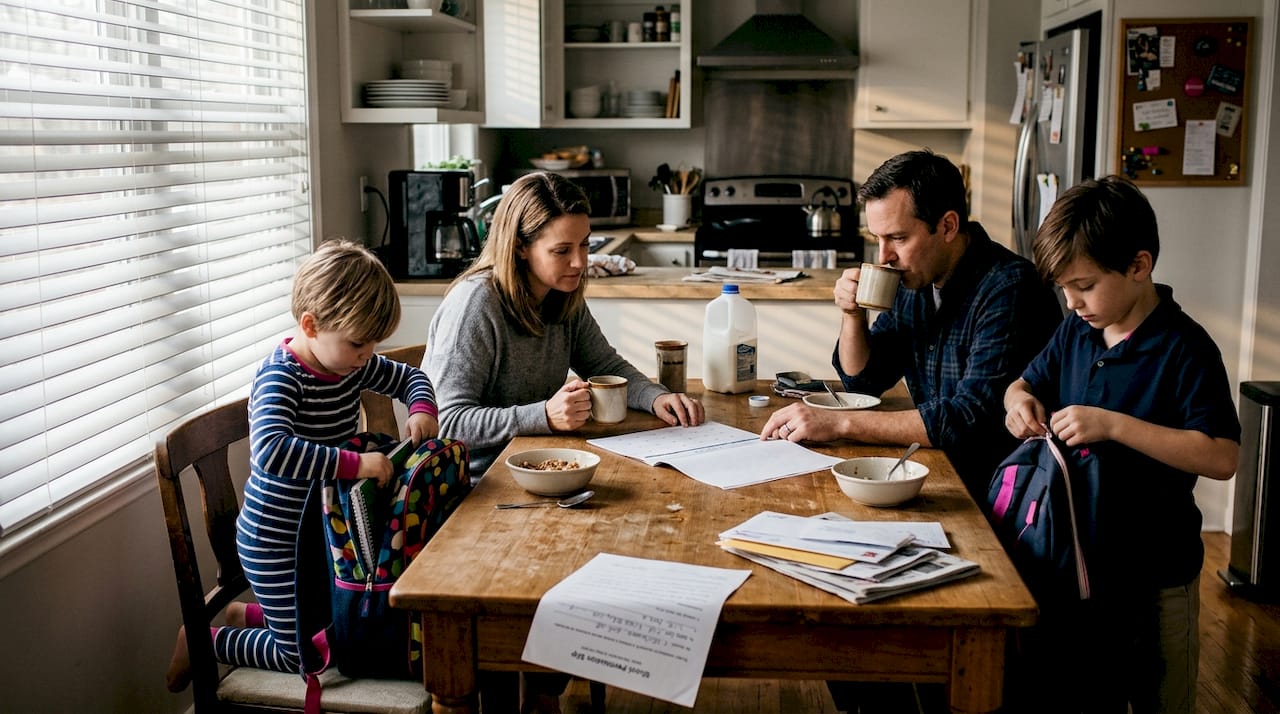
Family routines: 5 science-backed benefits for balance
TL;DR:
- Family routines provide essential stability and support children’s socioemotional, academic, and behavioral development.
- Effective routines are flexible, centered around anchor points like meals and bedtime, and involve family participation.
- Adapting routines for neurodiverse families and emphasizing warmth and resilience enhances their positive impact.
Family routines are often dismissed as a parenting tool for managing toddler tantrums or keeping bedtime from becoming a battle. But the truth runs much deeper. Family routines provide predictable structure that shapes socioemotional skills, academic success, and even the creative energy parents bring to work. This guide brings together science-backed evidence, practical frameworks, and real strategies you can start using today. Whether your home runs like clockwork or feels like organized chaos most mornings, you’ll find something here that fits your family’s unique rhythm and helps you build something lasting.
Table of Contents
- Why routines matter: Foundations for growth and stability
- Components of effective family routines
- Routines, productivity, and work-life balance: Real-world applications
- Adapting routines for diverse family needs and challenges
- What most families miss: Routines as resilience, not rigidity
- Next steps: Tools and support for family routine success
- Frequently asked questions
Key Takeaways
| Point | Details |
|---|---|
| Predictability fosters growth | Consistent routines create emotional security and support child development in key areas. |
| Flexible routines win | Anchor points and adaptable windows help routines persist amidst real family life challenges. |
| Productivity starts at home | Effective routines boost work-life balance, creativity, and day-to-day organization for all family members. |
| Adapt to unique needs | Families facing neurodevelopmental challenges or difficult circumstances can succeed with customized routines and positive discipline. |
| Resilience, not rigidity | The true power of routines is in their ability to help families adapt and thrive—not simply follow a schedule. |
Why routines matter: Foundations for growth and stability
With the groundwork laid, we can see how routines in daily life are far from just repetitive tasks. They form the backbone of successful, adaptable families. Think of a routine like the roots of a tree. You may not see them, but they hold everything upright when the storms come.
Family routines guide behavior and support child development across socioemotional, language, academic, and social skills while also enhancing family relationship satisfaction. That’s not a small thing. That’s the whole picture of a thriving household.
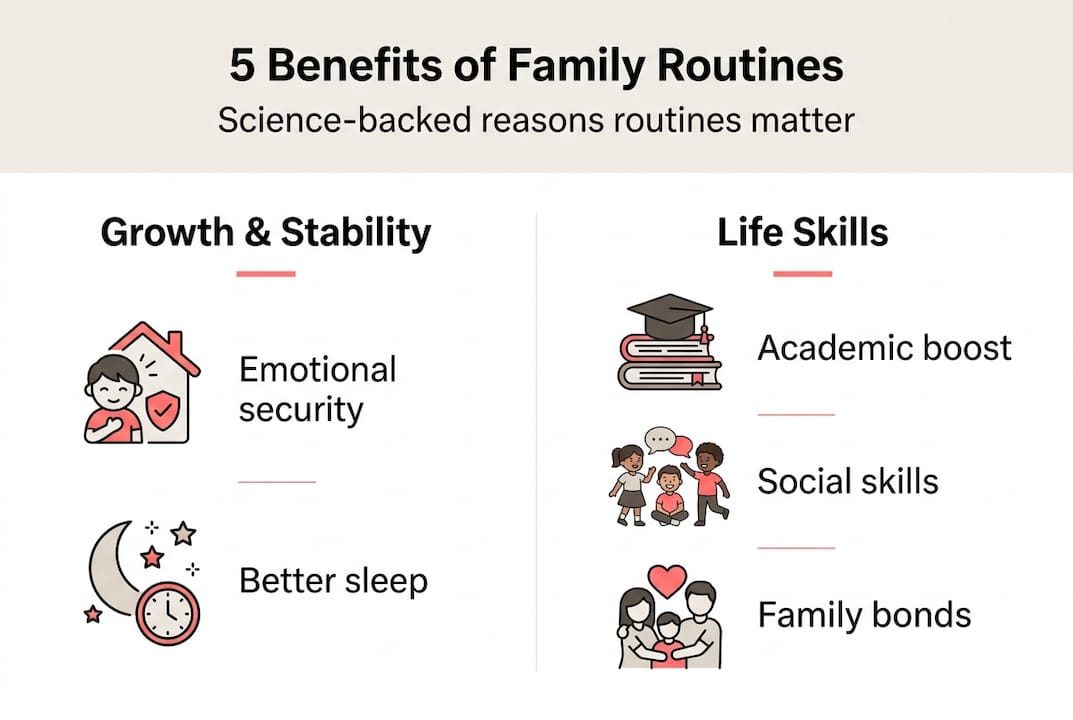
Here’s a quick look at what the research tells us about routine benefits:
| Area of development | Routine impact |
|---|---|
| Emotional regulation | Fewer outbursts, better coping skills |
| Academic performance | Improved homework completion and grades |
| Sleep quality | Longer, more restful sleep duration |
| Family relationships | Greater satisfaction and cohesion |
| Behavioral regulation | Reduced problem behaviors over time |
Bedtime routines deserve special attention. Consistent early bedtime routines improve emotion regulation in children over the long term. When kids know what to expect at night, their nervous systems settle more easily. That predictability is a gift you give them every single evening.
Here are the core reasons routines work so well:
- They reduce decision fatigue for both parents and children
- They signal safety and security to developing brains
- They create natural checkpoints for connection and communication
- They build self-discipline through repetition, not punishment
Understanding the benefits of family time helps you see why these daily touchpoints matter so much. And if you want a practical roadmap, exploring step-by-step family time management gives you a clear starting point.
Families with neurodiverse children or those navigating difficult seasons often struggle more with routine consistency. That’s not failure. It’s just a signal that the routine needs to be shaped differently, not abandoned entirely.
Components of effective family routines
Now that you know the importance of routines, let’s look closer at what makes a routine effective and how to develop one that works for your family.
Not all routines are created equal. A rigid schedule that nobody enjoys is just stress with a label on it. Effective routines have structure and soul. They’re built around what your family actually needs, not what looks perfect on a Pinterest board.
The concept of anchor points is key here. Anchor points like meals and bedtime create the foundation around which everything else is organized. They’re the non-negotiables. Between those anchors, you build flexible windows that allow for the unpredictability of real family life.
Here’s how rigid schedules compare to flexible routine frameworks:
| Rigid schedule | Flexible routine framework |
|---|---|
| Breaks down when one thing changes | Adapts when life shifts |
| Causes anxiety when missed | Maintains core structure despite disruptions |
| Feels like a rule to follow | Feels like a rhythm to return to |
| Driven by the clock | Driven by anchor points and family needs |
Routines tied to academic monitoring are strong predictors of academic performance in middle school. That means checking in on homework, keeping study time consistent, and making learning a natural part of the day. You can explore more about managing homework time to build that structure intentionally.
Pro Tip: Create a “minimum viable routine” for chaotic days. Identify just three anchor points you’ll protect no matter what. Morning connection, family dinner, and bedtime. Everything else is bonus.
Here’s how to build your family’s routine step by step:
- Identify your anchor points (meals, bedtime, school drop-off)
- Map flexible windows around those anchors for homework, chores, and free time
- Involve every family member in the planning conversation
- Use visual aids like a whiteboard or printed schedule so kids can see the plan
- Hold a brief weekly check-in to adjust what isn’t working
Getting kids involved in child and teen chores as part of the routine builds responsibility naturally. And when you’re looking for creative ways to keep things moving, family-friendly productivity hacks can spark some fresh ideas.
Routines, productivity, and work-life balance: Real-world applications
Once you have the building blocks, it’s time to see how routines drive real outcomes, especially for productivity and balancing life at home and work.
Here’s something that surprises most parents: routines don’t just help your kids. They help you. When your mornings have a clear rhythm, you show up to work with more mental clarity. When evenings have structure, you actually rest instead of just collapsing.

Proactive reorganization of family routines boosts work adaptability, innovation, self-efficacy, and family creativity. Read that again. Reorganizing your home routines can make you better at your job and more creative as a parent. That’s a remarkable return on a small investment of planning time.
Here are practical ways routines improve daily productivity:
- Prepping lunches and backpacks the night before cuts morning stress by half
- A consistent wake-up time protects your most productive hours
- Batching similar tasks (laundry, errands) into routine slots reduces mental switching costs
- Designated screen-free windows create space for real connection
- Weekly family planning sessions prevent scheduling conflicts before they happen
“Give me six hours to chop down a tree and I will spend the first four sharpening the axe.” That’s the spirit of a good routine. Preparation is the real work.
Pro Tip: Try the “night before” habit for one week. Lay out clothes, prep breakfast items, and review tomorrow’s schedule before you go to bed. Most families report feeling dramatically less rushed within three days.
Exploring family productivity hacks gives you a toolkit of strategies that fit real family life. And if financial stress is part of what’s disrupting your household peace, understanding breaking the paycheck cycle can help you build financial routines alongside your daily ones.
Work-life balance isn’t a destination. It’s a daily practice, and routines are the vehicle that gets you there consistently.
Adapting routines for diverse family needs and challenges
While routines are powerful, not every family faces the same circumstances. Adapting routines for specific challenges is essential for lasting success.
Let’s be honest about something. If you have a child with ADHD, autism spectrum disorder, or other neurodevelopmental differences, you already know that standard routine advice sometimes feels like it was written for a completely different family. And you’re right. It often was.
Families of children with ADHD or ASD face significantly greater challenges executing routines compared to neurotypical families, which impacts family cohesion and child development. That’s not a character flaw. It’s a real and documented challenge that deserves real solutions.
Here’s what the data shows about sleep and meals for neurodiverse children:
| Routine element | Impact on neurodiverse children |
|---|---|
| Regular bedtime | Improves total sleep duration |
| Consistent family meals | Supports behavioral regulation |
| Visual routine aids | Reduces transition anxiety |
| Predictable morning sequence | Lowers meltdown frequency |
Bedtime regularity and family meals are key factors for adequate sleep duration in children with neurodevelopmental disorders. Sleep is foundational. When it improves, almost everything else gets a little easier.
Here are practical adaptations for families facing routine challenges:
- Use picture-based schedules instead of written ones for younger or neurodiverse children
- Build in transition warnings (“five more minutes, then we start getting ready”)
- Keep anchor points consistent even when the details change
- Celebrate small wins loudly and often
- Reduce expectations during high-stress seasons without abandoning the routine entirely
“Routine is not the enemy of creativity. It is the condition that makes creativity possible.”
One finding that stops many parents in their tracks: harsh parenting negates the benefits of routines, undoing reductions in child behavior problems and ADHD symptoms. Routines planted in fear don’t grow well. The soil matters as much as the seed. Exploring positive discipline strategies can help you create the warm, firm environment where routines actually take root.
What most families miss: Routines as resilience, not rigidity
Finally, it’s worth challenging some common assumptions and sharing what years of research and real family feedback reveal about routines.
Most families I hear from think they’re failing at routines because they can’t stick to a perfect schedule. But that’s not what a good routine is. Routines are not checklists to complete flawlessly. They are rhythms to return to. The goal is resilience, not perfection.
Anchor points, visual aids, and weekly check-ins are the mechanics that keep routines alive through the inevitable disruptions of family life. When you miss a day, you come back to the rhythm. That’s the whole practice.
Here’s the uncomfortable truth: routines are essential but not causative on their own. A routine without warmth, flexibility, and genuine engagement is just a schedule. The magic happens when the routine becomes a shared family value, something everyone participates in and returns to with intention.
If you want your kids to value hard work and consistency, start with your own commitment to the family routine. You can learn more about teaching hard work without nagging, because modeling matters more than mandating.
Routines are seeds. Plant them with patience, water them with grace, and they will grow into something your whole family can lean on.
Next steps: Tools and support for family routine success
If you’re ready to make practical changes and need a helping hand, here’s where you can find the right support and resources.
Building better routines doesn’t have to feel overwhelming. At It’s a Southern Life Y’all, we’ve created practical guides and tools designed specifically for busy families like yours. Whether you need a complete home management system to organize your household from the ground up, or you’re looking for quick wins with family productivity examples you can try this week, we have something that fits where you are right now. Knowledge is the first step. Action is where transformation happens. Let’s take that next step together.
Frequently asked questions
How do routines benefit family relationships?
Routines create emotional security and predictability that strengthen bonds between family members. Consistent routines enhance relationship satisfaction and support development across socioemotional and language skills.
Can routines help children with ADHD or ASD?
Yes, but they require more flexibility and a warm, positive discipline approach to be truly effective. Neurodiverse families face greater challenges executing routines, so adapting the structure to fit the child is essential.
What are anchor points in family routines?
Anchor points are recurring events like meals and bedtime that provide consistent structure throughout the day. Establishing anchor points gives your routine a reliable foundation even when other parts of the day shift.
Does harsh parenting affect the effectiveness of routines?
Harsh parenting can cancel out the positive effects routines would otherwise provide. Harsh parenting negates routine benefits, particularly for reducing behavior problems and ADHD symptoms in children.
Recommended
- 7 Practical Work-Life Balance Tips for Busy Families –
- Why Schedule Family Time—Better Balance for Busy Homes –
- 7 Simple Ways to Refresh Your Home for Busy Families –
- Boost Productivity with Work-from-Home routines in 2026 –
- Self-improvement routines for men: Build discipline fast
Want a little more help with this? The Home Rhythm Planner is those routines written down once, fifteen minutes at a time.