
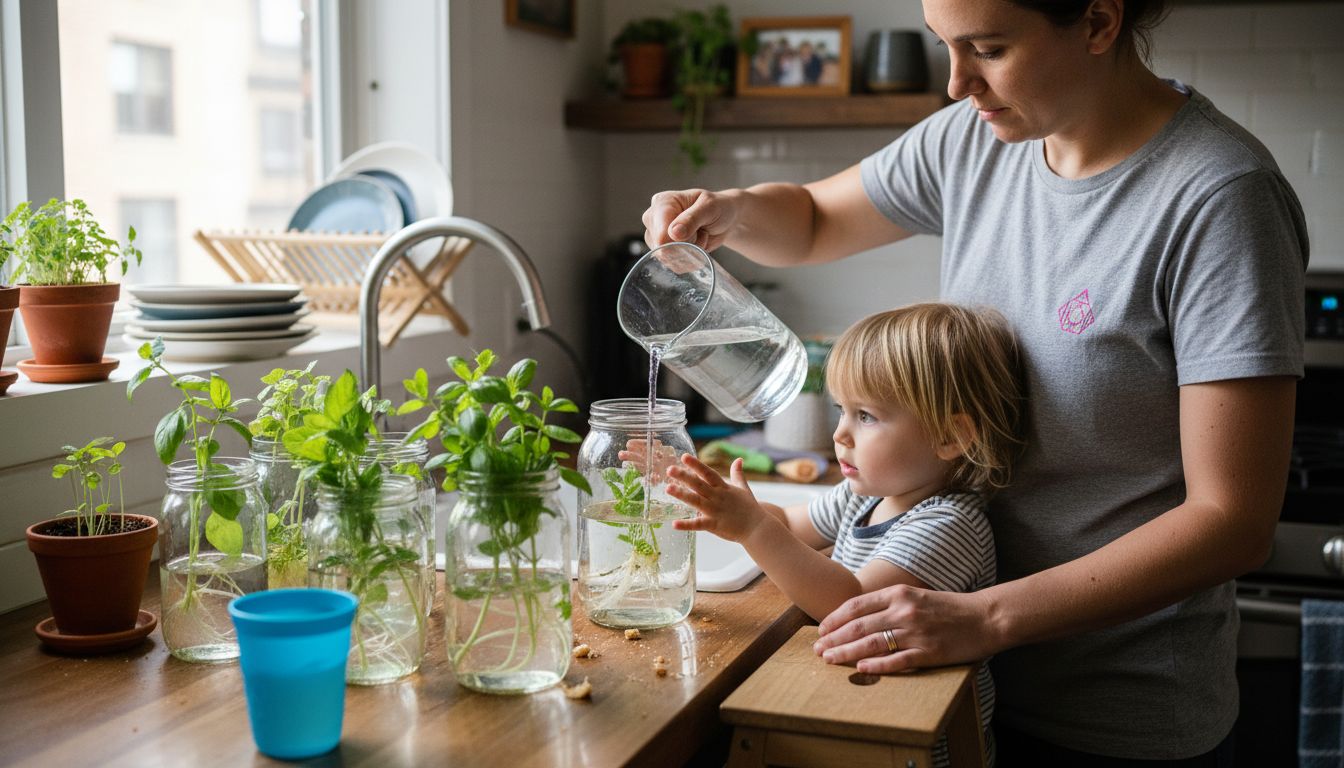
6 Herbs You Can Grow In Water for Busy Families
Over half of American households now grow their own fresh herbs, but many people still believe you need soil and a green thumb to succeed. In reality, water-grown herbs offer an incredibly easy and clean way to enjoy basil, mint, and other favorites right in your kitchen. This guide lays out why so many American families are turning to this space-saving and surprisingly efficient method to enjoy flavorful, homegrown herbs every day.
Table of Contents
- Understanding Herbs That Grow in Water
- Top Six Water-Grown Herbs For Families
- Step-By-Step Process For Indoor Water Cultivation
- Essential Care And Maintenance For Healthy Herbs
- Common Mistakes And How To Avoid Them
Key Takeaways
| Point | Details |
|---|---|
| Space-Efficient Cultivation | Growing herbs in water requires minimal space, making it ideal for small apartments and urban kitchens. |
| Simple Propagation Method | Propagating herbs in water involves taking cuttings and placing them in clean water, requiring no sophisticated gardening skills. |
| Year-Round Availability | This method allows for continuous herb production throughout the year, ensuring fresh ingredients are always available. |
| Care and Maintenance | Consistent care, including regular water changes and optimal light conditions, is essential for healthy herb growth. |
Understanding Herbs That Grow in Water
Looking for a super simple way to grow fresh herbs without getting your hands dirty? Growing herbs in water is a game changing technique perfect for busy families with limited gardening space. This method eliminates the need for traditional soil and allows you to cultivate fresh herbs right on your kitchen counter.
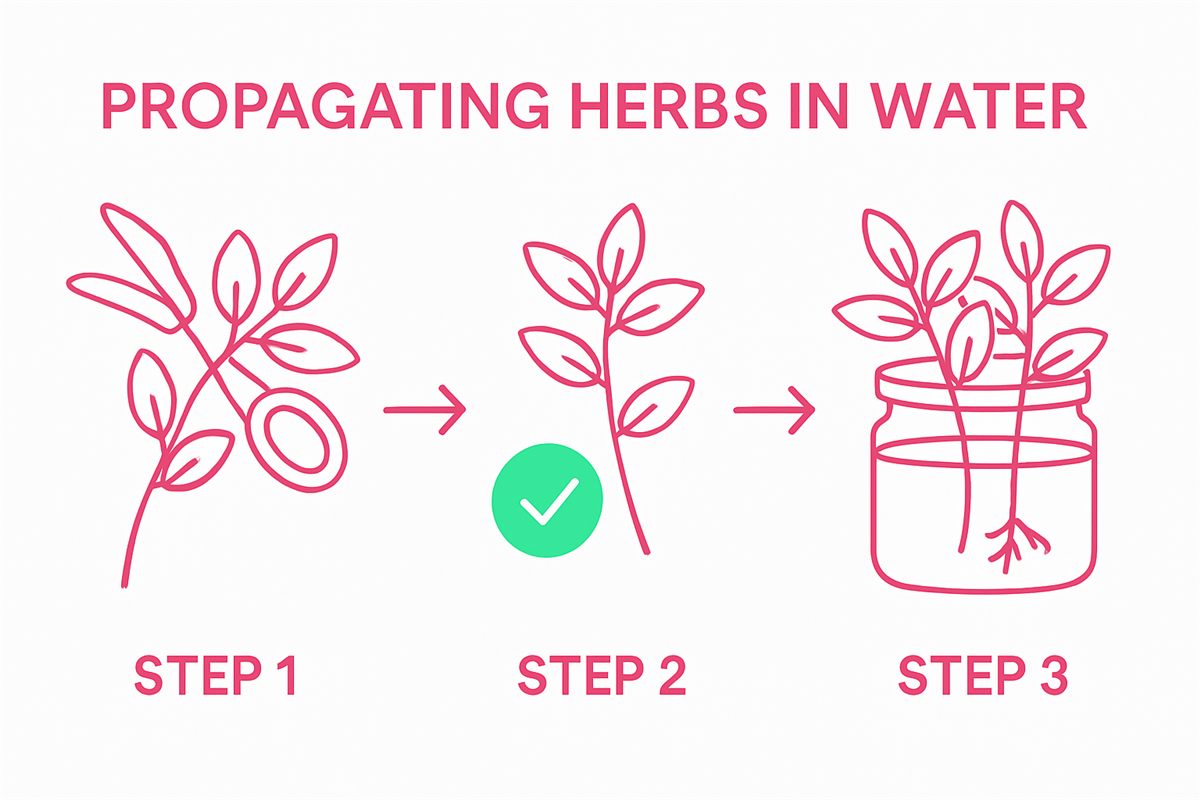
The process of propagating herbs in water is surprisingly straightforward. By taking healthy cuttings from existing herb plants and placing them in water, you can develop robust root systems without complex gardening skills. Most herb varieties like mint, basil, rosemary, and thyme adapt beautifully to water propagation, making it an accessible technique for even novice gardeners.
Water Herb Growing Benefits:
- Requires minimal space
- No messy soil involved
- Year-round herb production
- Cost-effective method
- Perfect for small apartments or urban kitchens
Successful water herb propagation depends on selecting healthy plant cuttings and maintaining clean water conditions. Start by choosing stems without flowers, ideally 4-6 inches long with several leaf nodes. Remove lower leaves that might sit underwater, and place your cutting in a clear glass or jar where roots can develop and grow. Change the water every few days to prevent bacterial growth and keep your new herb babies thriving. With a little patience and care, you’ll have a continuous supply of fresh herbs ready to elevate your home cooking.
Top Six Water-Grown Herbs for Families
Want to transform your kitchen into a mini herb garden? Water-grown herbs offer busy families an effortless way to cultivate fresh, flavorful ingredients without needing a green thumb or extensive gardening space. These versatile plants can thrive in simple glass containers, providing a continuous supply of aromatic herbs right at your fingertips.
According to gardening experts, several herb varieties excel in water cultivation, making them perfect for home cultivation. The top six herbs that grow beautifully in water include:
Top Six Water-Friendly Herbs:
- Basil: A culinary superstar with multiple varieties
- Mint: Refreshing and incredibly easy to propagate
- Oregano: Adds robust flavor to countless dishes
- Sage: Delicate leaves with complex taste profiles
- Lemon Balm: Citrusy herb with calming properties
- Stevia: Natural sweetener with unique growing characteristics
Each of these herbs brings unique flavors and potential health benefits to your family’s kitchen. Imagine snipping fresh mint for summer cocktails, plucking basil leaves for homemade pizza, or adding a sprinkle of oregano to your favorite pasta dish – all from herbs grown right on your windowsill. With minimal effort and zero gardening experience required, water herb cultivation becomes an accessible and rewarding family activity that connects everyone to fresh, homegrown ingredients.
Step-by-Step Process for Indoor Water Cultivation
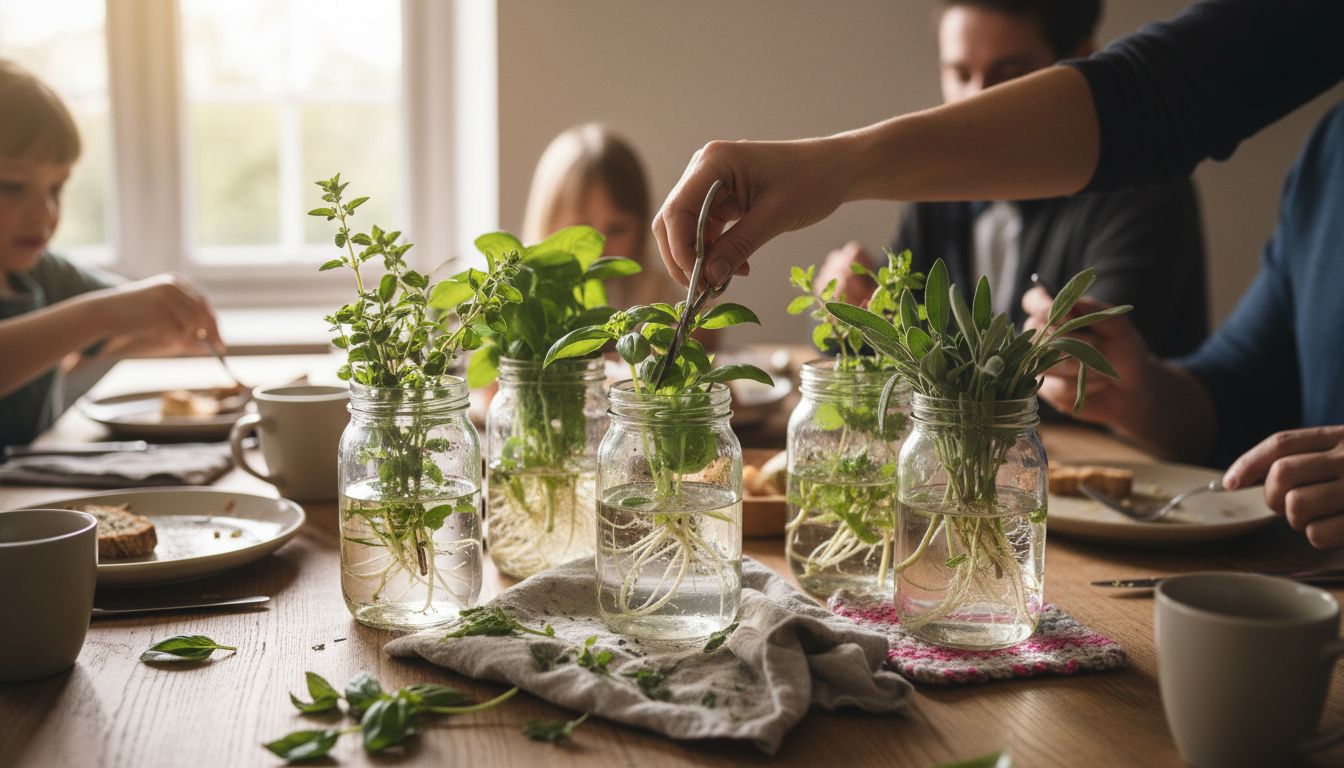
Growing herbs in water isn’t just simple – it’s practically foolproof for busy families looking to add fresh flavors to their kitchen. Herb propagation through water cultivation requires just a few basic supplies and minimal gardening experience. All you need are healthy herb stems, clean water, and a sunny spot in your home to get started.
The actual process of indoor water herb cultivation follows a straightforward method that anyone can master. Here’s a detailed breakdown of how to successfully grow your herbs:
Herb Water Cultivation Steps:
- Select Healthy Cuttings
- Choose stems 4-6 inches long
- Pick branches without flowers
- Ensure leaves look vibrant and undamaged
- Prepare Your Cuttings
- Remove lower leaves that would sit underwater
- Keep 2-3 leaf nodes above water level
- Use clean, sharp scissors for cutting
- Choose Your Container
- Use clear glass jars or containers
- Ensure container allows roots to spread
- Avoid containers with narrow necks
- Water and Sunlight Management
- Use filtered or room temperature water
- Place in bright, indirect sunlight
- Change water every 3-4 days
- Maintain consistent water level
With patience and minimal care, you’ll watch roots develop and transform those simple cuttings into thriving herb plants. This hands-on gardening experience not only provides fresh ingredients but also creates a fun, educational activity for the whole family to enjoy together.
Essential Care and Maintenance for Healthy Herbs
Water herb cultivation demands consistent attention to ensure your indoor garden thrives. Maintaining healthy water-grown herbs requires more than just placing cuttings in a jar – it’s about creating an optimal environment that supports continuous growth and vitality. Think of your herbs like delicate house guests who need just the right conditions to feel comfortable and flourish.
The cornerstone of successful herb maintenance lies in understanding their basic needs. Optimal herb growth conditions revolve around three critical factors: water quality, light exposure, and regular maintenance. Here’s a comprehensive breakdown of what your herbs need to stay healthy:
Herb Care Essentials:
- Water Quality
- Use filtered or distilled water
- Avoid tap water with heavy chlorine content
- Change water every 3-4 days
- Ensure water is room temperature
- Light Management
- Position in bright, indirect sunlight
- Aim for 6-8 hours of gentle light daily
- Rotate containers to ensure even growth
- Avoid direct, harsh afternoon sun
- Root Health Monitoring
- Check root development weekly
- Remove any slimy or brown roots
- Look for white, firm root structures
- Trim roots if they become overcrowded
Your herb garden is a living system that responds to careful, consistent care. By paying attention to these details, you’ll transform simple water and cuttings into a vibrant, productive indoor garden that provides fresh herbs and a sense of accomplishment for your entire family.
Common Mistakes and How to Avoid Them
Growing herbs in water might seem straightforward, but even experienced home gardeners can stumble into common pitfalls. Herb water cultivation mistakes often stem from well-intentioned but misguided practices that can quickly derail your indoor herb garden’s success. Understanding these potential issues is the first step in creating a thriving, productive herb collection.
Preventing common herb propagation errors requires careful attention to several key factors. Here’s a breakdown of the most frequent mistakes and practical strategies to overcome them:
Herb Growing Mistakes to Avoid:
- Water Quality Errors
- Mistake: Using tap water with chlorine
- Solution: Use filtered or distilled water
- Pro Tip: Let tap water sit out for 24 hours to dechlorinate
- Lighting Challenges
- Mistake: Placing herbs in direct, harsh sunlight
- Solution: Choose bright, indirect light
- Pro Tip: Rotate containers weekly for even growth
- Maintenance Neglect
- Mistake: Forgetting to change water regularly
- Solution: Replace water every 3-4 days
- Warning Signs: Murky water, slimy roots
- Cutting Selection Errors
- Mistake: Using damaged or diseased herb stems
- Solution: Select healthy, vibrant cuttings
- Inspection Checklist:
- No brown or yellowing leaves
- Firm, green stems
- No visible pest damage
Remember, every mistake is an opportunity to learn. By staying observant and responsive to your herbs’ needs, you’ll quickly develop the intuition needed to maintain a flourishing indoor herb garden. Don’t get discouraged by initial setbacks – with patience and practice, you’ll become a water herb cultivation pro in no time.
Grow Fresh Herbs and Simplify Your Busy Family Life
Trying to keep up with fresh ingredients while managing packed schedules can feel overwhelming. This article highlights how growing herbs in water offers a space-saving and low-maintenance way for busy families to enjoy homegrown flavors without complicated gardening. If you want to extend that simplicity and bring more order to your daily routines, exploring smart organization hacks and productivity strategies can make all the difference.
Discover practical solutions for decluttering, time management, and creating peaceful, organized spaces designed especially for families like yours. Start transforming your home and life today with expert tips from Its a Southern Life Yall and learn how to create efficient systems that free up time for what matters most.
Frequently Asked Questions
What types of herbs can I grow in water?
You can successfully grow several herbs in water, including basil, mint, oregano, sage, lemon balm, and stevia. These herbs adapt well to water propagation and are perfect for indoor gardening.
How do I propagate herbs in water?
To propagate herbs in water, take healthy cuttings of about 4-6 inches long, remove the lower leaves, and place the cuttings in a container filled with clean water. Change the water every few days and place the container in bright, indirect sunlight.
How often should I change the water for my water-grown herbs?
It’s recommended to change the water every 3-4 days to prevent bacterial growth and ensure that the roots stay healthy and vibrant.
What are the benefits of growing herbs in water?
Growing herbs in water requires minimal space, eliminates messy soil, allows for year-round production, and is a cost-effective and accessible way for busy families to enjoy fresh herbs without extensive gardening experience.
Recommended
- Herbs That Help with Stress (Because You Deserve a Break) – It’s a Southern Life Ya’ll
- Fun Outdoor Hobbies for Families to Learn Together – It’s a Southern Life Ya’ll
- 7 Simple Ways to Refresh Your Home for Busy Families – It’s a Southern Life Ya’ll
- Are Fresh Vegetables Healthier Than Frozen? – It’s a Southern Life Ya’ll
- Amazing soil-less farming – AMAZING GARDEN
Want a little more help with this? Grab my free Kitchen Reset Kit over on the Free Resources page — and when you’re ready to go deeper, the Meal Genie will carry you the rest of the way.