

How to Create Digital Products Your Audience Will Actually Buy
Every parent faces moments when routines unravel and the home feels one step away from pure chaos. For busy families, finding time to organize, manage schedules, and keep everyone on track can seem impossible. The right digital product should do more than just fill a gap—it must address genuine challenges and real daily needs parents experience. Discover how understanding true audience needs leads to digital solutions that help families reclaim time, reduce stress, and achieve meaningful balance.
Table of Contents
- Step 1: Identify Your Audience’s True Needs
- Step 2: Research Trending Problems and Solutions
- Step 3: Design Product Concepts That Solve Real Issues
- Step 4: Develop and Polish Your Digital Product
- Step 5: Test With Real Users and Gather Feedback
- Step 6: Launch Strategically and Monitor Results
Quick Summary
| Key Insight | Explanation |
|---|---|
| 1. Identify Audience Needs | Understand your audience’s pain points, motivations, and goals through in-depth research methods like surveys and focus groups. |
| 2. Research Trends and Solutions | Stay updated on current market challenges and emerging technologies that inform your product development strategy. |
| 3. Design with Empathy | Apply design thinking strategies to create product concepts that address real user problems through innovative and user-centric approaches. |
| 4. Develop Iteratively | Break down product development into manageable sprints, emphasizing continuous feedback and improvement to align with user needs. |
| 5. Test With Real Users | Conduct extensive user testing to gather insights that refine your product based on actual user interactions and behaviors. |
Step 1: Identify Your Audience’s True Needs
Understanding your audience isn’t just about collecting demographics—it’s about diving deep into their genuine motivations and challenges. Digital product success hinges on knowing exactly what your potential customers need, not just what you think they want.
To uncover these insights, start by understanding audience information behaviors. This means going beyond surface-level data and exploring their:
- Current pain points
- Existing knowledge levels
- Emotional triggers
- Specific goals and aspirations
You’ll want to gather this information through multiple research methods. Conduct surveys, host focus groups, analyze online discussions, and review customer feedback. Pay close attention to language patterns and repeated concerns that emerge across different platforms.
Here’s how key audience research methods compare in value:
| Method | Insight Depth | Time Required |
|---|---|---|
| Surveys | Moderate | Low |
| Focus Groups | High | Moderate |
| Online Discussion Analysis | High | Moderate |
| Customer Feedback Review | Moderate | Low |
The most successful digital products solve real problems, not imagined ones.
The goal is to create a comprehensive audience profile that reveals not just who they are, but what truly matters to them. Analyzing audience expectations helps you craft solutions that feel personalized and genuinely valuable.

Pro tip: Create a customer empathy map to visualize your audience’s thoughts, feelings, and needs more comprehensively.
Step 2: Research Trending Problems and Solutions
To create digital products that truly resonate, you need to go beyond guesswork and dive into the current landscape of emerging challenges and innovative solutions. This step is about understanding the pulse of market needs and technological trends that can inform your product development strategy.
Exploring top tech trends reveals critical areas where digital products can make a significant impact. These include:
- Cloud computing complexity
- AI trust mechanisms
- Immersive digital experiences
- Digital infrastructure gaps
- Technology skill development
Your research should involve multiple channels. Conduct deep-dive investigations through industry reports, expert interviews, online forums, and customer feedback platforms. Pay special attention to:
- Recurring user pain points
- Technological limitations
- Emerging market demands
- Potential solution frameworks
The most valuable digital products solve real-world problems before customers even realize they need a solution.
Digital progress trends indicate that successful products are those that anticipate and address complex user challenges with innovative, user-centric approaches.
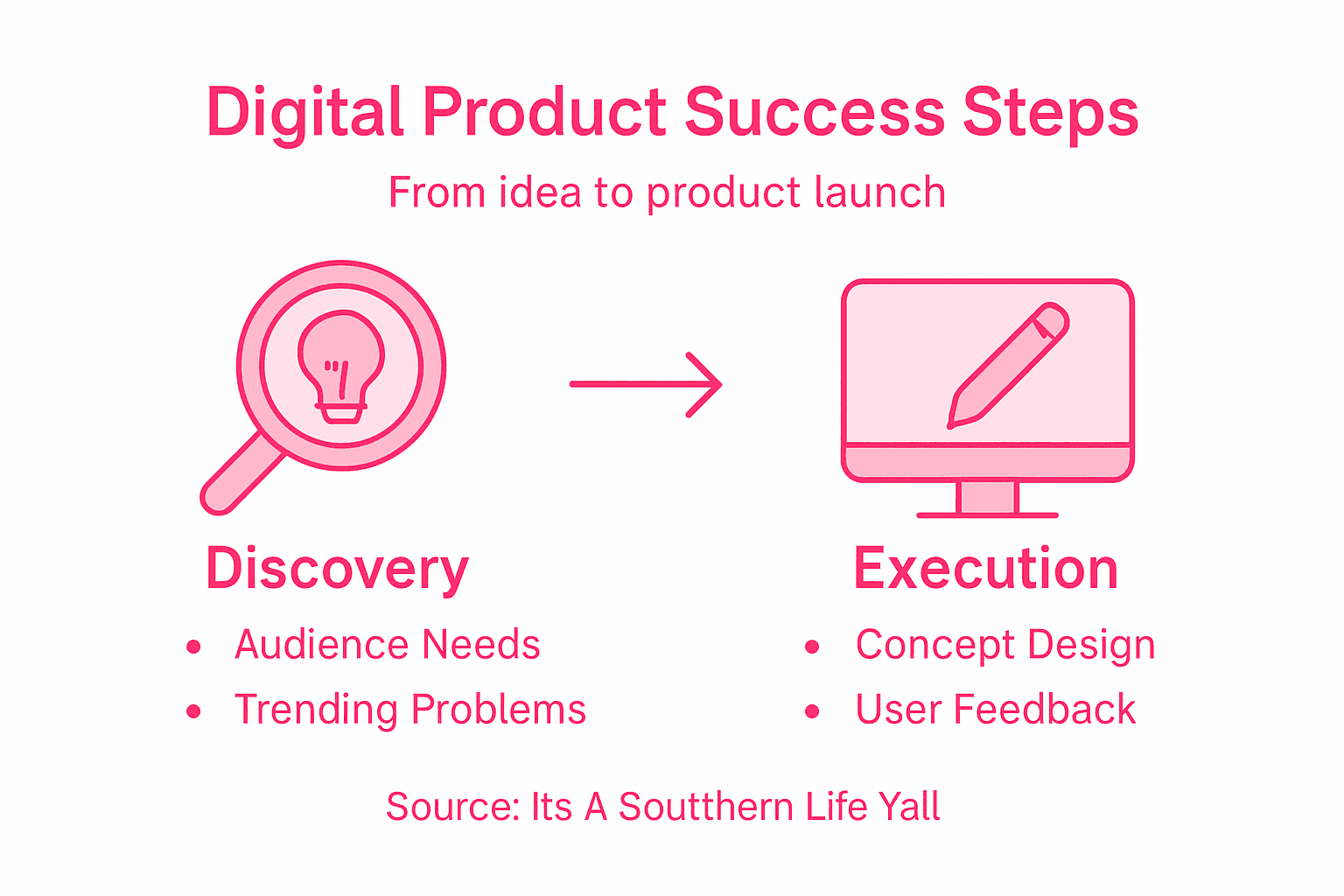
Pro tip: Create a trend tracking spreadsheet where you consistently log emerging problems, potential solutions, and market opportunities to stay ahead of the curve.
Step 3: Design Product Concepts That Solve Real Issues
Transforming your research insights into actionable digital product concepts requires a strategic and empathetic approach. Creative problem-solving isn’t just about generating ideas—it’s about crafting solutions that genuinely address user needs and pain points.
Design thinking strategies offer a powerful framework for developing innovative product concepts. These strategies involve:
- Deep user empathy
- Collaborative ideation
- Rapid prototyping
- Iterative refinement
- Continuous user feedback
Break down complex problems into manageable components. Start by mapping out user journeys, identifying specific pain points, and brainstorming potential solutions. Your goal is to create a product concept that feels intuitive and addresses real challenges.
Great design doesn’t just solve problems—it anticipates needs before users articulate them.
Systematic innovation approaches emphasize the importance of immersing yourself in user contexts. This means going beyond surface-level observations and truly understanding the emotional and practical dimensions of user experiences.
Pro tip: Create multiple concept prototypes and conduct rapid user testing to validate which solutions resonate most effectively with your target audience.
Step 4: Develop and Polish Your Digital Product
Turning your product concept into a polished digital solution requires strategic development and continuous refinement. Product development is an iterative journey where your initial idea evolves through careful testing, feedback, and improvement.
Product development frameworks suggest a structured approach that combines multiple methodologies. Key stages include:
- Minimum viable product (MVP) creation
- Rapid prototyping
- User experience testing
- Performance optimization
- Continuous iteration
Break down development into manageable sprints. Each sprint should focus on specific feature improvements, user experience enhancements, and technical refinements. Pay close attention to how each iteration brings you closer to solving your users’ core problems.
Perfection is not about getting everything right immediately, but about consistently improving.
Digital product creation research emphasizes the critical role of organizational adaptability and skilled talent in transforming concepts into successful digital products. This means being open to pivoting, learning from user feedback, and maintaining flexibility throughout the development process.
Pro tip: Implement a structured feedback loop where you collect user insights after each development sprint, allowing you to make data-driven refinements quickly and effectively.
Step 5: Test With Real Users and Gather Feedback
Nothing validates your digital product’s potential more effectively than putting it directly in front of real users. User testing transforms theoretical concepts into tangible insights, revealing the true value and potential improvements of your digital solution.
Iterative testing approaches demonstrate that frequent, low-stakes testing can dramatically enhance product development. Key testing strategies include:
- Recruiting diverse user groups
- Creating realistic testing scenarios
- Observing unfiltered user interactions
- Capturing detailed user feedback
- Analyzing behavioral patterns
Design comprehensive testing protocols that go beyond surface-level observations. Your goal is to understand not just what users do, but why they make specific choices during their product interaction.
The most valuable insights come from watching users struggle, not from watching them succeed.
User research methodologies emphasize the importance of creating multiple feedback channels. This means combining quantitative metrics with qualitative observations to gain a holistic understanding of user experiences.
Pro tip: Record user testing sessions with participants’ consent, allowing you to review subtle interactions and emotional responses that might be missed during live observation.
Step 6: Launch Strategically and Monitor Results
Successful digital product launches are more than just pushing a button—they require careful planning, strategic timing, and continuous performance tracking. Strategic launching transforms your hard work into a market-ready solution that can genuinely impact your target audience.
Strategic project launch techniques suggest developing a comprehensive launch strategy that includes:
- Precise timing selection
- Clear communication channels
- Resource allocation planning
- Stakeholder engagement
- Performance tracking mechanisms
Create a robust monitoring dashboard that tracks key performance indicators (KPIs) in real-time. Your metrics should capture user engagement, conversion rates, technical performance, and overall user satisfaction.
Below is a summary of key steps for a strategic digital product launch:
| Phase | Main Goal | Performance Focus |
|---|---|---|
| Timing Selection | Maximize impact | Market readiness |
| Communication | Drive awareness | Channel clarity |
| Resource Planning | Ensure support | Team allocation |
| Monitoring | Optimize results | Real-time adjustments |
A successful launch is not an endpoint, but the beginning of continuous improvement.
Technology launch strategies emphasize the importance of adaptive monitoring. This means being prepared to pivot quickly, address unexpected challenges, and refine your product based on immediate market feedback.
Pro tip: Set up automated alerts for critical performance metrics to ensure you can respond to any significant changes or potential issues within minutes of their occurrence.
Create Digital Products That Truly Connect by Organizing Your Life First
The article highlights the challenge of designing digital products that solve real problems your audience actually faces. Key pain points include understanding true user needs, researching trends, and testing solutions to craft products people want to buy. This requires focus, clear thinking, and reducing distractions so you can deeply empathize with your audience and stay ahead of market demands.
At Its A Southern Life Yall, we understand that transforming your home and life through proven organization hacks and productivity tips can free up mental space and time. This clarity lets you develop your ideas and create digital products that resonate on a deeper emotional level with your audience. Explore simple living strategies and time management tools that empower busy families to find work-life balance. By taking control of your environment and schedule, you set the perfect foundation to design products your audience will actually buy.
Ready to bring your digital product ideas to life with confidence and focus Visit Its A Southern Life Yall and discover how decluttering solutions and home management systems can unlock your creative potential today. Take the first step to build the organized lifestyle needed for your next digital product breakthrough.
Frequently Asked Questions
How can I identify my audience’s true needs when creating digital products?
Understanding your audience’s true needs requires in-depth research beyond demographics. Conduct surveys, host focus groups, and review customer feedback to gather insights about their pain points, goals, and emotions. Aim to create a comprehensive audience profile that reflects what truly matters to them.
What are effective methods for researching trending problems related to digital products?
To research trending problems, explore industry reports, expert interviews, and online discussions. Keep an eye on recurring user pain points and emerging market demands to ensure your product addresses real challenges. Create a trend tracking spreadsheet to log these insights consistently.
How can I design product concepts that genuinely solve user issues?
To design effective product concepts, employ design thinking strategies that focus on deep user empathy and collaborative ideation. Break down complex problems into manageable parts, map out user journeys, and brainstorm solutions that intuitively address user challenges. Develop multiple prototypes and test them with real users to refine your ideas further.
What steps should I take when developing and polishing a digital product?
In product development, break the process into manageable stages, starting with creating a Minimum Viable Product (MVP). Incorporate user experience testing and continuous iteration to refine your product based on real user feedback. Set specific feature goals for each development sprint to maintain focus and ensure progress towards solving core user problems.
How do I conduct user testing for my digital product effectively?
Conduct user testing by recruiting diverse user groups and creating realistic scenarios for them to engage with your product. Observe their interactions and gather detailed feedback to understand their thought processes and struggles. Implement a structured feedback loop to capture insights and identify areas for improvement.
What are the key elements of a successful digital product launch?
A successful digital product launch involves careful planning, clear communication, and real-time performance monitoring. Define precise timing for the launch, allocate resources effectively, and develop a detailed monitoring dashboard to track key performance metrics. Set up automated alerts for critical metrics to enable quick adjustments as needed.
Recommended
- How to Safely Buy Cryptocurrency Online –
- 10 Ways to Make Money Online (That Aren’t Total Scams) – It’s a Southern Life Ya’ll
- 20 Side Hustles to Do in 2025 for Extra Income – It’s a Southern Life Ya’ll
- How to Sell Feet Pics and Make Money in 2023: A Comprehensive Guide – It’s a Southern Life Ya’ll
- Understanding What Is Digital Strategy For Businesses – Stratgetic IT Consultants For Accountants
- 10 Actionable QR Code Marketing Ideas to Grow Your Small | BonusQR
- Why Does AI Content Automation Fail and How Can I Fix It?
Want a little more help with this? The Digital Product Launcher takes you from the idea to a listing that is actually finished and live.