

What Is Family Meal Planning and Why It Matters
Over 68 percent of American parents say getting dinner on the table feels harder than ever during busy weeks. With work, school demands, and countless activities on the calendar, meal decisions can spark daily stress. Family meal planning offers a simple, powerful way to reclaim control, balance nutrition, and create meaningful moments. This guide highlights practical tips and surprising benefits that transform chaotic evenings into opportunities for connection and wellness.
Table of Contents
- Defining Family Meal Planning For Busy Families
- Types Of Meal Planning Methods And Tools
- Key Benefits For Family Health And Budget
- How To Structure A Weekly Meal Plan
- Common Mistakes And How To Avoid Them
Key Takeaways
| Point | Details |
|---|---|
| Family Meal Planning | It’s a strategic approach that promotes nutrition, time management, and family bonding. Aim for shared meals to foster communication and connection among family members. |
| Meal Planning Methods | Different approaches exist, from weekly menus to digital tools. Select a method that fits your family’s lifestyle for optimal efficiency. |
| Health and Budget Benefits | Regular meal planning leads to better nutrition and can reduce food expenses. This practice supports overall family wellness by addressing both health and financial aspects. |
| Common Mistakes | Avoid overwhelming meal plans by considering family preferences and time constraints. Encourage collaboration to ensure all voices are heard in the planning process. |
Defining Family Meal Planning for Busy Families
Family meal planning is more than just deciding what to eat each week. It’s a strategic approach to managing nutrition, time, and family connections in our increasingly hectic world. At its core, meal planning represents a proactive method of organizing meals to support your family’s health and schedule.
According to researchers at North Dakota State University, family meal planning involves organizing meals in advance to ensure balanced nutrition and accommodate hectic schedules. This approach isn’t just about preparing food – it’s about creating intentional spaces for family connection. When families plan meals together, they create opportunities for communication, cooperation, and shared experiences.
The process typically involves several key strategies:
- Selecting recipes in advance
- Creating a weekly meal schedule
- Grocery shopping with a specific list
- Preparing ingredients ahead of time
- Involving family members in meal preparation
Research from Rutgers University highlights that consistent family meal planning can lead to significant benefits. Shared meals contribute to improved nutrition, better academic performance in children, and stronger family bonds. By dedicating time to planning, families can transform mealtime from a daily chore into a meaningful ritual that supports overall family wellness.
Pro Tip: Meal Prep Efficiency: Start by dedicating just 30 minutes each week to planning meals. Use a shared family calendar or digital tool to coordinate schedules and involve everyone in the meal selection process.
Types of Meal Planning Methods and Tools
Meal planning isn’t a one-size-fits-all approach. Families can choose from multiple methods that suit their unique lifestyle, schedule, and nutritional needs. Meal planning methods range from creating weekly menus to utilizing advanced digital tools that streamline meal preparation.
Traditional meal planning methods typically include:
- Weekly menu planning
- Batch cooking
- Theme nights (Taco Tuesday, Pasta Wednesday)
- Ingredient-based planning
- Seasonal meal rotation
Modern families have access to numerous digital and analog tools to simplify their meal planning process. Meal planning templates and grocery list apps can significantly aid in organizing and simplifying the meal preparation workflow. These tools help families track ingredients, manage dietary restrictions, and ensure balanced nutrition with minimal stress.
Technology has revolutionized meal planning, offering smartphone apps, online recipe databases, and collaborative planning platforms. Some advanced tools even integrate grocery delivery services, making the entire process from planning to table more streamlined and efficient.
Here’s how common meal planning methods compare across practicality and ideal use:
| Method | Ideal For | Prep Time Required | Flexibility Level |
|---|---|---|---|
| Weekly Menu | Structured families | 30-60 minutes/week | Moderate |
| Batch Cooking | Large families, busy weeks | 2-3 hours/week | Low (fixed meals) |
| Theme Nights | Kids and routine seekers | 15-30 minutes/week | High (customizable meals) |
| Ingredient Planning | Shopping efficiency seekers | 20-40 minutes/week | High (swap ingredients) |
| Seasonal Rotation | Variety lovers | 30-60 minutes/season | Moderate (seasonal) |
Pro Tip: Digital Integration Strategy: Select one digital meal planning tool that syncs across family devices, allowing all members to contribute, view, and modify the weekly meal plan in real time.
Key Benefits for Family Health and Budget
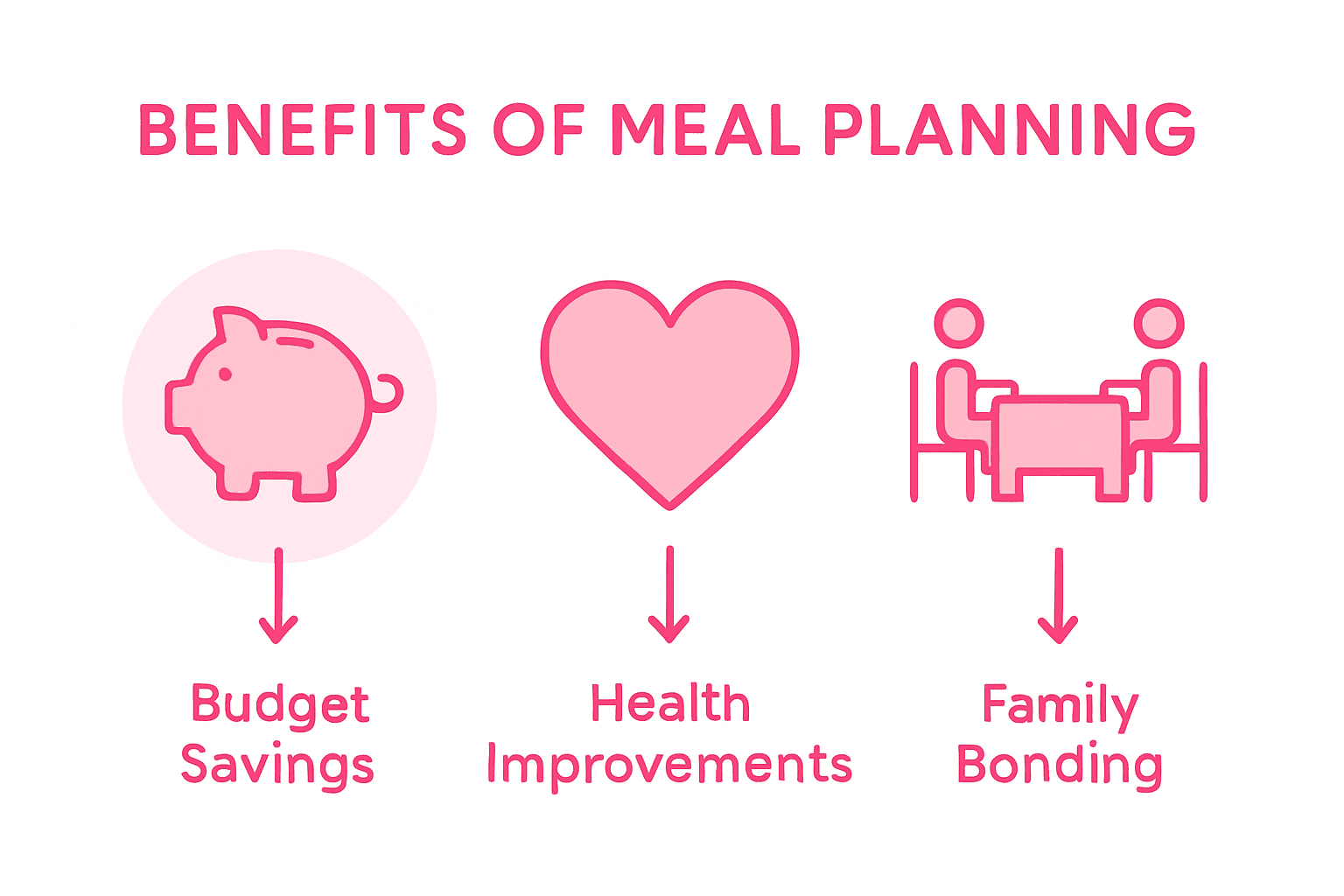
Regular family meals contribute to significant improvements in both physical health and financial wellness, offering families a powerful strategy for holistic well-being. By intentionally planning meals, families can simultaneously address nutritional needs and economic challenges.
Health benefits of consistent family meal planning include:
- Reduced risk of childhood obesity
- Improved academic performance
- Enhanced family communication
- Better overall nutrition
- Increased emotional connection
Meal planning supports families in making cost-effective food choices while minimizing unnecessary spending on convenience foods. By purchasing ingredients strategically, preparing meals in advance, and avoiding impulse restaurant purchases, families can significantly reduce their monthly food expenses. This approach transforms meal preparation from a potential financial burden into a smart budgeting strategy.

Beyond economic advantages, regular family meals create opportunities for emotional bonding, shared experiences, and teaching children valuable nutrition and cooking skills. Parents can use meal planning as a tool for modeling healthy eating habits, introducing diverse foods, and creating meaningful family traditions that extend far beyond the dinner table.
The table below summarizes key ways meal planning impacts family wellness and budgets:
| Benefit Category | Short-Term Impact | Long-Term Result |
|---|---|---|
| Nutrition | More balanced daily meals | Healthier lifelong eating habits |
| Family Bonding | Increased shared mealtimes | Stronger relationships, traditions |
| Budget | Lower grocery bills weekly | Significant annual savings |
| Time Management | Reduced daily meal stress | Better weekly time allocation |
| Skill Building | Practice new recipes, teamwork | Kids learn cooking and budgeting |
Pro Tip: Budget Tracking Strategy: Create a dedicated meal planning spreadsheet that tracks weekly grocery expenses, helping you identify potential savings and optimize your family’s food budget.
How to Structure a Weekly Meal Plan
Structuring an effective weekly meal plan requires strategic thinking and careful consideration of your family’s unique schedule and nutritional needs. The process involves more than simply selecting random recipes – it’s about creating a comprehensive approach that balances nutrition, time management, and family preferences.
Key steps in developing a successful weekly meal plan include:
- Review the family calendar for upcoming activities
- Identify available cooking and meal times
- Select recipes that match your time constraints
- Create a detailed grocery shopping list
- Plan for flexibility and potential schedule changes
Successful meal planning demands a thoughtful approach that considers time availability, nutritional balance, and family member preferences. Start by blocking out nights with limited cooking time and designate those for quick, simple meals or prepare-ahead options. Consider theme nights like Taco Tuesday or Stir-Fry Friday to add structure and excitement to your meal planning routine.
Technology can be a powerful ally in meal planning. Utilize digital tools like shared family calendars, meal planning apps, and collaborative spreadsheets to coordinate schedules, track recipes, and ensure everyone’s dietary needs are met. By involving family members in the planning process, you transform meal preparation from a chore into a collaborative and engaging family activity.
Pro Tip: Meal Prep Synchronization: Dedicate one hour each weekend to collaborative meal planning, allowing every family member to contribute recipe ideas and review the upcoming week’s schedule.
Common Mistakes and How to Avoid Them
Meal planning can quickly become overwhelming when families fall into predictable traps that sabotage their best intentions. Understanding these common pitfalls is the first step toward creating a sustainable and effective meal planning strategy that works for your entire family.
Common meal planning mistakes include:
- Ignoring family members’ food preferences
- Overcomplicating recipe selections
- Failing to account for busy schedule variations
- Not preparing backup meal options
- Purchasing unnecessary ingredients
Successful meal planning requires carefully selecting recipes that align with your family’s cooking abilities and available time. Many families make the critical error of choosing complex recipes that require extensive preparation during weeknights when time is most limited. Instead, focus on versatile, adaptable recipes that can be partially prepared in advance or quickly assembled after a long day.
Technology and communication are key to avoiding meal planning pitfalls. Create a shared digital platform where family members can contribute recipe ideas, note dietary restrictions, and provide feedback. This collaborative approach transforms meal planning from a potential source of stress into an engaging family activity that ensures everyone feels heard and valued.
Pro Tip: Mistake Prevention Strategy: Conduct a monthly family meal planning review where everyone discusses what worked, what didn’t, and brainstorms improvements for the upcoming weeks.
Simplify Your Family Meal Planning Journey Today
Family meal planning can feel overwhelming when juggling busy schedules and picky eaters. This article highlights the challenge of organizing nutritious meals while maintaining family connections and managing time effectively. If you find yourself struggling with meal prep, balancing budgets, or creating a weekly plan that fits your lifestyle, you are not alone. Concepts like “weekly menu planning,” “batch cooking,” and “digital meal planning tools” can sound great but need practical systems to make them work smoothly.
At Its a Southern Life Y’all, we specialize in turning these challenges into simple, achievable steps with proven organization hacks and time management strategies that work for busy families. Our solutions help you create an easy meal planning routine that saves you time and money with:
- Step-by-step home management systems tailored for families
- Budget-friendly food shopping and meal prep tips
- Tools to declutter your schedule and maximize family mealtime
Start transforming your meal planning from stressful to successful now. Visit Its a Southern Life Y’all to explore practical strategies designed to bring balance, peace, and efficiency into your busy family life. Don’t wait to create the calm, organized household you deserve when mealtime can be the heart of your family connection.
Frequently Asked Questions
What is family meal planning?
Family meal planning is a strategic approach where families organize meals in advance to ensure balanced nutrition and accommodate busy schedules, fostering family connection and communication.
Why is meal planning important for families?
Meal planning benefits families by improving nutrition, enhancing academic performance in children, fostering emotional bonds, and reducing food expenses, turning mealtime into a meaningful ritual.
What are some effective meal planning methods?
Effective meal planning methods include weekly menus, batch cooking, theme nights, ingredient-based planning, and seasonal rotation, allowing families to choose what suits their lifestyle best.
How can families avoid common meal planning mistakes?
Families can avoid meal planning mistakes by accounting for everyone’s food preferences, simplifying recipe selections, preparing backup meals, and regularly reviewing their meal planning process to identify improvements.
Recommended
- Meal Planning for Families: Your Guide – It’s a Southern Life Ya’ll
- Understanding What is “Pre-Planned Meals” for Families – It’s a Southern Life Ya’ll
- Understanding the Advantages of Meal Planning – It’s a Southern Life Ya’ll
- Guide to the Role of Proactive Planning – It’s a Southern Life Ya’ll
- Understanding Managing Parent-Provided Food in Care Settings – Probe IT
Want a little more help with this? Meal Genie does the planning part for you, turning what is already in your kitchen into a week of suppers and a grocery list to match.