

Boost Productivity with Work-from-Home routines in 2026
Working from home with children can feel like an impossible juggling act. Between back-to-back meetings and snack requests, finding focus seems nearly impossible. Yet thousands of families have discovered that structured daily schedules reduce chaos and create breathing room for both work and family time. This article shares practical, evidence-backed routines that help you reclaim productivity without sacrificing precious moments with your kids. You’ll learn how to design schedules, spaces, and habits that actually work for real families navigating the work-from-home reality.
The short answer: Working from home with children works when the day is built in blocks instead of one long stretch — focused work during naps or school hours, lighter tasks when the kids are around, and a clear signal that marks the end of the workday. A dedicated workspace, even a small corner, does more for focus than any app.
Table of Contents
- How To Choose Effective Work-From-Home Routines For Families
- Examples Of Work-From-Home Routines That Enhance Productivity With Children
- Designing Your Home Workspace And Play Area To Support Work-From-Home Routines
- Sustaining Balance: Managing Interruptions, Childcare, And Avoiding Burnout
- Discover More Family-Friendly Productivity Tools And Tips
Key takeaways
| Point | Details |
|---|---|
| Structured schedules reduce chaos | Clear time blocks for work, meals, and play create predictability and lower stress for everyone. |
| Align work with children’s rhythms | Schedule deep work during naps or early mornings when kids are naturally quieter. |
| Separate spaces set boundaries | Distinct work and play zones help children understand when you’re in work mode. |
| Self-directed activities build independence | Screen-free, engaging tasks keep kids occupied while you focus on priorities. |
| External support prevents burnout | Part-time childcare or coworking spaces sustain long-term balance and well-being. |
How to choose effective work-from-home routines for families
Selecting the right work-from-home routine starts with understanding your family’s unique rhythm and needs. Every household operates differently, so what works for your neighbor might not fit your situation. The goal is to create a framework that brings clarity without feeling rigid or impossible to maintain.
Start by mapping out your work commitments alongside your children’s natural patterns. When do your kids need the most attention? When are they naturally calmer or more independent? Aligning work blocks with children’s rhythms like nap times or early mornings creates pockets of uninterrupted focus. This strategic timing makes a massive difference in what you can accomplish.
Consider these essential factors when building your routine:
- Identify your peak productivity hours and match them with your children’s quietest times
- Determine which tasks require deep concentration versus which can tolerate interruptions
- Assess your home layout and available spaces for creating work zones
- Evaluate your childcare resources, including partner schedules or family support
- Build in buffer time for the inevitable surprises and interruptions
Physical and psychological boundaries matter just as much as time management. Even in small homes, visual cues like closing a door or setting up a specific corner signal to children that you’re in work mode. Your work at home schedule should account for both focused work blocks and intentional family connection time.
Flexibility is your secret weapon. Rigid schedules often crumble under the weight of sick days, school closures, or developmental changes. Instead, create a flexible structure that adapts to shifting needs while maintaining core routines. When you notice patterns of stress or constant interruptions, that’s your signal to adjust rather than push through.
Pro Tip: Start with just one or two time blocks each day and gradually build your routine. Trying to overhaul everything at once usually leads to frustration and abandonment of the whole system.
Recognize when you need external support. Many parents discover that attempting full-time work and full-time childcare simultaneously isn’t sustainable long term. There’s no shame in seeking part-time care, coordinating with a partner, or using occasional coworking spaces to maintain your sanity and productivity.
Examples of work-from-home routines that enhance productivity with children
Real families have cracked the code on balancing work demands with childcare through strategic scheduling. These proven routines provide concrete starting points you can adapt to your household’s needs.
The early bird approach capitalizes on quiet morning hours before children wake. Parents who are natural morning people often find their most productive work happens between 5:00 and 7:00 AM. This sample toddler schedule demonstrates how focused morning work creates momentum for the entire day. You tackle complex projects while your mind is fresh and the house is silent.
Here’s a structured daily routine that many families follow successfully:
- 5:30 AM to 7:00 AM: Deep work session on priority tasks while kids sleep
- 7:00 AM to 8:00 AM: Family breakfast and morning routine with children
- 8:00 AM to 10:00 AM: Focused work block with partner or caregiver managing kids
- 10:00 AM to 12:30 PM: Lighter work tasks while children do self-directed activities
- 12:30 PM to 2:30 PM: Nap time used for uninterrupted work or meetings
- 2:30 PM to 5:00 PM: Flexible work mixed with family time and breaks
- 5:00 PM onward: Family dinner and evening routine, work wraps up
The nap time power hour transforms quiet afternoon periods into productivity gold. For families with younger children who still nap, this 90-minute to two-hour window becomes sacred work time. Protect it fiercely for your most demanding tasks or important meetings.
Visual timers revolutionize how children understand your work schedule. A simple timer shows kids exactly when you’ll be available again, reducing constant questions about when you’ll be done. Pair timers with a rotation of self-directed activities that don’t require your involvement.
Consider these activity options for keeping kids engaged during work blocks:
- Sensory bins with rice, beans, or water beads for tactile exploration
- Building sets like blocks or magnetic tiles that encourage independent play
- Art stations with coloring books, stamps, or playdough
- Audio books or podcasts designed for children
- Outdoor play in a fenced yard where you can supervise from a window
The key is rotating activities to maintain novelty and interest. What captivates your child for 30 minutes today might bore them tomorrow. Keep a variety of options ready and switch them out regularly. This approach connects directly to productivity hacks for families that create sustainable work environments.
Setting clear expectations through routine creates security for children. When kids know what to expect, they resist less and cooperate more. Your consistent schedule teaches them when they can have your full attention and when they need to play independently.
Designing your home workspace and play area to support work-from-home routines
Your physical environment shapes productivity just as much as your schedule does. Separate work and play spaces create psychological boundaries that help both you and your children shift between modes. Even small changes to your home layout can dramatically improve focus and reduce conflicts.
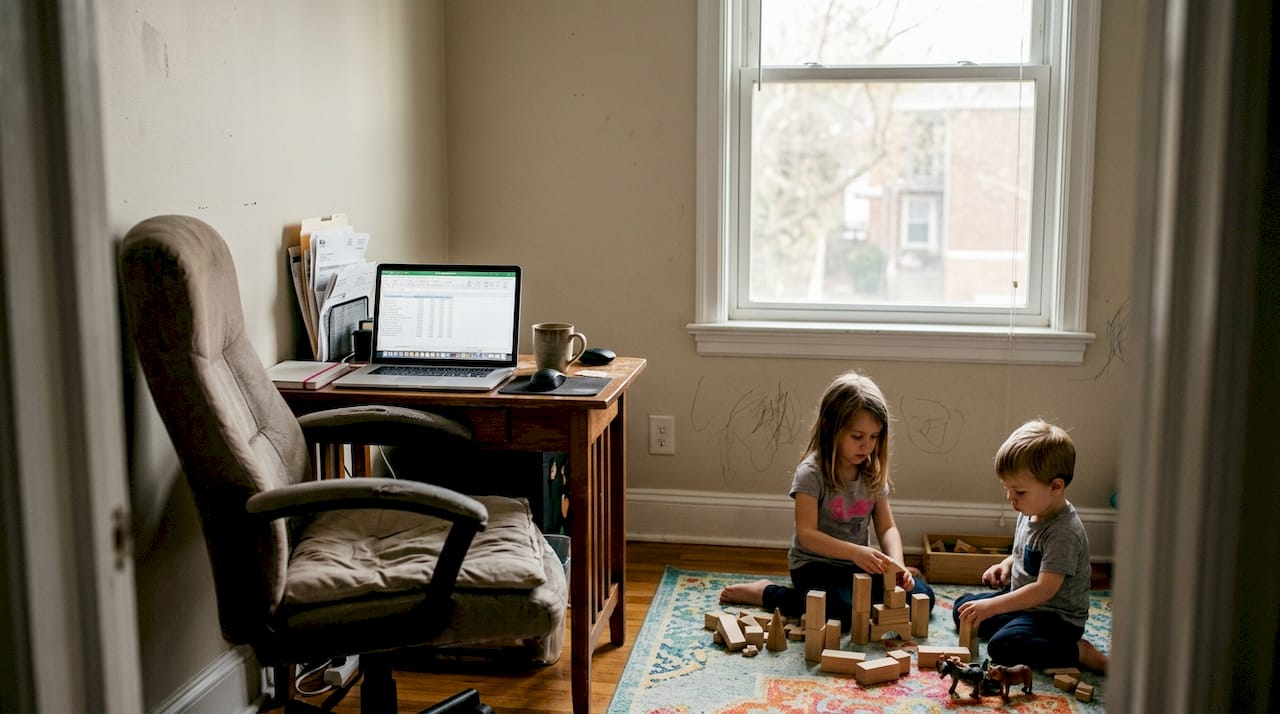
Creating distinct zones doesn’t require a large home or expensive renovations. Visual and spatial cues signal different purposes for different areas. A dedicated desk in a corner, a room divider, or even a specific chair can mark your workspace. Children quickly learn that when you’re in that spot, you’re working.
For small homes, get creative with portable solutions. A folding screen creates instant separation. Noise-canceling headphones block distractions while signaling to kids that you’re concentrating. Some parents rotate between indoor workspaces and outdoor patios depending on weather and tasks. Others use local coworking spaces or coffee shops for particularly demanding work days.
Here’s how different workspace setups compare:
| Workspace Type | Best For | Challenges | Flexibility |
|---|---|---|---|
| Dedicated home office | Deep focus work, video calls | Requires extra room, can feel isolated | Low, fixed location |
| Kitchen table setup | Staying near young kids, flexibility | Noise, interruptions, cleanup needed | High, easy to relocate |
| Bedroom corner desk | Privacy in small homes, quiet | Blurs work-life boundaries | Medium, semi-permanent |
| Coworking space | Escape interruptions, professional environment | Cost, commute time, childcare needed | High, use as needed |
The play area deserves equal attention to your workspace. Position it where you can supervise without constant interaction. An open play space visible from your desk lets you keep an eye on safety while maintaining work focus. Stock it with age-appropriate, engaging materials that don’t require adult direction.
Think about noise management in your space design. Soft furnishings absorb sound. Rugs, curtains, and cushions dampen the acoustic chaos that comes with children. If possible, position your workspace away from high-traffic areas like the kitchen or main hallway.
Pro Tip: Create a “work-in-progress” station where kids can see what you’re doing without touching. A whiteboard showing your daily schedule or a visible timer counting down to break time helps them understand your availability.
Environmental cues benefit everyone’s behavior and focus. When you sit at your desk, your brain knows it’s work time. When kids enter their play zone, they understand it’s independent activity time. These spatial boundaries reduce the mental load of constantly negotiating and explaining. Check out more productive workspace tips to optimize your setup.
Lighting and comfort matter too. Natural light boosts mood and energy. An uncomfortable chair leads to fidgeting and reduced focus. Invest in the basics that support sustained concentration. Your workspace should feel inviting rather than punishing, making it easier to settle in for focused work sessions.
Sustaining balance: managing interruptions, childcare, and avoiding burnout
Even the best routines face real-world challenges that test your limits. Interruptions happen. Children get sick. Deadlines collide with family needs. Learning to manage these inevitable conflicts separates sustainable work-from-home arrangements from those that lead to exhaustion and resentment.
Recognize when your current setup isn’t working. External childcare support becomes vital when you’re constantly stressed, missing deadlines, or feeling like you’re failing at both work and parenting. Full-time work combined with full-time solo childcare pushes most people beyond their capacity. There’s no award for suffering through an unsustainable situation.
Batching similar tasks improves efficiency when interruptions are frequent. Group all your phone calls together, batch email responses, or consolidate meetings into specific days. This approach minimizes the cognitive cost of constant context switching between work and childcare.
Communicate clearly with your employer about flexibility needs. Many companies now understand that work-from-home parents need accommodations. Discuss core hours when you’re fully available versus flex time when you might respond more slowly. Setting these expectations upfront prevents misunderstandings and reduces pressure.
Consider these strategies for managing common work-from-home challenges:
- Schedule your most critical work during your most reliable childcare coverage
- Build in 15-minute buffer zones between commitments to handle unexpected kid needs
- Keep a running list of five-minute tasks for moments when you have brief windows
- Use your partner’s schedule strategically, trading off high-focus work blocks
- Accept that some days will be survival mode, and that’s completely okay
Research reveals interesting dynamics about WFH impact on work-life balance, showing that while remote work often improves balance, it can also increase family-to-work conflict, particularly for fathers. Understanding these patterns helps you anticipate and address tensions before they escalate.
“Working from home offers flexibility, but without boundaries and support, it can blur into an exhausting cycle where you never fully engage with work or family.”
Part-time childcare options provide crucial breathing room. Even a few hours of dedicated work time each week can dramatically reduce stress. Consider a nanny share with another family, drop-in daycare, or trading childcare with trusted friends. The investment often pays for itself through improved productivity and mental health.
Pro Tip: Schedule one completely work-free day each week if possible. Protecting family time without the pressure to be productive helps prevent burnout and strengthens your relationships with your children.
Prioritize self-care without guilt. You can’t pour from an empty cup. Taking breaks, moving your body, and maintaining boundaries around work hours aren’t luxuries but necessities for sustainable performance. Explore more work-life balance tips for busy families to build resilience into your routine.
Cut yourself slack on imperfect days. Some mornings your toddler will refuse to cooperate. Some afternoons your focus will completely evaporate. That’s normal, not failure. The goal is progress and sustainability, not perfection. Adjust your expectations to match reality rather than an idealized version of work-from-home life.
Discover more family-friendly productivity tools and tips
Building effective work-from-home routines is just the beginning of creating a productive, balanced family life. Our website offers a wealth of practical guides designed specifically for busy families navigating the challenges of modern home life. You’ll find actionable strategies that real families use to stay organized, focused, and connected.
Explore our collection of family-friendly productivity hacks that go beyond basic time management. These proven techniques help you accomplish more in less time while maintaining the flexibility family life demands. From meal planning shortcuts to efficient cleaning routines, you’ll discover methods that actually fit into your busy schedule.
Our comprehensive guide to home organization systems transforms chaotic spaces into calm, functional environments. Learn which organizational approaches work best for different family sizes, home layouts, and lifestyle needs. These systems reduce daily friction and free up mental energy for what matters most.
For step-by-step guidance on managing your family’s most precious resource, check out our time management step by step framework. This practical roadmap walks you through creating schedules, setting priorities, and building habits that stick. You’ll learn how to coordinate multiple schedules, protect important time blocks, and create routines that support your family’s unique goals and values.
FAQ
What are some easy work-from-home routines with children?
Divide your day into key work blocks that align with your children’s natural quiet times, like naps or early mornings. Use visual timers to help kids understand when you’ll be available again, reducing constant interruptions. Incorporate scheduled breaks for family connection time, which helps children feel secure and less likely to demand attention during work periods. Plan self-directed play activities that engage kids without requiring your involvement, rotating options to maintain interest. Focus on creating a rhythm that fits your family rather than forcing a rigid schedule that causes stress. Check out our work at home schedule guide for more detailed planning strategies.
How can I minimize interruptions while working from home with kids?
Create a designated workspace with clear visual boundaries like a closed door or specific corner that signals work mode to your family. Stock a play area with self-directed, screen-free activities that keep children engaged independently during your focus blocks. Communicate your schedule clearly with all family members, including young children who benefit from knowing when you’ll be available. Consider occasional external childcare or coworking spaces for days when you have critical deadlines or important meetings. Implement quiet times that align with your highest-priority work sessions, protecting these periods as sacred focus time. Our productive workspace tips offer additional strategies for creating an environment that supports concentration.
Is it sustainable to work from home full-time with toddlers and no childcare?
Many parents find full-time WFH with toddlers extremely challenging without breaks or external help, often leading to burnout and reduced performance in both areas. Seek part-time childcare, flexible work arrangements with your employer, or support from family members if possible. Balancing full work demands with constant toddler care alone pushes most people beyond their sustainable capacity. Don’t hesitate to ask for support to protect your well-being and maintain quality in both your work and parenting.
Recommended
- Boost productivity with effective rest strategies in 2026 –
- Home Office Tips You Need to Create a Productive Workspace –
- Daily Essentials: Working From Home –
- 7 Family-Friendly Examples of Productivity Hacks That Work –
- Cozee Bay – Sustainable Office Solutions: Why They Matter Now
Want a little more help with this? I made a free 30-Minute Reset that pairs right up with this post — y’all can grab it over on my Free Resources page.