
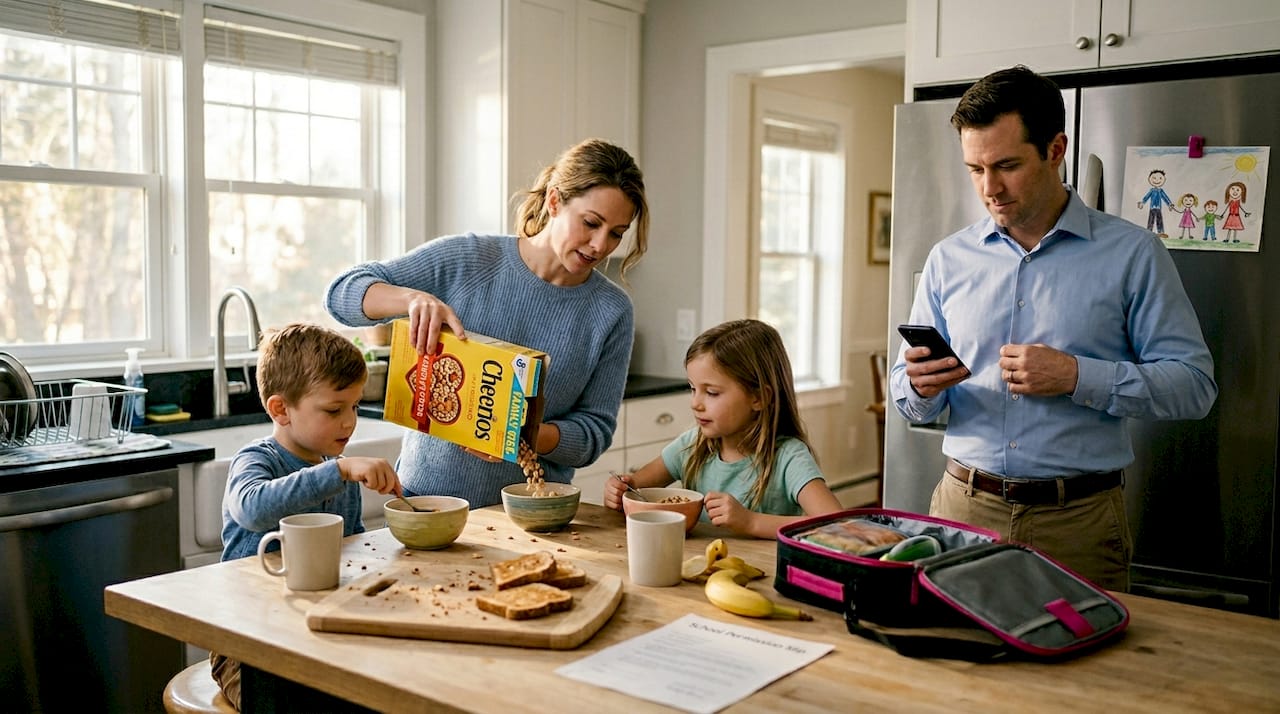
Productivity Habits for Busy Parents: Daily Examples
TL;DR:
- Small, intentional daily habits improve family productivity and reduce chaos.
- Consistent routines like bedtime, chores, and decluttering are quick, effective, and family-friendly.
- Customizing habits to fit each family’s rhythm ensures sustainability and long-term success.
Juggling school pickups, work deadlines, dinner prep, and bedtime stories can feel like running a marathon with no finish line in sight. Most parents don’t need a complete life overhaul. They need a handful of small, intentional daily habits that actually stick. The good news? Research confirms that simple, consistent routines are the real engine behind family productivity. In this article, we’ll walk through a clear framework for choosing the right habits, share six proven daily examples, and show you how to customize them for your unique household. Think of it as planting seeds that, with a little daily care, grow into something truly life-changing.
Table of Contents
- How to choose habits that boost family productivity
- 6 daily habits that make busy parents more productive
- How these habits compare in real family life
- Situational strategy: Customizing habits for your unique family
- Our take: Why small daily habits beat big overhauls
- Ready to level up? Explore more tools for family productivity
- Frequently asked questions
Key Takeaways
| Point | Details |
|---|---|
| Small habits boost productivity | Simple routines like consistent bedtimes or meal prep save time and reduce stress for busy parents. |
| Tailor to your family | Adapting habits to your unique schedule and needs helps routines stick and deliver better results. |
| Comparison clarifies choices | Side-by-side comparisons make it easier to select habits that fit your real life. |
| Start small for lasting change | Focusing on one new habit at a time leads to successful, long-term improvements. |
How to choose habits that boost family productivity
Not every productivity tip you read online will work for your family. And that’s okay. The key is knowing how to filter the good from the not-so-good before you invest your precious time and energy.
Here’s a simple numbered framework to evaluate any new habit:
- Is it easy to start? A habit that requires a 30-minute setup every day is unlikely to survive a Tuesday with three kids and a work deadline.
- Does it fit your family’s rhythm? A habit that works for a family with a stay-at-home parent may not suit a dual-income household.
- Does it reduce decisions? The fewer choices you have to make in the morning, the more mental energy you save for what matters.
- Can you measure its impact? Track how you feel after one week. Less chaos? Better sleep? That’s your signal to keep going.
- Does it involve the whole family? Habits that only require one person often collapse when that person has a rough day.
Consistent bedtime routines improve outcomes for both children and parents, reinforcing why routines that the whole family can rely on are so powerful. When everyone knows what to expect, the household runs more smoothly and parents reclaim mental bandwidth.
Routines around meals and bedtime are especially effective because they anchor the day. They create natural checkpoints that reduce the “what’s next?” spiral that drains so many parents by noon.
Pro Tip: Focus first on habits that eliminate decisions. Laying out clothes the night before, prepping a weekly meal plan, or setting a consistent wake time removes tiny choices that add up to big mental fatigue by evening.
For more ideas tailored to your situation, explore these productivity tips for parents and practical work-life balance tips. And don’t overlook self-care strategies for parents, because sustainable habits start with a sustainable you.
Try one change at a time. Give it seven days before deciding if it works. Small experiments lead to lasting transformation.
6 daily habits that make busy parents more productive
“You do not rise to the level of your goals. You fall to the level of your systems.” — James Clear
That quote hits differently when you’re a parent. Systems aren’t just for CEOs. They’re for anyone trying to hold a household together with grace and intentionality. Here are six habits worth building into your daily life.
1. Consistent bedtime routine
Consistent bedtime routines improve outcomes including better emotion regulation in children and more productive evenings for parents.
- Reduces bedtime battles
- Gives parents a predictable end to the day
- Improves children’s sleep quality
2. Morning planning session (10 minutes)
Review your top three priorities before the day begins. It sets your intentions and keeps you from reacting all day.
- Increases focus
- Reduces forgotten tasks
- Helps you feel in control
3. Meal prepping on weekends
One or two hours on Sunday can save 30 to 45 minutes every weeknight. Batch cooking is one of the most underrated family productivity tools.
- Reduces weeknight stress
- Saves money
- Encourages healthier eating
4. Shared family chores
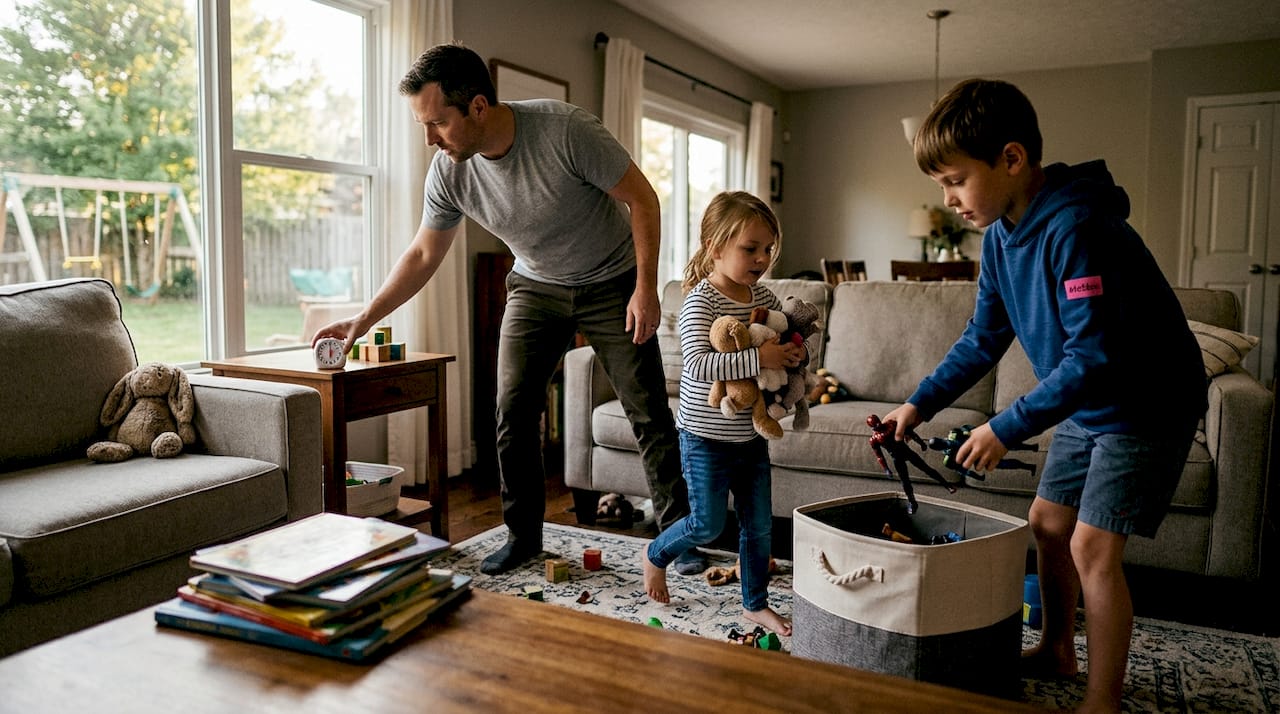
Assigning age-appropriate tasks to every family member builds responsibility and lightens your load. Even a four-year-old can put toys in a bin.
- Teaches children life skills
- Reduces parent burnout
- Builds teamwork
5. Daily five-minute declutter
Set a timer and tidy one area together. It’s amazing how much ground a family can cover in five focused minutes.
- Prevents clutter buildup
- Reduces visual stress
- Creates a calmer home environment
6. Evening reflection
Spend five minutes reviewing what went well and what needs adjusting. This habit builds resilience and intentionality over time.
- Improves next-day planning
- Strengthens gratitude
- Supports emotional wellbeing
Pro Tip: Involve your kids in chores and decluttering by making it a game. A “beat the timer” challenge turns a dreaded task into a fun family moment and saves you real time. You can find even more inspiration in these family productivity hacks and learn how prioritizing tasks can boost your output by up to 25 percent.
Start with just one or two habits this week. Commit fully before adding more.
How these habits compare in real family life
Knowing a habit is helpful is one thing. Knowing which habit fits your life right now is another. Here’s a side-by-side look at how each habit measures up across key factors.
| Habit | Difficulty | Time needed | Family buy-in | Best for |
|---|---|---|---|---|
| Consistent bedtime | Low | 20 to 30 min | High | All families |
| Morning planning | Low | 10 min | Low (parent only) | Dual-income families |
| Meal prepping | Medium | 1 to 2 hours/week | Medium | Families with busy weeknights |
| Shared chores | Medium | 15 to 20 min/day | High | Families with school-age kids |
| Daily declutter | Low | 5 min | Medium | All families |
| Evening reflection | Low | 5 to 10 min | Low (parent only) | Parents feeling overwhelmed |
Consistent bedtime routines improve outcomes including fewer behavioral issues in children, which makes it the top quick win for most families. It’s low effort, high reward, and the whole family benefits immediately.
Meal prepping tends to require the most adjustment upfront, especially if cooking isn’t already part of your weekend rhythm. But once it clicks, it becomes one of the most beloved habits in the household.
For families with toddlers, the daily declutter and bedtime routine are the easiest entry points. Teens respond better to shared chores and evening reflection, since those habits give them ownership and voice.
Dual-working families often find the morning planning session to be a game changer, because it replaces the frantic “what do I need to do today?” spiral with calm, focused intention.
For deeper guidance on managing your household’s time, check out this resource on family time management and explore healthy routines for couples to strengthen your partnership while building these habits together.
Situational strategy: Customizing habits for your unique family
Here’s something most productivity articles won’t tell you: the best habit is the one that fits your life, not someone else’s highlight reel. Routines must fit a family’s unique rhythm to be sustainable long-term.
Use this table to quickly identify which habits suit your household structure best.
| Family type | Best starting habits | Habits to build toward |
|---|---|---|
| Single parent | Bedtime routine, daily declutter | Meal prepping, morning planning |
| Shift workers | Evening reflection, meal prepping | Shared chores, morning planning |
| Large families (4+ kids) | Shared chores, bedtime routine | Meal prepping, daily declutter |
| Dual-income couples | Morning planning, meal prepping | Evening reflection, shared chores |
| Work-from-home parents | Daily declutter, morning planning | Bedtime routine, evening reflection |
Once you’ve identified your best starting habits, use this step-by-step approach to test and adjust:
- Pick one habit from the table above that matches your family type.
- Set a specific time for it each day. Vague intentions fade. Scheduled habits stick.
- Run a one-week trial. Don’t judge it until day seven.
- Reflect honestly. Did it reduce stress? Save time? If yes, keep it. If not, adjust the timing or format.
- Add a second habit only after the first feels natural, usually after two to three weeks.
When a routine doesn’t stick, the problem is usually timing, not willpower. Try shifting it to a different part of the day before giving up entirely. For more inspiration, explore these family routine hacks and practical time management tips. And if stress is making it hard to stay consistent, mindfulness for working parents can be a powerful support tool.
Our take: Why small daily habits beat big overhauls
We’ve seen it time and again. A parent gets inspired, overhauls their entire schedule on a Monday, and by Thursday the whole system has collapsed under the weight of real life. Big, dramatic changes feel exciting, but they rarely stick.
What actually works? Small, repeatable actions done with quick productivity hacks woven into the fabric of your existing day. A five-minute declutter. A ten-minute morning plan. A consistent bedtime. These aren’t glamorous. But they are powerful.
The families we’ve seen thrive aren’t the ones who tried to change everything at once. They’re the ones who picked one small habit, stayed with it, and let that win build confidence for the next one. That’s resilience in action. That’s intentionality. And it’s available to every parent, no matter how hectic life feels right now.
Celebrate the small wins. They are the foundation of everything bigger.
Ready to level up? Explore more tools for family productivity
Building productive daily habits is just the beginning. If you’re ready to take your family’s efficiency to the next level, we have resources designed specifically for busy parents like you. Discover how home management systems can bring structure and calm to even the most chaotic households. Dive into our favorite family productivity hacks for creative, real-life solutions that actually work. And if you’re wondering what’s quietly draining your time, our guide on productivity killers will open your eyes. You deserve a home and a schedule that work for you, not against you.
Frequently asked questions
What is the single most effective daily habit for busy parents?
Consistent bedtime routines improve outcomes for children’s behavior and emotion regulation, which in turn gives parents more productive and peaceful evenings.
How can I stick to new productivity habits despite a hectic schedule?
Start with just one habit, keep it simple and time-specific, and loop in your whole family so everyone stays accountable together.
Do these daily habits work for single-parent families?
Absolutely. Routines must fit each family’s unique rhythm, so single parents should start with the lowest-effort habits and build from there.
Can productivity habits benefit children as well as parents?
Yes. Routines improve both child wellbeing and parent productivity, making daily habits a win for every member of the household.
How long does it take to see results from these habits?
Many parents notice less stress and smoother mornings within just one week of starting a consistent new routine.
Recommended
- 7 Family-Friendly Examples of Productivity Hacks That Work –
- Understanding Productivity Tips for Parents Guide –
- Parental Time Management Types for Busy Families –
- 7 Practical Work-Life Balance Tips for Busy Families –
- Top 10 Tips for Working From Home – TEFL Institute
Want these habits to hold? The Home Rhythm Planner gives them a place in your week so they are not left to willpower.