

Guide to the Role of Proactive Planning
Over 60 percent of american parents say managing family schedules feels like juggling flaming torches. Life moves fast and unexpected twists are the norm for most households. Learning how to plan ahead can make every day less stressful and help your family reach its goals with more confidence. This article shares practical strategies for proactive planning so you can stop reacting to chaos and start feeling back in control.
Table of Contents
- Defining Proactive Planning For Busy Families
- Key Benefits Of Proactive Planning At Home
- Types Of Proactive Planning Strategies
- How Proactive Planning Supports Work-Life Balance
- Avoiding Common Pitfalls And Mistakes
Key Takeaways
| Point | Details |
|---|---|
| Proactive Planning Defined | Proactive planning helps families anticipate challenges and establish systems to manage daily dynamics more effectively. |
| Benefits of Proactive Planning | Implementing proactive strategies enhances organization, reduces stress, and promotes better communication among family members. |
| Strategies for Success | Key strategies include time blocking, meal preparation, and regular family meetings to stay coordinated and manage time efficiently. |
| Avoiding Pitfalls | Families should set realistic goals, maintain flexibility, and regularly review plans to improve their proactive planning skills. |
Defining Proactive Planning for Busy Families
Proactive planning isn’t just a fancy buzzword – it’s a practical strategy that can transform how your family manages daily life and long-term goals. According to Calm, proactive planning entails anticipating challenges and taking initiative to address them before they become overwhelming.
For busy families, proactive planning means developing systems and strategies that help you stay ahead of potential problems. Think of it like being a family quarterback – you’re constantly scanning the field, predicting potential obstacles, and creating game plans that keep everyone organized and moving smoothly. This approach goes beyond simple scheduling and involves strategic thinking about your family’s time, resources, and energy.
Successful proactive planning involves several key elements:
- Anticipating potential challenges before they arise
- Creating flexible but structured systems
- Establishing clear communication channels within the family
- Regularly reviewing and adjusting your strategies
While it might sound complex, proactive planning is really about making intentional choices that reduce stress and create more predictable, manageable family dynamics. By implementing proactive strategies, you transform from constantly reacting to circumstances to confidently steering your family’s direction. If you’re looking for more ways to optimize your family’s time management, check out our Time Management Tips for Families guide to take your planning skills to the next level.
Key Benefits of Proactive Planning at Home
Proactive planning isn’t just about managing time – it’s a powerful strategy that can dramatically transform your family’s daily life and long-term success. According to Northstar Academy, implementing proactive planning enhances organization, time management, and goal-setting, ultimately leading to improved productivity and reduced stress for all family members.
The financial advantages of proactive planning are equally compelling. Blog ITR Economics highlights that families who anticipate potential challenges can optimize resources and achieve greater financial efficiency by preparing for future expenses and avoiding last-minute, often costly decisions.
Key benefits of proactive planning include:
- Reduced household stress and anxiety
- Better financial management and budgeting
- Improved family communication and coordination
- More predictable and smoother daily routines
- Enhanced ability to handle unexpected challenges

By embracing proactive planning, your family transforms from constantly reacting to circumstances to confidently steering your collective direction. If you want to take your home organization to the next level, our guide on home organization systems can provide additional strategies to support your planning efforts.
Types of Proactive Planning Strategies
Proactive planning isn’t a one-size-fits-all approach – it’s a flexible framework that can be customized to meet your family’s unique needs. According to eSoft Skills, effective proactive planning strategies fundamentally involve task prioritization, strategic resource allocation, and setting clear objectives to maximize efficiency and productivity.
Developing a proactive mindset goes beyond simple scheduling. As GK Liggans explains, it involves anticipating potential problems, planning ahead, and taking initiative to address issues before they become significant challenges. This approach transforms your family’s problem-solving from reactive firefighting to strategic management.
Here are some key proactive planning strategies for families:
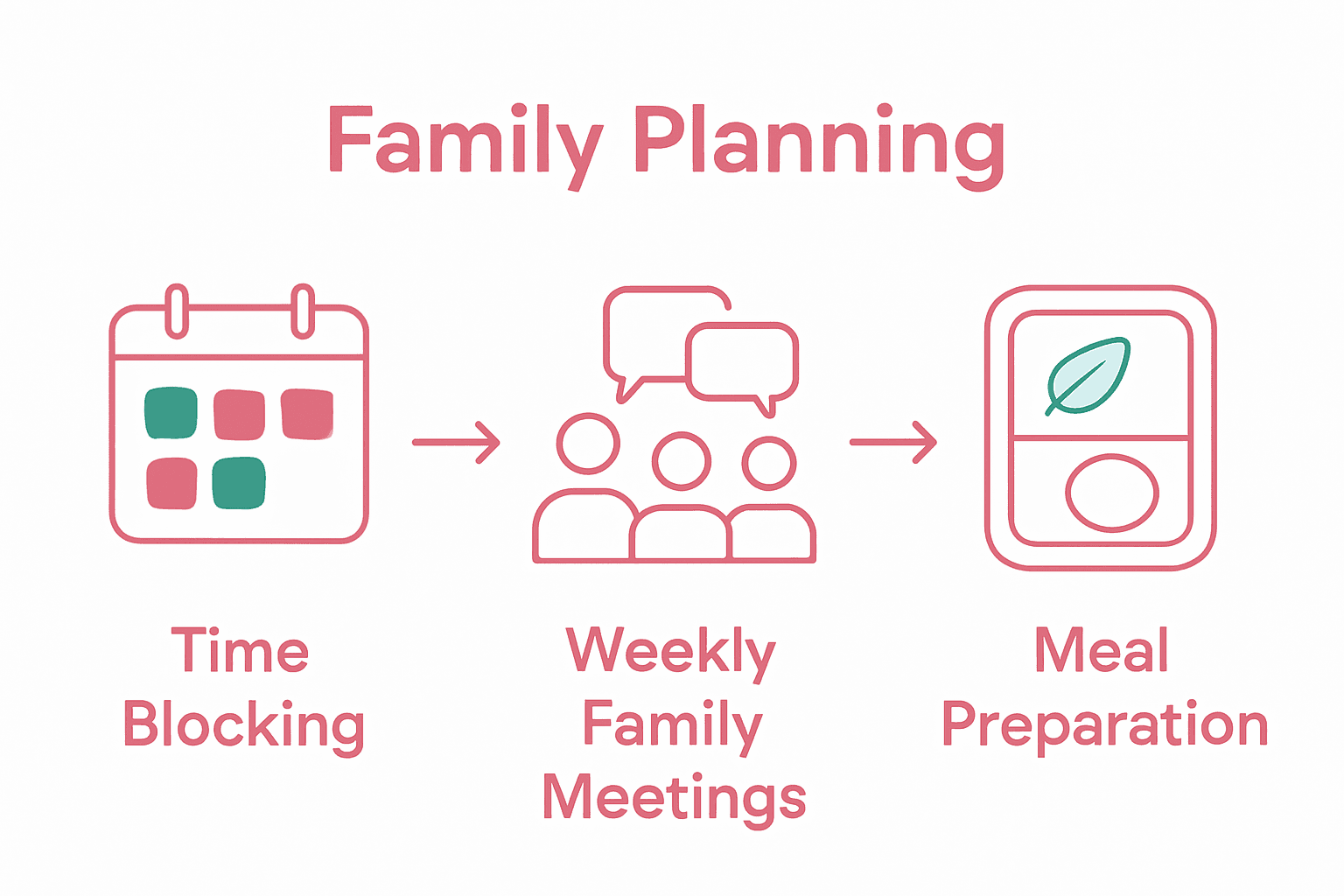
- Time Blocking: Allocate specific time slots for different family activities and responsibilities
- Weekly Family Meetings: Discuss upcoming schedules, challenges, and coordinate plans
- Meal Preparation: Plan and prep meals in advance to reduce daily stress
- Financial Forecasting: Regularly review and project family expenses and savings goals
- Contingency Planning: Create backup plans for potential disruptions or unexpected events
Implementing these strategies requires consistent effort and flexibility. Start small, be patient with your family’s learning curve, and remember that proactive planning is a skill that improves with practice. For more detailed insights into managing your family’s time effectively, check out our Time Blocking Guide for Parents to help you get started.
How Proactive Planning Supports Work-Life Balance
Work-life balance isn’t about achieving perfection – it’s about creating intentional boundaries and strategic management of your time and energy. According to Calm, proactive individuals can effectively manage their time by planning and prioritizing tasks, which ultimately reduces stress and creates essential space for relaxation and personal activities.
Strategic time management is the cornerstone of maintaining a healthy work-life balance. By anticipating potential challenges and creating flexible yet structured schedules, families can prevent burnout and ensure that both professional responsibilities and personal moments receive appropriate attention. This approach transforms work from a constant source of stress to a more manageable part of your overall life experience.
Key strategies for supporting work-life balance through proactive planning include:
- Setting clear boundaries between work and personal time
- Creating dedicated family time without work interruptions
- Developing morning and evening routines that support mental wellness
- Scheduling regular breaks and self-care activities
- Using technology mindfully to enhance, not disrupt, family connections
Implementing these strategies requires patience and consistent effort. Small, incremental changes can lead to significant improvements in how you manage your professional and personal responsibilities. For more insights into maintaining productivity while preserving family time, explore our guide on productivity tips for parents to help you navigate this delicate balance.
Avoiding Common Pitfalls and Mistakes
Proactive planning sounds straightforward, but many families stumble when implementing their strategies. According to Calm, common pitfalls include overcommitting and failing to set realistic goals. The key is developing good habits and surrounding yourself with proactive individuals who can support and motivate your planning efforts.
Realistic goal-setting is crucial for successful proactive planning. GK Liggans emphasizes that developing a proactive mindset means anticipating potential problems and taking initiative before challenges escalate. This approach requires honest self-assessment and a willingness to adjust your strategies when they aren’t working.
Common mistakes to watch out for in proactive planning include:
- Setting unrealistic or overly ambitious goals
- Failing to build flexibility into your plans
- Neglecting to regularly review and adjust your strategies
- Trying to plan every single detail without room for spontaneity
- Becoming discouraged when plans don’t work perfectly
Remember that proactive planning is a skill that improves with practice. Embrace imperfection and view each planning attempt as a learning opportunity. When you inevitably encounter setbacks, use them as chances to refine your approach. If you’re looking for inspiration on turning challenges into opportunities, check out our guide on failing forward and flipping fails into wins.
Take Control of Your Family Life with Proactive Planning
Feeling overwhelmed by daily chaos and endless to-do lists is common for busy families trying to find balance. The article highlights key challenges like unpredictable schedules, financial stress, and communication gaps that make it hard to stay organized and calm. By embracing proactive planning strategies such as realistic goal-setting, contingency planning, and time blocking, you can reduce anxiety and create smoother family routines.
Frequently Asked Questions
What is proactive planning?
Proactive planning is a strategy that involves anticipating challenges and taking initiative to address them before they become overwhelming, ultimately helping families manage daily life and long-term goals effectively.
How can proactive planning reduce family stress?
By implementing proactive planning, families can create predictable routines, improve communication, and better manage time and resources, leading to reduced household stress and anxiety.
What are some effective strategies for proactive planning?
Effective strategies for proactive planning include time blocking, weekly family meetings, meal preparation, financial forecasting, and contingency planning to anticipate challenges and optimize family management.
How does proactive planning support work-life balance?
Proactive planning supports work-life balance by allowing families to establish clear boundaries between work and personal time, prioritize family activities, and plan for relaxation and self-care, ultimately reducing stress and enhancing overall well-being.
Recommended
- Understanding What is “Pre-Planned Meals” for Families – It’s a Southern Life Ya’ll
- Understanding the Advantages of Meal Planning – It’s a Southern Life Ya’ll
- Event Planning Checklist 2025: Step-by-Step Guide for Success – team I
- Event Logistics Planning: Essential Steps and Tips for 2025 – team I
Want a little more help with this? I made a free 30-Minute Reset that pairs right up with this post — y’all can grab it over on my Free Resources page.