
Are Fresh Vegetables Healthier Than Frozen?
Most American families are surprised to learn that frozen vegetables can outshine their fresh counterparts in nutritional value. Grocery aisles are filled with choices, and picking between fresh and frozen produce affects not just taste, but also the vitamins and minerals you bring home. With studies showing nutrient loss in fresh vegetables within just 24 hours, knowing what truly makes produce ‘fresh’ versus ‘frozen’ empowers smarter shopping and healthier meals.
Table of Contents
- What Defines Fresh Vs Frozen Produce
- How Nutrient Levels Compare Over Time
- Which Vegetables Lose Nutrients Faster
- Practical Benefits Of Frozen Options
- Smart Ways To Maximize Nutrient Intake
Key Takeaways
| Point | Details |
|---|---|
| Fresh vs Frozen | Fresh produce is picked and sold immediately, while frozen vegetables are harvested at peak ripeness and processed within hours. |
| Nutritional Comparison | Frozen vegetables often retain more nutrients than fresh due to immediate processing, which preserves their vitamin and mineral content. |
| Shelf Life and Convenience | Frozen vegetables have a shelf life of 8-10 months, making them a cost-effective and convenient option for busy families. |
| Cooking Methods | To maximize nutrient retention, opt for gentle cooking methods like steaming rather than boiling fresh or frozen vegetables. |
What Defines Fresh vs Frozen Produce
When you walk into the produce section of your grocery store, you’re faced with two primary options for vegetables: fresh and frozen. Understanding the key differences can help you make smarter nutrition choices for your family. According to azed.gov, fresh produce is harvested and consumed without undergoing preservation processes, offering peak taste and quality when in season.
Frozen vegetables follow a fascinating journey from farm to freezer. As nofima.com explains, these vegetables are harvested at optimal maturity and then quickly processed. The key step is blanching – a brief hot water treatment that stops enzyme activity and helps preserve nutritional content. This process ensures that frozen vegetables are essentially “paused” at their nutritional peak, locking in vitamins and minerals.
The main distinctions between fresh and frozen produce come down to several critical factors:
- Harvest Timing: Fresh produce is picked and sold immediately, while frozen vegetables are harvested at peak ripeness
- Processing: Fresh vegetables are unaltered, frozen vegetables undergo blanching
- Shelf Life: Fresh produce has limited storage time, frozen vegetables can be stored for months
- Nutrient Preservation: Contrary to popular belief, frozen vegetables often retain more nutrients due to immediate processing after harvest
This means that frozen vegetables aren’t just a convenient alternative – they can actually be a nutritionally smart choice for busy families looking to maintain a healthy diet without constant grocery shopping.
How Nutrient Levels Compare Over Time
When it comes to nutrition, the big question is whether frozen vegetables can truly match fresh ones in nutrient content. Surprisingly, scientific research suggests that freezing might actually be a powerful preservation method. According to PubMed, research comparing mineral, fiber, and total phenolic content in fresh and frozen produce revealed that most food items showed no significant difference in nutrient retention over time.
This means the nutrient degradation you might worry about with frozen vegetables isn’t as dramatic as you’d think. The freezing process actually acts like a nutritional pause button, keeping vitamins and minerals locked in place. When vegetables are frozen quickly after harvesting, they effectively maintain their nutritional profile. Some nutrients might even be more readily available in frozen vegetables because the freezing process can break down cell walls, making certain nutrients easier for your body to absorb.
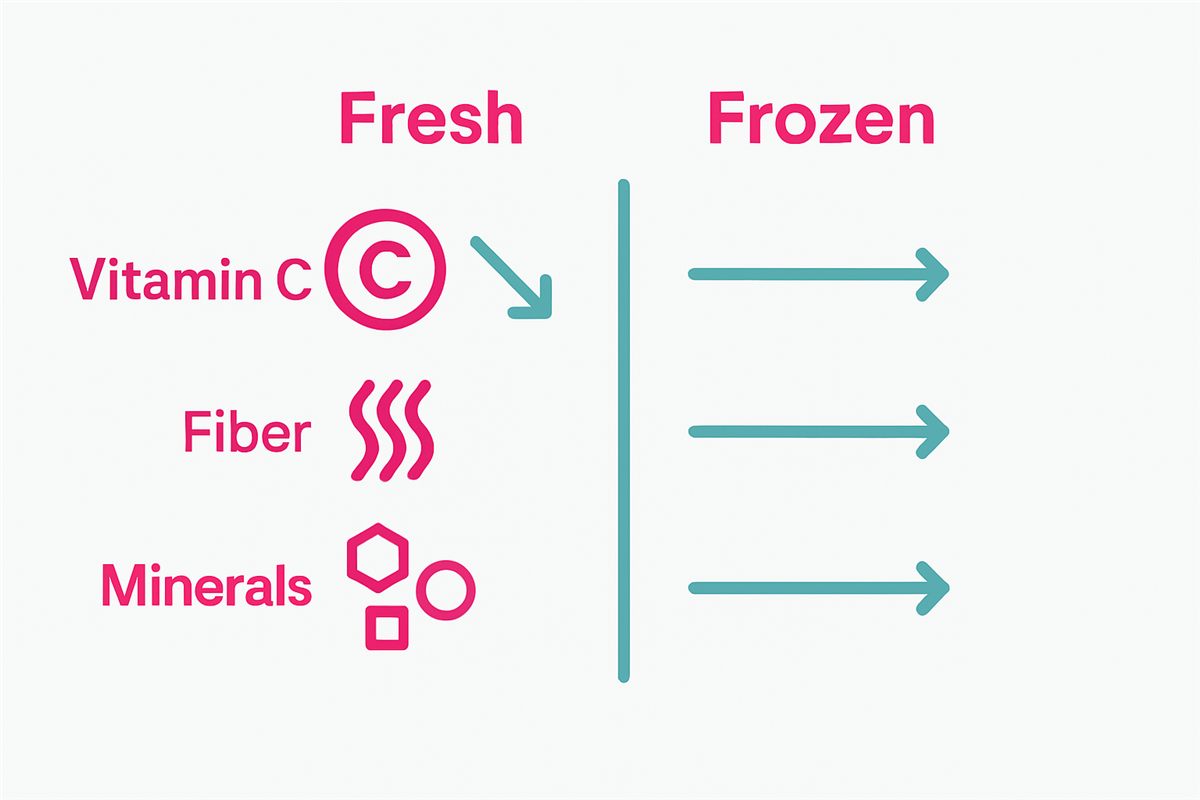
Here’s a quick breakdown of how different nutrients fare in frozen versus fresh produce:
- Vitamin C: Slightly more loss in frozen vegetables, but still retains significant amounts
- Minerals: Mostly preserved during freezing process
- Fiber: Remains consistent between fresh and frozen options
- Antioxidants: Often well-preserved or sometimes even enhanced by freezing
For busy families looking to maintain a nutritious diet without daily grocery trips, frozen vegetables offer a practical and scientifically supported alternative to fresh produce. The key is choosing high-quality frozen vegetables and handling them properly during storage and preparation.
Which Vegetables Lose Nutrients Faster
Not all vegetables are created equal when it comes to nutrient preservation. Some vegetables are nutritional champions at holding onto their vitamins and minerals, while others start losing nutrients almost immediately after harvesting. Nofima research reveals a fascinating insight: peas and beans, being seed-based vegetables with high enzyme activity, are particularly vulnerable to rapid nutrient breakdown. In fact, fresh beans can experience a shocking 25% reduction in vitamin C content within just 24 hours at room temperature.
Vegetables have different nutrient retention profiles based on their cellular structure and composition. Leafy greens like spinach and kale tend to lose nutrients quickly due to their delicate cellular membranes. In contrast, hardier vegetables such as broccoli and cauliflower maintain their nutritional integrity much longer. This variation means that your storage and preparation methods can significantly impact the nutritional value of your produce.
Here’s a quick breakdown of vegetable nutrient loss rates:
- Fastest Nutrient Loss:
- Beans
- Peas
- Leafy greens (spinach, lettuce)
- Fresh herbs
- Moderate Nutrient Loss:
- Tomatoes
- Bell peppers
- Zucchini
- Slowest Nutrient Loss:
- Broccoli
- Cauliflower
- Root vegetables (carrots, beets)
For families looking to maximize nutrition, the key is understanding these differences. Freezing vegetables at peak ripeness or purchasing frozen options can help preserve those essential vitamins and minerals, ensuring you’re getting the most nutritional bang for your buck.
Practical Benefits Of Frozen Options
Busy families are always searching for convenient and nutritious meal solutions. According to azed.gov, frozen produce offers an incredible combination of practicality and nutrition, with a remarkable shelf life of 8-10 months. This means you can stock up on vegetables without worrying about rapid spoilage, a game-changer for meal planning and reducing food waste.
The economic advantages of frozen vegetables are substantial. NIB notes that frozen vegetables are widely available and often more affordable than their fresh counterparts. By being picked and frozen at peak ripeness, these vegetables maintain maximum nutrient levels while providing significant cost savings. For families watching their grocery budget, frozen vegetables represent a smart nutritional investment.
Here are the key practical benefits of choosing frozen vegetable options:
- Extended Storage: Keeps for 8-10 months in your freezer
- Cost-Effective: Typically cheaper than fresh produce
- Consistent Quality: Harvested and frozen at peak nutritional point
- Reduced Waste: No more wilting vegetables in your refrigerator
- Convenience: Ready to use with minimal preparation
- Nutritional Integrity: Nutrients locked in during freezing process
For families juggling work, school, and household responsibilities, frozen vegetables offer a flexible, nutritious solution that fits seamlessly into busy lifestyles. They provide the nutrition you need without the stress of daily produce shopping or concerns about rapid spoilage.
Smart Ways To Maximize Nutrient Intake
Maximizing the nutritional value of your vegetables requires strategic planning and smart preparation techniques. Healthline recommends consuming fresh produce soon after purchase to preserve its nutrient content and suggests avoiding boiling when cooking. Instead, opt for gentler cooking methods like steaming or microwaving, which help retain more essential vitamins and minerals.
Choosing the right type of produce is just as important as how you prepare it. Edison Institute advises selecting frozen fruits and vegetables without added sugars or sauces to maintain their natural nutritional profile. By being mindful of both selection and preparation, you can significantly enhance the nutrient density of your meals.
Here are practical strategies to maximize nutrient intake:
- Timing Matters: Consume fresh produce within 2-3 days of purchase
- Smart Cooking: Use steaming or microwaving instead of boiling
- Minimal Processing: Choose vegetables without added sauces or preservatives
- Quick Freezing: Freeze excess fresh produce at peak ripeness
- Partial Cooking: Lightly cook vegetables to maintain nutrient structure
By implementing these strategies, you can ensure that your family receives maximum nutritional benefits from both fresh and frozen vegetables. When time is short, meal planning on a budget becomes an essential skill in maintaining a nutrient-rich diet without sacrificing convenience.
Make Nutrition and Meal Prep Easier for Your Busy Family
If you struggle to balance keeping your family healthy with the chaos of everyday life, you are not alone. The article showed how frozen vegetables can lock in nutrients longer than fresh produce and save you time without sacrificing quality. But knowing this is only half the battle when it comes to feeding your family well while managing your busy schedule and budget.
At Its a Southern Life Yall, we understand the challenge of juggling nutritious meals with work, school, and home life. Our proven strategies for meal planning on a budget help you save money and time by selecting the best foods that fit your lifestyle. Plus, our simple living tips and organization hacks will keep your kitchen and freezer stocked efficiently so you never worry about waste or last-minute unhealthy choices.
Get started today to create a smoother, healthier routine your whole family will thank you for.
Recommended
- Healthy Grocery List on a Budget – It’s a Southern Life Ya’ll
- 27 Most Underrated Ways to Save Money on Groceries in 2024 – It’s a Southern Life Ya’ll
- 10 Winter Salads – It’s a Southern Life Ya’ll
- How to Feed a Family on a Budget – It’s a Southern Life Ya’ll
- How to Store Fresh Food Naturally for Maximum Freshness – naturessoulshop
- 10 Essential Tips for Healthy Eating Habits – LeanAndFit
Want a little more help with this? Grab my free Kitchen Reset Kit over on the Free Resources page — and when you’re ready to go deeper, the Meal Genie will carry you the rest of the way.