
Establish a Successful Work from Home Routine for Families
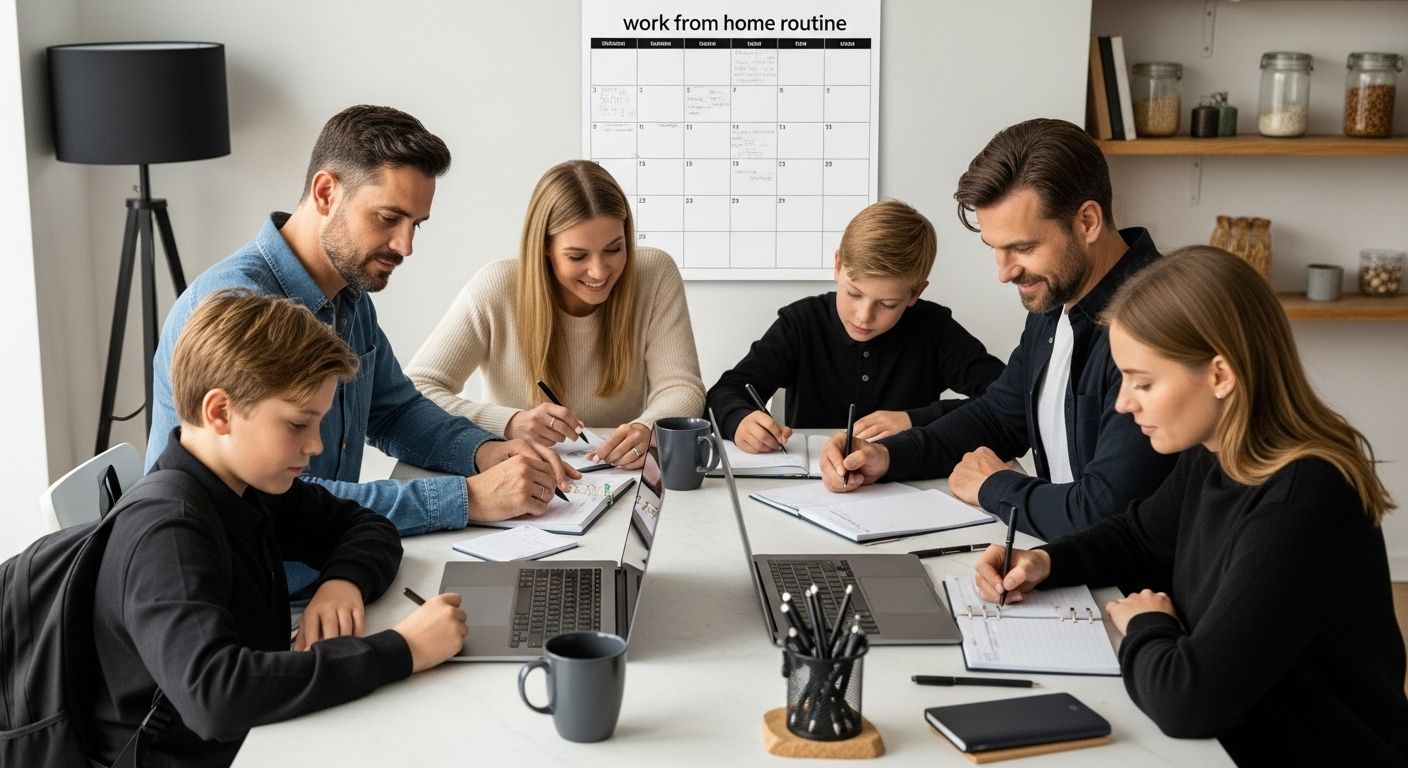
Families are working and studying from home more than ever and making it work well takes serious planning. You might think juggling everyone’s needs is just impossible, but studies show that regular schedule reviews and open communication boost remote work satisfaction for families by over 30 percent. The real surprise is that success is mostly about teamwork on everything from workspace design to setting clear boundaries, not just organizing your time.
Quick Summary
| Key Point | Explanation |
|---|---|
| 1. Assess Family Schedules Together | Gather all family members’ schedules to create a unified calendar that accommodates everyone’s commitments. |
| 2. Collaborate on Workspace Design | Involve everyone in planning a functional workspace that meets individual needs for productivity and comfort. |
| 3. Define Clear Work Boundaries | Establish specific work hours and physical signals to respect professional and personal time. |
| 4. Create a Flexible Family Activity Schedule | Develop a dynamic schedule that balances structured routines with flexible time for personal and family activities. |
| 5. Conduct Regular Check-Ins | Hold weekly meetings to review progress and adapt the routine based on family experiences and challenges. |
Step 1: Evaluate Your Family’s Needs and Schedules
Establishing a successful work from home routine for families starts with a comprehensive understanding of your household’s unique dynamics. This initial step requires careful assessment of each family member’s professional responsibilities, academic commitments, and personal schedules to create a harmonious and productive environment.
Understanding Individual Schedules and Constraints
Begin by gathering detailed information about every family member’s time requirements. Adults should document their work hours, meeting schedules, and critical deadlines. Parents working remotely need to synchronize their professional obligations with children’s virtual learning, potential care needs, and personal time management. School-age children should also contribute their class schedules, study times, and extracurricular activities to create a holistic family calendar.
The goal is transparency and collaborative planning. Each family member should feel comfortable sharing their time constraints and potential challenges. For instance, a parent might have a crucial client presentation requiring uninterrupted focus, while another manages flexible work hours that can accommodate unexpected childcare needs.
Creating a Visual Family Schedule
Transform your collected scheduling information into a centralized, visual tracking system. Digital tools like shared Google Calendars offer excellent flexibility, allowing real-time updates and color-coded entries for different family members. These platforms enable everyone to see upcoming commitments and potential scheduling conflicts at a glance.
A well-designed family schedule should include:
- Work meeting times for each professional family member
- Children’s online class schedules
- Dedicated focus hours for concentrated work
- Shared family meal and break times
- Potential backup childcare or supervision arrangements
For families seeking additional organizational strategies, read our guide on creating bulletproof work-from-home schedules to refine your approach.
According to research from the National Center for Biotechnology Information, successful remote work arrangements require ongoing communication and periodic schedule reassessment. Family members should plan to review and adjust their routine weekly, ensuring the system remains responsive to changing professional and personal needs.
Successful completion of this step means having a comprehensive, visually accessible schedule that represents every family member’s commitments and provides clear guidelines for maintaining work-life balance.
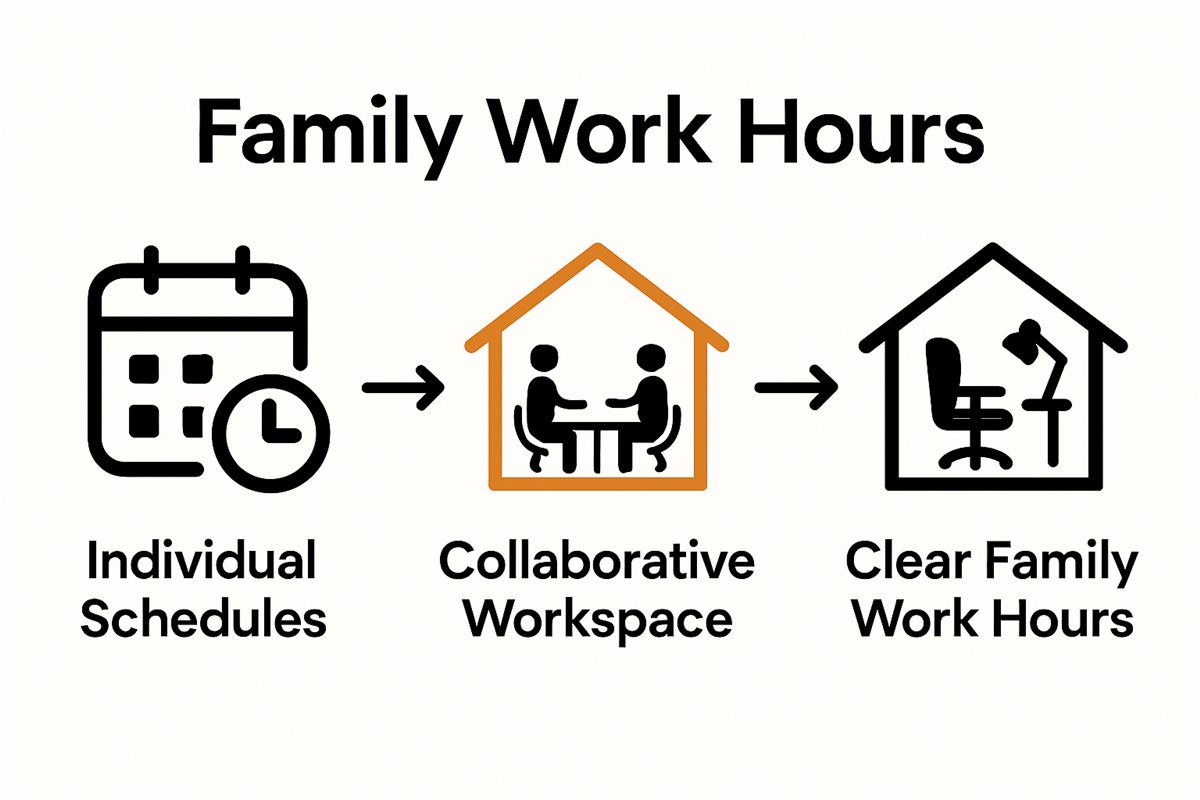
Step 2: Design Your Home Workspace Together
Creating an effective home workspace is more than selecting a desk and chair. It involves thoughtful collaboration that considers every family member’s needs, comfort, and productivity. This critical step transforms your home into a functional environment where professional work, learning, and family life can coexist harmoniously.
Collaborative Workspace Planning
Workspace design requires open communication and creative problem solving. Instead of treating workspace allocation as a top-down decision, invite all family members into the planning process. Walk through your home together, identifying potential work areas that provide minimal distractions while maintaining family connectivity. Natural light, minimal noise, and adequate space are key considerations for selecting optimal work zones.
Consider the unique requirements of each family member. Parents might need dedicated spaces for video conferences, while children require study areas conducive to online learning. Some families discover innovative solutions like rotating workstations, converting underutilized spaces like dining areas or guest rooms into multifunctional work zones. The key is flexibility and willingness to experiment.
Ergonomics and Shared Resources
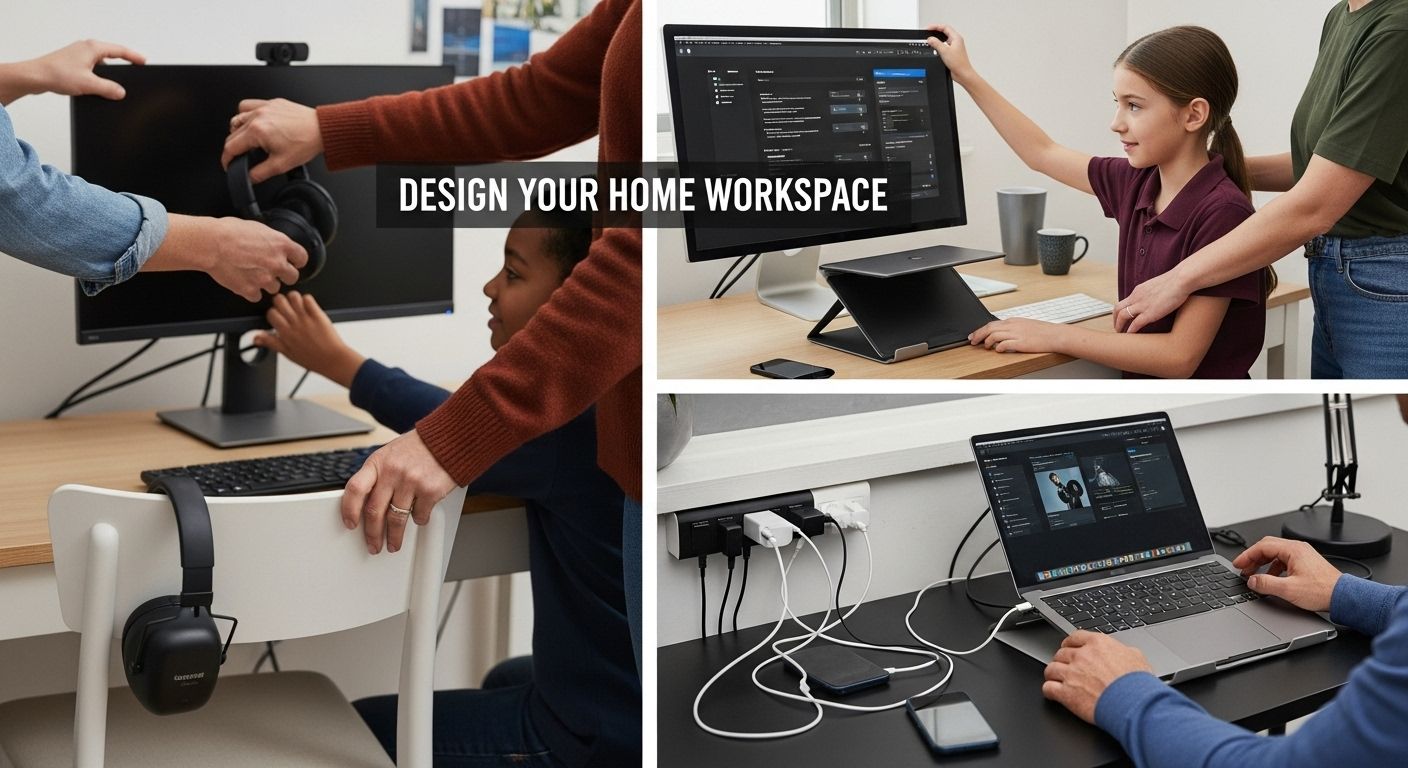
Ergonomic considerations are crucial for maintaining physical health during extended work and study periods. Invest in adjustable chairs, proper desk heights, and monitor stands that can be easily modified for different family members. Portable laptop stands, noise-canceling headphones, and shared charging stations can help create a versatile workspace that accommodates everyone’s needs.
Key workspace essentials include:
- Comfortable, adjustable seating
- Adequate lighting
- Noise-reduction tools
- Shared digital storage solutions
- Portable work equipment
For more detailed strategies on creating productive home environments, explore our comprehensive guide to work-at-home schedules.
According to research from the International Journal of Environmental Research and Public Health, collaborative workspace design significantly reduces family stress and improves overall remote work satisfaction.
Successful workspace design means creating an adaptable environment where each family member feels supported, comfortable, and equipped to perform their best. Regular check-ins and willingness to adjust the setup will ensure your home workspace continues to meet evolving family needs.
Below is a table summarizing workspace essentials for a productive family home office, along with their key purposes as described in the article.
| Workspace Essential | Purpose |
|---|---|
| Adjustable seating | Ensures comfort and proper posture for all family members |
| Adequate lighting | Reduces eye strain and improves focus |
| Noise-reduction tools | Minimizes distractions, enabling concentration |
| Shared digital storage solutions | Allows convenient file sharing and organization |
| Portable work equipment | Adapts to different family member needs and flexible home layouts |
| Noise-canceling headphones | Helps individuals concentrate during meetings or study sessions |
| Charging stations | Keeps all devices powered and accessible |
Step 3: Set Clear Boundaries and Work Hours
Establishing clear boundaries transforms a chaotic home workspace into a productive environment where work and family life coexist harmoniously. This critical step involves creating explicit guidelines that protect professional focus while maintaining family connections and preventing burnout.
Defining Professional and Personal Zones
Boundary setting starts with physical and psychological demarcation of work spaces. Communicate visual signals that indicate when someone is working and should not be disturbed. This might involve wearing specific clothing, using noise-canceling headphones, or placing a colored sign at your workspace signaling availability. Children especially benefit from understanding these signals, learning to respect professional time while feeling securely connected to family members.
Time blocking becomes essential in maintaining these boundaries. Establish consistent work hours that align with your family’s natural rhythms. Some families find success by scheduling work during children’s quiet study times or early morning hours. The goal is creating predictable patterns that allow everyone to understand and respect each other’s professional commitments.
Communication and Mutual Respect
Effective boundary setting requires ongoing family dialogue. Schedule regular family meetings to discuss what’s working and what needs adjustment. These conversations teach children valuable lessons about professional responsibilities and mutual respect. Parents should model healthy work-life integration by demonstrating how to transition between professional and personal modes.
Key boundary establishment strategies include:
- Designating specific work hours
- Creating physical workspace indicators
- Developing family communication protocols
- Establishing technology usage rules
- Planning intentional family interaction times
For more detailed strategies on managing your work schedule, explore our comprehensive time blocking guide.
According to Harvard Business Review research, establishing clear work-home boundaries significantly reduces stress and improves overall family productivity.
Successful boundary implementation means creating a flexible yet structured environment where professional responsibilities and family connections are equally respected. Regular communication, visual cues, and mutual understanding transform potential conflict into collaborative harmony.
Step 4: Create a Family Activity Schedule
A well-crafted family activity schedule transforms chaos into coordinated harmony, ensuring that every family member’s needs are met while maintaining productivity and connection. This step goes beyond simple time management, creating a dynamic blueprint that supports individual growth and collective well-being.
Collaborative Schedule Development
Schedule creation is not a solitary task but a family collaboration. Gather everyone together and approach schedule building as a collective brainstorming session. Each family member should contribute their perspective, sharing their learning, work, and personal activity requirements. Children can be encouraged to suggest recreational time, study blocks, and preferred activity windows, fostering a sense of ownership and responsibility.
Digital tools like shared Google Calendars or dedicated family scheduling apps become invaluable in this process. Color-code different activities professional work, school assignments, personal time, and family activities to create visual clarity. These platforms allow real-time updates and transparent communication, ensuring everyone stays informed about daily and weekly commitments.
Balancing Structure and Flexibility
A successful family activity schedule strikes a delicate balance between structured routine and adaptable spontaneity. Establish core non-negotiable time blocks for critical activities like work meetings, online classes, and family meals. However, build in flexible margins that accommodate unexpected interruptions, personal needs, and occasional spontaneous moments. This approach prevents rigid scheduling from becoming a source of stress.
Key elements to include in your family activity schedule:
- Daily work and learning hours
- Dedicated family interaction times
- Personal development and leisure activities
- Meal preparation and shared dining
- Physical exercise and outdoor time
- Quiet study or independent work periods
For more insights on creating efficient schedules, explore our comprehensive time blocking guide.
According to research from North Carolina A&T State University, structured yet flexible family schedules significantly reduce stress and improve overall household productivity.
Successful schedule implementation means creating a living document that evolves with your family’s changing needs. Regular weekly reviews, open communication, and willingness to adjust ensure your family activity schedule remains a supportive framework for individual and collective success.
Step 5: Monitor Progress and Adjust as Needed
Creating a successful work from home routine is not a one-time event but an ongoing process of observation, reflection, and strategic adaptation. This final step transforms your initial plan from a static document into a dynamic system that grows and evolves with your family’s changing needs and challenges.
Implementing Regular Family Check-Ins
Consistency is key in monitoring your family’s work from home routine. Schedule weekly family meetings specifically designed to review your current schedule, discuss challenges, and celebrate successes. These meetings should be collaborative, allowing every family member to share their experiences, frustrations, and suggestions. Children and adults alike should feel empowered to contribute insights about what’s working and what needs improvement.
During these check-ins, approach the conversation with curiosity and openness. Avoid blame or defensiveness. Instead, treat schedule adjustments as a collective problem-solving exercise. Use specific examples and concrete observations to guide your discussion. For instance, if a child is struggling to concentrate during study time or a parent is experiencing frequent work interruptions, discuss potential solutions together.
Tracking and Measuring Family Performance
Implement simple tracking mechanisms to objectively assess your family’s work from home routine. Create a shared digital spreadsheet or use productivity tracking apps that allow family members to log their daily achievements, challenges, and time management. Visual tracking tools can help everyone understand progress and identify patterns that might require adjustment.
Key metrics to track during your routine evaluation include:
- Individual productivity levels
- Stress and satisfaction ratings
- Time spent on work and learning activities
- Quality of family interactions
- Frequency of schedule disruptions
- Personal and collective goal achievements
For additional strategies on optimizing your family’s routine, explore our comprehensive work-at-home scheduling guide.
According to research from Cornell University, successful remote work environments require continuous adaptation and transparent communication.
Successful routine monitoring means creating a responsive, flexible system that prioritizes family well-being. Remember that perfection is not the goal. Progress, understanding, and collective growth are the true markers of a thriving work-from-home family routine.
This table provides an overview of common metrics and methods for tracking and adjusting your family’s work from home routine, based on the recommendations outlined in the article.
| Metric or Method | What It Tracks or Measures | Tool/Approach Example |
|---|---|---|
| Individual productivity levels | Daily tasks completed, focus | Digital spreadsheet, productivity app |
| Stress and satisfaction ratings | Family well-being, mood | Weekly self-report during family check-ins |
| Time spent on work/learning | Balance of activities throughout day | Calendar review, tracking apps |
| Family interaction quality | Quality of time spent together | Discussions during routine check-ins |
| Schedule disruption frequency | Number of unexpected interruptions | Log during the week, review in meetings |
| Goal achievement | Progress toward collective/individual goals | Checklist, progress tracker |
Struggling to Balance Work and Family at Home? Here’s The Solution
Families often face misunderstanding, chaos, and daily tension when trying to manage work and school within the same space. As described in this article, building a successful work from home routine means dealing with conflicting schedules, creating fair boundaries, and keeping everyone productive without losing your sense of togetherness. If you feel overwhelmed balancing professional commitments and family time, you are not alone. Many households share these same growing pains—especially when it comes to designing flexible schedules, building shared workspaces, and establishing boundaries everyone can respect.

Take the next step with real solutions designed for busy families. Get our proven strategies to declutter your home, master time management, and implement smarter home systems that make remote work and family life run smoother. Discover more organizational tools and tips on our main site or boost your results today with our focused tips for work-at-home schedules and time blocking for productivity. Stop letting chaos control your household. Visit our trusted resources now and create the peaceful, efficient home life your family deserves.
Frequently Asked Questions
How can I evaluate my family’s needs for a work from home routine?
To evaluate your family’s needs, gather information about each member’s professional responsibilities, academic schedules, and personal commitments. Collaborate to create a comprehensive and centralized family schedule that aligns everyone’s needs and allows for transparent planning.
What are the best practices for designing a home workspace for the family?
Design your home workspace collaboratively by identifying distraction-free areas and considering each family member’s unique requirements. Ensure ergonomic comfort with adjustable furniture and shared resources, and keep communication open to adapt the space as needed.
How can I set clear boundaries when working from home with family?
Establish clear boundaries by defining professional and personal zones in your home. Use visual signals to indicate when someone is working, set consistent work hours, and maintain open lines of communication to ensure mutual respect for each other’s time.
What should I include in a family activity schedule?
Include daily work and learning hours, dedicated family interaction times, personal development sessions, shared meals, physical activities, and quiet independent study blocks. Use digital tools to keep everyone informed and allow for flexibility in your schedule.
Recommended
- Tips for Creating a Bullet-Proof Work at Home Mom Schedule
- 20 Time-Tested Family Hacks to Break the Paycheck-to-Paycheck Cycle (Strategies That Actually Work with Kids)
- Build an amazing morning routine for productive days using better habits.
- How to Use Inspirational Quotes to Build Stronger Family Values
Want a little more help with this? The Home Rhythm Planner builds the daily and weekly rhythms that make working from home workable.