
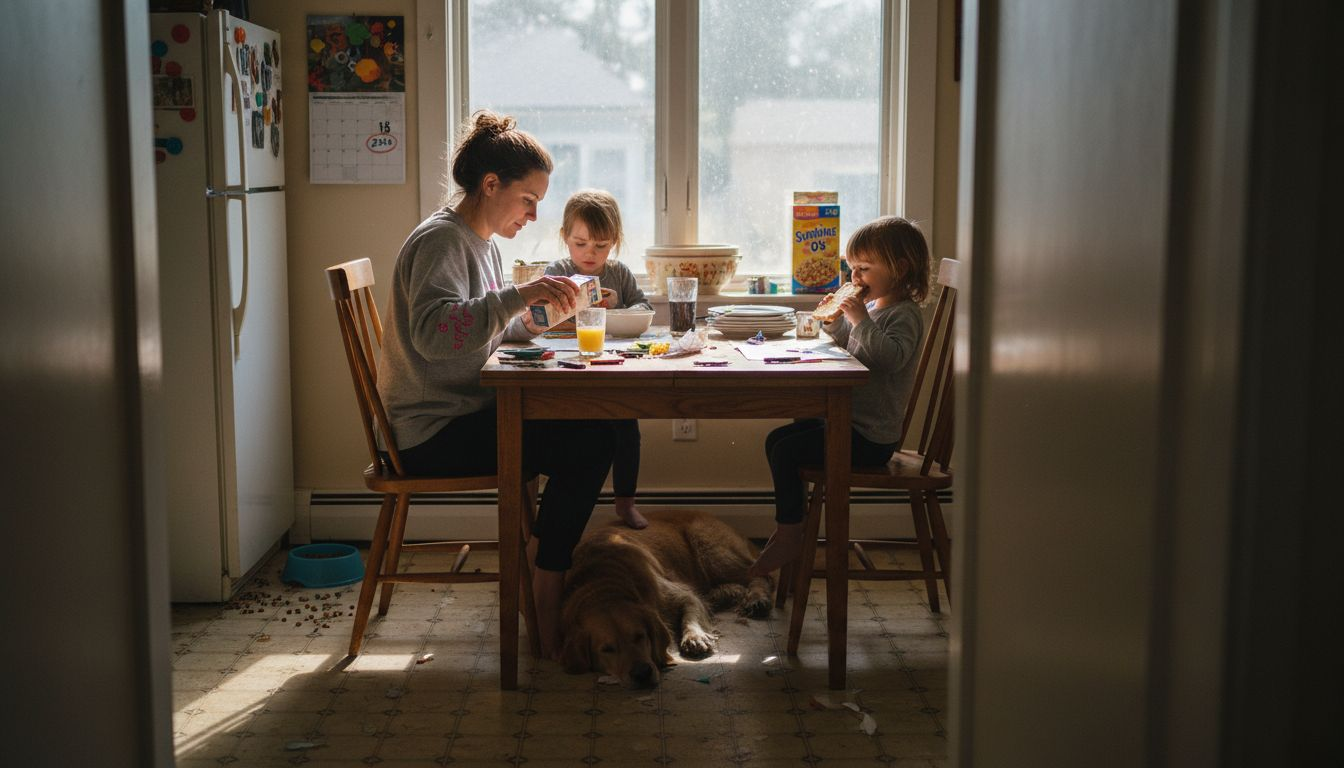
Role of Home Routines in Balance: Everyday Solutions
More than 60 percent of American parents report feeling overwhelmed by the rush of daily demands. Balancing work, chores, and quality family time can seem impossible without reliable routines. Whether you are racing to finish breakfast or juggling evening activities, finding practical home strategies matters for every American family. This guide uncovers what home routines really offer and how they set the groundwork for less stress, better connection, and smoother days.
Table of Contents
- What Home Routines Really Mean For Families
- Types Of Routines And Their Impact On Balance
- Key Elements Of Effective Family Routines
- How Home Routines Support Work-Life Harmony
- Mistakes Families Make With Home Routines
Key Takeaways
| Point | Details |
|---|---|
| Emotional Security | Establishing consistent home routines provides children with emotional security, reducing stress and anxiety through predictability. |
| Teaching Life Skills | Home routines promote the development of responsibility, self-discipline, and confidence in children, helping them manage their time and tasks effectively. |
| Flexibility is Essential | Effective family routines should strike a balance between consistency and flexibility, adapting to changing family needs while maintaining structure. |
| Involve Everyone | Include all family members in routine planning to increase engagement and make routines feel like shared experiences rather than imposed rules. |
What Home Routines Really Mean for Families
Home routines are much more than just a series of scheduled activities – they’re the powerful framework that transforms family chaos into smooth, predictable harmony. When families establish consistent daily patterns, they create a sense of safety, comfort, and mutual understanding that goes far beyond simple scheduling.
At their core, home routines provide children with a sense of emotional security. Research from the American Academy of Pediatrics reveals that predictable patterns help reduce stress and anxiety for kids, giving them a reliable structure they can depend on. Whether it’s a morning breakfast ritual, an evening storytime, or a weekend family game night, these repeated interactions build trust and strengthen family connections.
Routing isn’t just about timing – it’s about teaching fundamental life skills. According to Boston Children’s Hospital, consistent routines help children develop responsibility, self-discipline, and confidence. When kids know what to expect and have clear expectations, they learn to manage their own time, complete tasks independently, and feel more in control of their environment.
The beauty of home routines lies in their flexibility. They aren’t rigid constraints but adaptable frameworks that evolve with your family’s changing needs. The key is finding rhythms that work for everyone, creating a sense of predictability while leaving room for spontaneity and individual personalities.
Pro Family Rhythm Tip: Start small by implementing just one consistent daily routine, like a shared breakfast or bedtime story, and gradually build from there. Consistency matters more than perfection.
Types of Routines and Their Impact on Balance
Family routines are not a one-size-fits-all approach but a nuanced system of interconnected practices that support emotional and functional balance. Research from the American Psychological Association highlights that these routines can be broadly categorized into two primary types: observable practices and symbolic rituals, each playing a crucial role in family dynamics.
Observable practices are the tangible, day-to-day activities that create structure and predictability. These include morning preparation routines, meal schedules, homework time, and bedtime sequences. Recent studies from Frontiers in Child and Adolescent Psychiatry demonstrate that consistent mealtimes and bedtime routines significantly reduce emotional challenges in children, providing a sense of security and emotional regulation.
Symbolic rituals, on the other hand, transcend daily logistics and focus on creating meaningful family connections. These might include weekly family dinners, weekend traditions, holiday celebrations, or special recognition of personal achievements. Such rituals build emotional resilience, strengthen family identity, and create lasting memories that children carry throughout their lives. They serve as anchors during times of stress, offering a sense of continuity and belonging.
Here’s a comparison of observable practices and symbolic rituals in family routines:
| Aspect | Observable Practices | Symbolic Rituals |
|---|---|---|
| Focus | Daily structure and timing | Emotional meaning and connection |
| Examples | Morning prep, mealtimes, bedtimes | Family dinners, holidays, awards |
| Main Benefits | Enhances predictability, order | Builds identity, resilience |
| Impact on Children | Reduces anxiety, promotes security | Creates memories, fosters bonds |
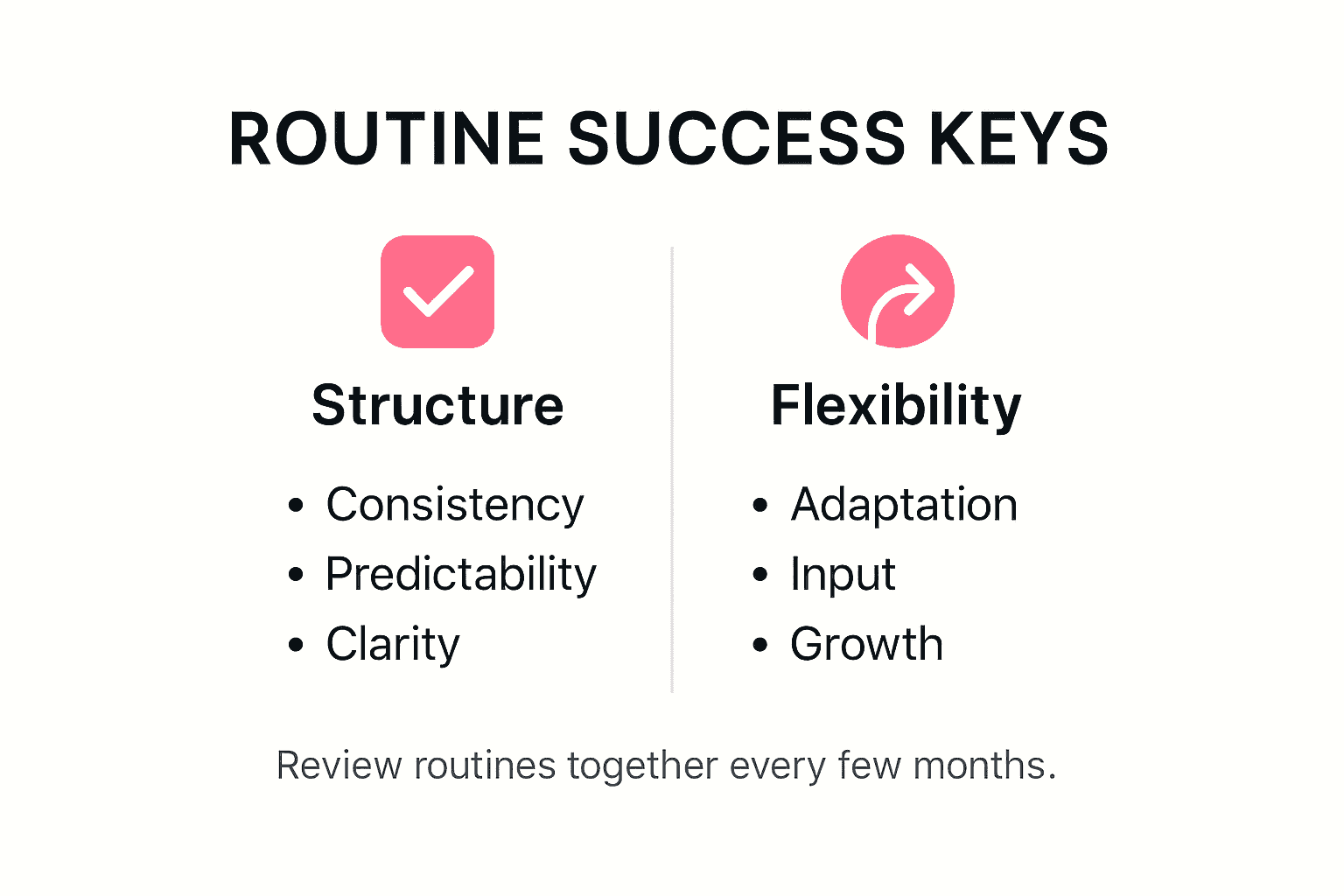
The most effective family routines strike a delicate balance between structure and flexibility. While consistency is key, overly rigid routines can become restrictive. The goal is to create a framework that provides predictability while allowing room for spontaneity, individual growth, and adaptation to changing family needs.
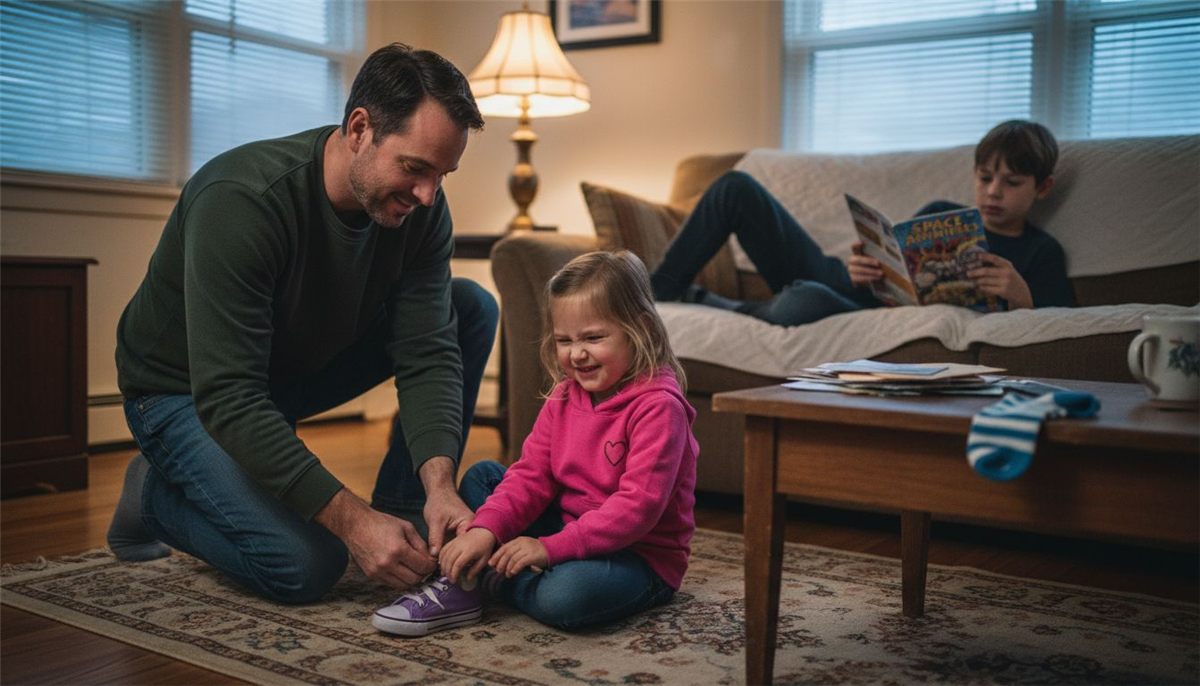
Pro Routine Planning Tip: Create a visual routine chart with your family, allowing each member to contribute ideas and have a sense of ownership over the family’s daily rhythm. This collaborative approach increases buy-in and makes routines feel less like rules and more like shared family experiences.
Key Elements of Effective Family Routines
Creating successful family routines is an art that requires thoughtful planning and intentional design. According to Head Start’s comprehensive guidelines, effective routines are built on three fundamental pillars: consistency, flexibility, and age-appropriateness. These principles transform routines from rigid schedules into dynamic frameworks that support each family member’s growth and emotional well-being.
Consistency forms the backbone of any effective routine. This means establishing predictable patterns that children can anticipate and rely on, which provides a sense of security and emotional stability. Zero to Thrive emphasizes the importance of creating routines with clear, manageable steps that engage all family members. The goal is to design routines that feel natural and intuitive, not like a military-style regimentation that leaves no room for individual personality or spontaneity.
Flexibility is equally crucial in modern family dynamics. While consistency provides structure, routines must also adapt to changing family circumstances, work schedules, and individual needs. This means being willing to modify routines when they’re not working, involving family members in the process of creating and adjusting these frameworks, and understanding that perfection is less important than genuine connection and mutual understanding.
Age-appropriate routines are particularly critical in supporting children’s developmental stages. A routine that works for a toddler will look dramatically different from one designed for teenagers. The key is to create scalable systems that can evolve as children grow, gradually increasing responsibilities and independence while maintaining a supportive, predictable family environment.
Below is a summary of key elements that make family routines truly effective:
| Principle | Description | Why It Matters |
|---|---|---|
| Consistency | Predictable patterns children expect | Provides safety and stability |
| Flexibility | Adjusts to family changes and needs | Reduces stress, increases buy-in |
| Age-Appropriateness | Matches developmental stages | Encourages growth, independence |
Pro Routine Adaptation Tip: Conduct a quarterly family meeting to review and adjust your existing routines, allowing each family member to provide input and share what’s working or needs improvement. This collaborative approach ensures that routines remain relevant and meaningful.
How Home Routines Support Work-Life Harmony
Balancing work and family life is one of the most challenging aspects of modern parenting. Reid Health highlights how structured home routines can dramatically transform family dynamics, creating a seamless integration between professional responsibilities and family needs that reduces overall stress and increases quality time together.
Home routines act as a strategic framework for time management, allowing parents to maximize productivity while maintaining meaningful connections with their children. By establishing predictable patterns for daily activities like meals, homework, and bedtime, families create natural rhythms that minimize chaos and create emotional breathing room. This systematic approach means less mental energy spent on constant decision-making and more intentional moments of genuine family interaction.
The psychological benefits of work-life harmony through routines extend far beyond simple scheduling. When children understand what to expect, they feel more secure, which reduces family tension and creates a more supportive home environment. Parents experience reduced decision fatigue, as established routines eliminate the constant negotiation and improvisation that can drain emotional resources. These structured approaches provide a sense of control that helps families navigate the complex demands of modern life with greater ease and confidence.
Implementing work-life harmony through routines requires a holistic approach that considers each family member’s unique needs and responsibilities. This means being flexible enough to adjust routines as children grow, work demands change, and family dynamics evolve. The most successful families view routines not as rigid constraints, but as adaptive tools that support everyone’s individual and collective well-being.
Pro Harmony Tip: Design a visual family command center with color-coded schedules, shared calendars, and designated spaces for each family member’s responsibilities to create transparency and mutual understanding.
Mistakes Families Make With Home Routines
Research from SCAN of Northern Virginia reveals that many families unintentionally sabotage their home routines by making common yet critical mistakes. Understanding these pitfalls is the first step toward creating more effective, stress-reducing family systems that actually work with—not against—your family’s natural rhythm.
One of the most prevalent mistakes is creating overly rigid routines that leave no room for flexibility. Families often design schedules so strict that they become sources of stress rather than solutions. This approach backfires by making routines feel like punishment instead of supportive structures. Children and parents alike need breathing room—routines should guide, not dictate, daily life. The key is creating frameworks flexible enough to adapt when unexpected situations arise, whether it’s a late work meeting, a sick child, or spontaneous family fun.
Another significant error is excluding children from routine development. Effective routine strategies require buy-in from all family members, especially kids. When parents unilaterally impose rules without explanation or input, children feel disempowered and are more likely to resist. Successful routines involve age-appropriate conversations about why certain structures matter, allowing children to contribute ideas and feel ownership over family processes.
Many families also fall into the trap of trying to implement too many changes simultaneously. Sustainable routine development is about gradual, intentional shifts. Attempting to revolutionize every aspect of family life overnight leads to overwhelm and inevitable failure. Smart families introduce one or two new practices at a time, allowing everyone to adjust and build confidence before layering on additional structure.
Pro Routine Rescue Tip: Create a family routine “test run” week where you experiment with new structures, gather feedback from all members, and make collaborative adjustments, treating routine development as a team problem-solving exercise.
Find Peace and Balance Through Better Home Routines
Struggling to create home routines that actually work for your busy family Can unpredictable schedules and the stress of balancing work and family life feel overwhelming You are not alone The article highlights common challenges like overly rigid routines, lack of flexibility, and the need for family buy-in These pain points can lead to frustration and emotional tension at home but there is a way forward
At Its a Southern Life Yall, you can discover simple living strategies and time management tools designed to help you build consistent yet adaptable family routines that foster calm and connection Explore proven organization hacks and home management systems that reduce the chaos and increase quality time with your loved ones Don’t wait to transform your family life Start your journey to balance and peace today by visiting Its a Southern Life Yall and take advantage of expert advice tailored for busy families just like yours
Frequently Asked Questions
What are the benefits of establishing home routines for families?
Establishing home routines provides emotional security for children, enhances their development of responsibility and self-discipline, and promotes stronger family connections through predictable interactions.
How can families begin to implement effective routines?
Families can start by introducing one consistent routine, such as a shared meal or bedtime story, and gradually build from there, focusing on consistency over perfection.
What types of routines are most impactful for balancing family life?
Impactful routines can be categorized into observable practices, such as meal times and homework schedules, and symbolic rituals, like family dinners and holiday celebrations, both of which support family dynamics and emotional wellbeing.
How can we ensure our home routines remain flexible?
To keep routines flexible, families should regularly review and adjust them as needed, involve all family members in discussions about routine changes, and understand that spontaneous moments can enrich structured practices.
Recommended
- 7 Family-Friendly Examples of Productivity Hacks That Work – It’s a Southern Life Ya’ll
- Guide to Morning Routines of High Achievers – It’s a Southern Life Ya’ll
- Everyday Items You’re Cleaning Wrong – It’s a Southern Life Ya’ll
- Home Away From Home – Why Predictability Matters Most – Guestly Homes
Want a little more help with this? The Sunday Blueprint is the one-hour reset that sets these routines up for the week ahead.