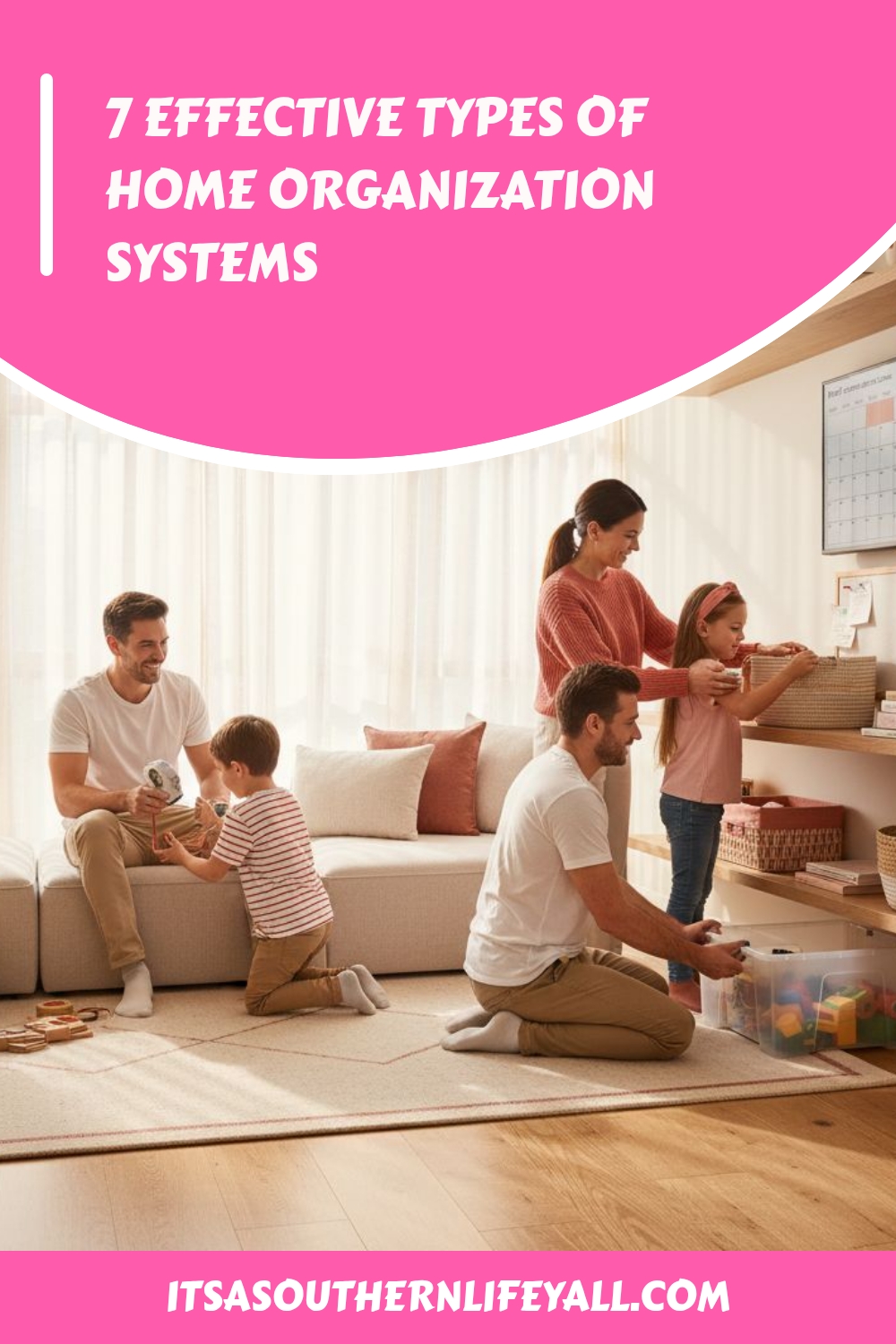
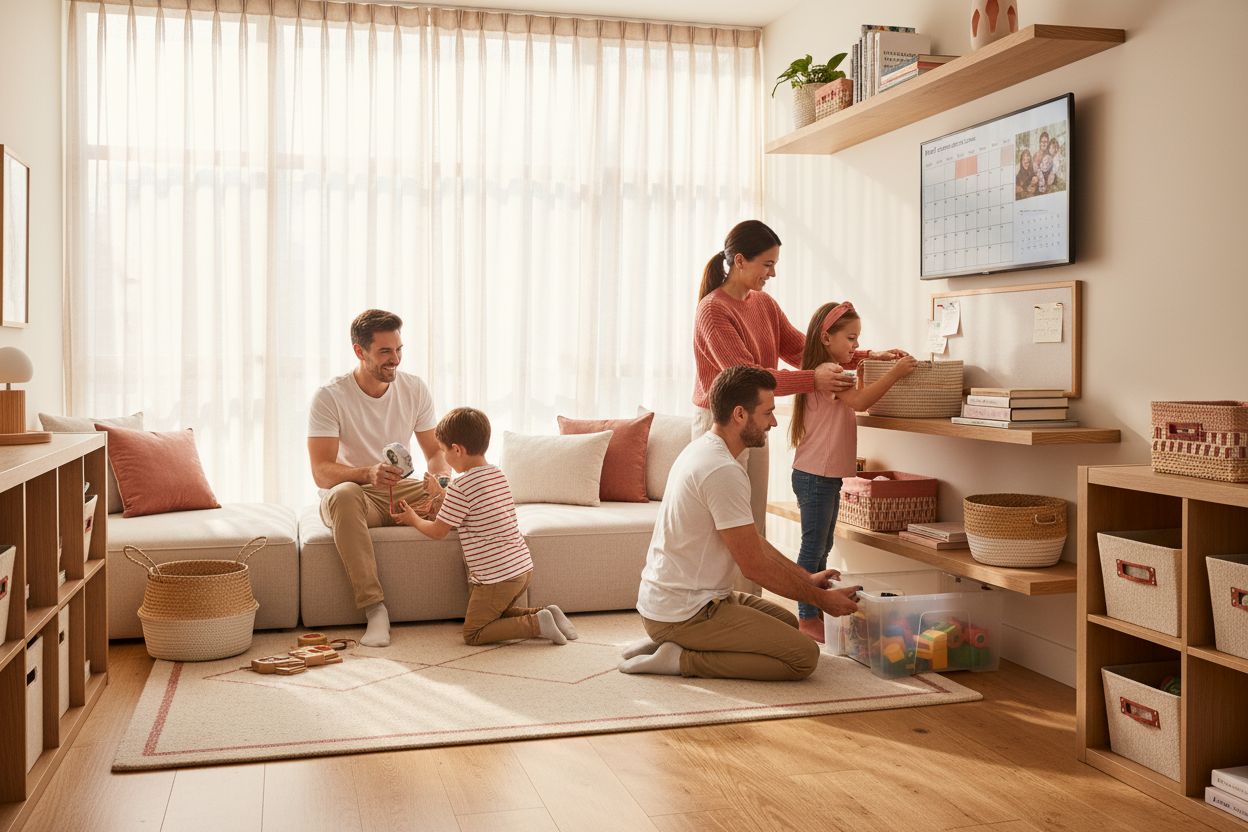
Keeping a home organized can sometimes feel like chasing a moving target. The average American spends over two and a half days each year just looking for misplaced items. Surprising, right? Most people think more cleaning is the answer, but sustainable home organization is about building simple systems that do the work for you and transform everyday chaos into calm.
Table of Contents
- Introduction To Home Organization Systems
- Storage Solutions For Small Spaces
- Labeling Systems For Easy Identification
- Modular Furniture For Flexible Organization
- Digital Organization Tools And Apps
- Family Command Centers For Centralized Management
- Seasonal Organization Tactics For Clutter Control
Quick Summary
| Takeaway | Explanation |
|---|---|
| Implement practical home organization systems | Create structured approaches to manage belongings efficiently and reduce clutter at home. |
| Utilize creative storage solutions for small spaces | Make use of vertical space and multi-functional furniture to maximize storage without sacrificing openness. |
| Establish effective labeling systems | Use clear, easy-to-read labels to help family members quickly locate items, reducing frustration and time spent searching. |
| Adopt modular furniture for flexibility | Choose adaptive furniture that can be easily reconfigured to meet changing needs and optimize space management. |
| Conduct seasonal organization assessments | Regularly evaluate belongings and clear out items that are no longer needed to maintain an organized home year-round. |
1: Introduction to Home Organization Systems
Home organization systems transform chaotic living spaces into peaceful, functional environments. Effective organization isn’t just about tidying up but creating sustainable strategies that make daily life smoother and more enjoyable. By implementing smart home organization systems, you can reduce stress, save time, and create spaces that truly work for you and your family.
At its core, home organization involves developing structured approaches to manage your living spaces efficiently. These systems help you categorize, store, and access your belongings in ways that maximize space and minimize clutter. Learn more about organizing your home with strategic techniques that adapt to your unique lifestyle.
When considering types of home organization systems, you’ll want to focus on methods that are practical, flexible, and tailored to your specific needs. The best systems share several key characteristics:
- Simplicity and ease of maintenance
- Adaptability to changing household dynamics
- Clear categorization of items
According to National Association of Productivity and Organizing Professionals, successful home organization goes beyond mere storage. It’s about creating intuitive systems that help you locate items quickly, reduce mental clutter, and create spaces that promote peace and productivity.
Home organization isn’t a one-size-fits-all solution. What works perfectly for one household might not suit another. This is why understanding different types of organization systems is crucial. By exploring various approaches, you can mix and match strategies that align with your personal style, living space, and family needs.
Think of home organization systems as personalized roadmaps to a more streamlined life. They’re not about achieving picture-perfect spaces, but creating functional environments that support your daily routines and help you feel more in control.
2: Storage Solutions for Small Spaces
Living in compact spaces demands creative and intelligent storage strategies. Small homes and apartments challenge residents to maximize every square inch while maintaining a sense of openness and comfort. The key is selecting storage solutions that are both functional and visually unobtrusive.
Explore kitchen organization tips that can help transform cramped areas into efficient spaces. Vertical storage becomes crucial in small living environments, allowing you to utilize wall space and height instead of spreading horizontally.
According to The Spruce, innovative storage solutions can help you reclaim valuable living space. Smart homeowners focus on multi-functional furniture and hidden storage options that serve dual purposes.
Consider these strategic storage approaches for small spaces:
- Utilize under-bed storage containers
- Install floating shelves to maximize vertical space
- Choose furniture with built-in storage compartments
The most effective small space storage systems share several important characteristics. They are compact, adaptable, and designed to integrate seamlessly with your existing decor. Modular storage units allow you to customize and reconfigure spaces as your needs change.
Psychologically, well-organized small spaces can significantly reduce stress and increase overall satisfaction with your living environment. When every item has a designated place, you spend less time searching and more time enjoying your home.
Multi-purpose furniture represents a game-changing approach to small space organization. Ottoman beds with storage, expandable dining tables, and wall-mounted desks that fold away demonstrate how intelligent design can create flexible living spaces.
Remember that successful small space storage isn’t about cramming everything into tight spaces. It’s about thoughtful selection, strategic placement, and maintaining a sense of openness that makes your compact area feel larger and more inviting.
3: Labeling Systems for Easy Identification
Effective labeling transforms chaotic storage into an organized, intuitive system. When every container, shelf, and space has a clear identification method, you dramatically reduce time spent searching and minimize household frustration.
Explore organizing life strategies that can help streamline your labeling approach. Labeling isn’t just about placing tags on containers it’s about creating a communication system within your home that everyone can understand.
According to Professional Organizers in Canada, well-designed labeling systems can reduce household stress by up to 40%. The goal is to create a consistent, easy-to-read method that works for every family member.
Consider these key principles for effective labeling:
- Use clear, large fonts that are easy to read
- Choose waterproof and durable label materials
- Create a consistent color-coding system
Digital and physical labeling methods can work together to create comprehensive organization. Digital label makers offer precision and uniformity, while handwritten labels can add a personal touch. The most successful systems combine technology with personal preference.
For families with children, labeling becomes an educational tool. Kids can learn organizational skills by understanding where items belong and how to return them to their designated spaces. Visual labels with pictures work exceptionally well for younger children.
Labeling extends beyond storage containers. Consider labeling kitchen pantry shelves, home office filing systems, garage tools, and children’s play areas. A comprehensive labeling approach ensures that every family member can maintain organization with minimal effort.
Choose label materials and styles that match your home’s aesthetic. Minimalist homes might prefer clean, white labels with simple black text, while more eclectic spaces could incorporate colorful, creative labeling techniques. The key is finding a system that feels natural and sustainable for your specific household dynamic.

4: Modular Furniture for Flexible Organization
Modular furniture represents the future of intelligent home organization, offering unprecedented flexibility for families navigating changing living spaces. These adaptive pieces transform how we think about storage and functionality, allowing rooms to evolve alongside our lifestyle needs.
Explore organizing tips that showcase how versatile furniture can revolutionize your living environment. Modular systems provide dynamic solutions that grow and shift with your family’s requirements.
According to Furniture Design Research Institute, modular furniture can increase living space efficiency by up to 35% compared to traditional static furniture. These innovative designs prioritize adaptability and smart space management.
Key advantages of modular furniture include:
- Ability to reconfigure spaces quickly
- Scalable storage solutions
- Customizable design options
Modular furniture works exceptionally well in compact living environments. Pieces like stackable cubes, expandable shelving units, and transforming tables allow you to maximize every square inch of your home. These designs aren’t just about storage they’re about creating intelligent living spaces that respond to your changing needs.
For families with growing children or professionals working in evolving spaces, modular furniture offers unparalleled flexibility. A bookshelf that starts in a home office can easily transition to a child’s bedroom or living room entertainment center as your life changes.
Consider investing in furniture pieces that serve multiple functions. A sofa that converts into a bed, a dining table with expandable leaves, or ottomans with hidden storage demonstrate how modern design can create more adaptable living environments.
The psychological benefit of modular furniture cannot be overstated. Knowing that your living space can easily transform reduces stress and increases overall satisfaction. Instead of feeling trapped by rigid furniture arrangements, you gain the freedom to reimagine your space whenever inspiration strikes.
5: Digital Organization Tools and Apps
Digital organization tools transform how we manage personal and professional life, offering unprecedented ways to track, categorize, and streamline our daily activities. These technological solutions provide real-time organization capabilities that extend far beyond traditional paper-based systems.
Explore organizing life strategies that leverage cutting-edge digital technologies to simplify complex management tasks. Modern apps and tools create seamless connections between different aspects of our personal and professional worlds.
According to Productivity Research Center, digital organization tools can increase personal productivity by up to 40% when implemented strategically. These technologies are not just about tracking tasks but creating holistic systems that adapt to individual workflow needs.
Consider these essential digital organization strategies:
- Integrate cloud-based storage solutions
- Use cross-platform synchronization tools
- Implement task management applications
Digital organization goes beyond simple task tracking. Advanced tools now offer artificial intelligence-powered recommendations, predictive planning, and integrated communication systems that learn from your personal habits and preferences.
Mobile apps and web-based platforms have revolutionized how we approach organization. Calendar applications that sync across devices, note-taking tools with advanced search capabilities, and project management platforms enable unprecedented levels of personal and professional coordination.
For families and individuals, digital organization tools provide centralized spaces to manage complex schedules, track expenses, coordinate household tasks, and maintain important documents. These tools create a digital ecosystem that reduces mental clutter and increases overall efficiency.
The most effective digital organization systems prioritize user experience, offering intuitive interfaces that make complex organizational tasks feel simple and manageable. By selecting tools that integrate smoothly with your existing technology and lifestyle, you can create a personalized digital organization strategy that feels natural and supportive.
6: Family Command Centers for Centralized Management
Family command centers represent the nerve center of household organization, providing a dedicated space where information, schedules, and critical communication converge. These centralized management zones transform how families track, plan, and coordinate their complex daily activities.
Explore kitchen organization strategies that can help you design an efficient family command center. The most effective command centers integrate multiple organizational tools into one cohesive system.
According to Family Management Research Institute, well-designed family command centers can reduce household stress by up to 50% and improve overall family communication and coordination.
Key elements of an effective family command center include:
- Large central calendar for tracking family schedules
- Message board for shared communications
- Designated space for mail, keys, and important documents

The physical location of your family command center matters significantly. High-traffic areas like kitchen spaces or home entryways work best, ensuring maximum visibility and accessibility for all family members.
Modern family command centers blend traditional organizational tools with digital technologies. Magnetic boards, dry-erase surfaces, and bulletin boards coexist with tablet mounts, charging stations, and digital calendars. This hybrid approach accommodates different communication preferences and technological comfort levels.
For families with children, command centers become powerful educational tools. Kids learn organizational skills by observing and participating in the family’s central information hub. Color-coded sections, individual folders, and interactive elements make organization feel engaging rather than tedious.
Customization is the heart of an effective family command center. No two families are identical, so your command center should reflect your unique household dynamics, communication styles, and organizational needs. Whether you prefer a minimalist digital approach or a vibrant, analog system, the goal remains the same: creating a centralized space that helps your family communicate, plan, and thrive together.
7: Seasonal Organization Tactics for Clutter Control
Seasonal organization transforms cluttered spaces into streamlined, manageable environments, offering families a strategic approach to managing belongings throughout the year. By implementing targeted tactics, you can prevent accumulation and maintain a clean, organized home.
Learn how to clear clutter from your home with proven seasonal strategies that make maintenance feel effortless. Seasonal organization is about proactive management, not reactive cleaning.
According to National Cleaning Association, households that implement seasonal organization tactics reduce overall clutter by up to 60% and significantly decrease stress related to home maintenance.
Key seasonal organization strategies include:
- Conduct quarterly comprehensive home assessments
- Rotate seasonal clothing and decorations systematically
- Donate or discard items no longer serving a purpose
Winter provides an excellent opportunity for indoor organization projects. When outdoor activities are limited, focus on sorting storage areas, reviewing digital files, and creating comprehensive organizational systems that will serve you throughout the year.
Spring cleaning goes beyond surface-level tidying. It’s a comprehensive reset that involves deep examination of your living spaces. Evaluate each room’s functionality, identify unnecessary items, and create streamlined storage solutions that adapt to your evolving lifestyle.
Summer offers unique organizational challenges with increased family activities and potential travel. Develop flexible systems that can accommodate fluctuating schedules, temporary storage needs, and the influx of seasonal items like sports equipment, beach gear, and vacation souvenirs.
The most effective seasonal organization approaches are flexible and personalized. Your tactics should reflect your family’s specific needs, living space, and lifestyle. By treating organization as an ongoing process rather than a one-time event, you create sustainable systems that reduce stress and increase home efficiency.
Below is a comprehensive table summarizing the main types, benefits, and strategies covered in the article to help you implement effective home organization systems.
| Home Organization System | Key Features & Steps | Primary Benefits |
|---|---|---|
| Storage Solutions for Small Spaces | Use vertical space, under-bed storage, floating shelves, and multi-functional furniture | Maximizes small areas, maintains openness |
| Labeling Systems for Easy Identification | Clear, durable labels; consistent fonts; color coding; visual labels for kids | Speeds up item retrieval, reduces frustration |
| Modular Furniture for Flexible Organization | Reconfigurable, stackable, and scalable pieces; multi-purpose furniture | Adapts to changing needs, optimizes space |
| Digital Organization Tools and Apps | Employ cloud storage, task managers, cross-device syncing, and AI-powered planning | Boosts productivity, centralizes management |
| Family Command Centers for Centralized Management | Central calendar, message board, key/mail storage; place in high-traffic areas, blend digital/traditional | Improves family coordination, reduces stress |
| Seasonal Organization Tactics | Conduct quarterly reviews, rotate clothing/decor, declutter, and donate/discard as needed | Maintains year-round order, prevents accumulation |
| Foundational Characteristics | Simplicity, adaptability, clear categorization, blend of digital and physical systems | Sustainable, versatile organization throughout home |
Unlock Lasting Organization with Solutions Made for Your Busy Life
Are you feeling overwhelmed by constant clutter and the never-ending struggle to find space for everything? If you connected with the frustration of chaotic rooms and the stress caused by disorganized schedules discussed in the article, you are not alone. Busy families often want more than just quick fixes. They need home organization systems that work in real life, from labeling tricks to digital organization tools and central family command centers.
Take the first step to a more peaceful, productive home today. Discover proven decluttering hacks, sustainable time management tips, and simple routines that fit your lifestyle. Ready to manage your home with confidence and finally create the calm, organized space you deserve? Explore practical solutions inspired by the exact pain points discussed in effective home organization systems. Your transformation starts with just one click.
Frequently Asked Questions
What are the key characteristics of effective home organization systems?
Effective home organization systems should be simple, adaptable, and well-categorized. To create your own system, start by assessing your current belongings and identifying which items can be grouped together based on their usage.
How can I implement storage solutions in small spaces?
To maximize space in small areas, opt for multi-functional furniture and vertical storage solutions. Begin by evaluating your living space for hidden areas to add under-bed storage or floating shelves, aiming to reduce clutter by at least 30%.
What are the benefits of using labeling systems in home organization?
Labeling systems help in quickly identifying the contents of storage places, reducing time spent searching for items. Implement a labeling system by using clear, durable materials and organizing items based on frequency of use, which can streamline your daily routines.
How can modular furniture enhance organization in my home?
Modular furniture allows for flexible space reconfiguration to suit your changing needs. Choose modular pieces that can serve multiple functions, like a sofa that transforms into a bed, to optimize your living environment accordingly.
What digital organization tools should I consider for home management?
Consider adopting digital organization tools like task management apps or cloud storage services to keep track of your personal and family schedules. Start by integrating at least two digital tools that sync across devices to improve overall household efficiency by 40%.
How can I effectively maintain a family command center?
To maintain an effective family command center, create a centralized location with a calendar, message board, and designated storage for important documents. Regularly update the center with new family events and reminders at least once a week to enhance communication and organization.
Recommended