
From Pinterest Follower to Blog Subscriber: How to Convert Your Audience Easily
Every American parent knows there never seems to be enough time to juggle busy family schedules with growing an online presence. Yet with over 80 percent of Pinterest users coming from the United States and Canada, a well-planned strategy lets working mothers turn Pinterest interest into loyal blog subscribers. This guide offers easy, actionable steps to help you reach more readers without sacrificing precious time at home.
Table of Contents
- Step 1: Identify Your Pinterest Audience Preferences
- Step 2: Optimize Your Blog Content For Pinterest Users
- Step 3: Design Irresistible Lead Magnets For Signups
- Step 4: Integrate Seamless Signup Forms And Workflows
- Step 5: Test Conversion Strategies And Refine For Results
Quick Summary
| Key Point | Explanation |
|---|---|
| 1. Analyze Pinterest Analytics | Use Pinterest analytics to discover what content resonates most with your audience, focusing on saves, repins, and clicks. |
| 2. Optimize Visual Content | Create eye-catching, vertical graphics for your pins, ensuring dimensions and text align with Pinterest’s best practices. |
| 3. Develop Targeted Lead Magnets | Address specific audience challenges with valuable resources like checklists or ebooks to drive subscriptions. |
| 4. Strategically Place Sign-Up Forms | Position sign-up forms within blog content to create a natural progression for readers and encourage subscriber engagement. |
| 5. Continuously Test Strategies | Implement A/B testing on your conversion strategies and regularly analyze results to adapt your approach based on audience behavior. |
Step 1: Identify your Pinterest audience preferences
Understanding your Pinterest audience is key to turning casual followers into dedicated blog subscribers. By developing detailed audience personas, you can create targeted content that resonates deeply with your specific demographic.
Start by analyzing your current Pinterest analytics to uncover critical insights. Look closely at which pins get the most saves, repins, and clicks. These engagement metrics reveal what type of content your audience finds most compelling. Pay attention to the demographics section showing age ranges, gender breakdown, and geographic locations of your followers. Track which board categories attract the most interaction and use these details to craft more precise content strategies.
Consider creating a simple spreadsheet to organize your audience research. Document patterns like most popular pin styles, typical engagement times, and content themes that generate the highest interaction. By understanding audience preferences carefully, you can design blog content that speaks directly to their interests and needs.
Pro tip: Use Pinterest’s built-in analytics tools to conduct quarterly audience preference reviews and continuously refine your content strategy.
Here is a summary of key Pinterest analytics metrics and how each informs your blog strategy:
| Analytics Metric | What It Reveals | Strategic Action |
|---|---|---|
| Saves & Repins | Content appeal and virality | Create more of engaging content types |
| Clicks | Pin efficacy driving traffic | Refine call-to-actions and pin designs |
| Demographics | Age, gender, location insights | Personalize blog themes and topics |
| Top Board Categories | Niche interest segmentation | Focus on high-interaction content areas |
| Engagement Times | When audience is most active | Schedule posts for peak interaction |
Step 2: Optimize your blog content for Pinterest users
Transforming your blog content into Pinterest gold requires strategic visual and structural planning. Pinterest functions as a visual discovery engine that rewards creators who understand its unique search and sharing dynamics.
Start by creating eye-catching, vertical pin graphics that stand out in crowded feeds. Use high-resolution images with bright colors and clear text overlays that explain your blog post’s key value proposition. Ensure your pin dimensions are optimized for Pinterest recommended sizes 1000×1500 pixels which perform best in the platform’s algorithm. Include descriptive keywords in your pin titles and descriptions that match common search queries related to your content topic.

Visual search optimization techniques are crucial for attracting potential blog subscribers. Develop multiple pin variations for each blog post to increase visibility and test which designs generate the most engagement. Group your pins into thematic, well-organized boards that help users quickly understand your content niche and expertise.
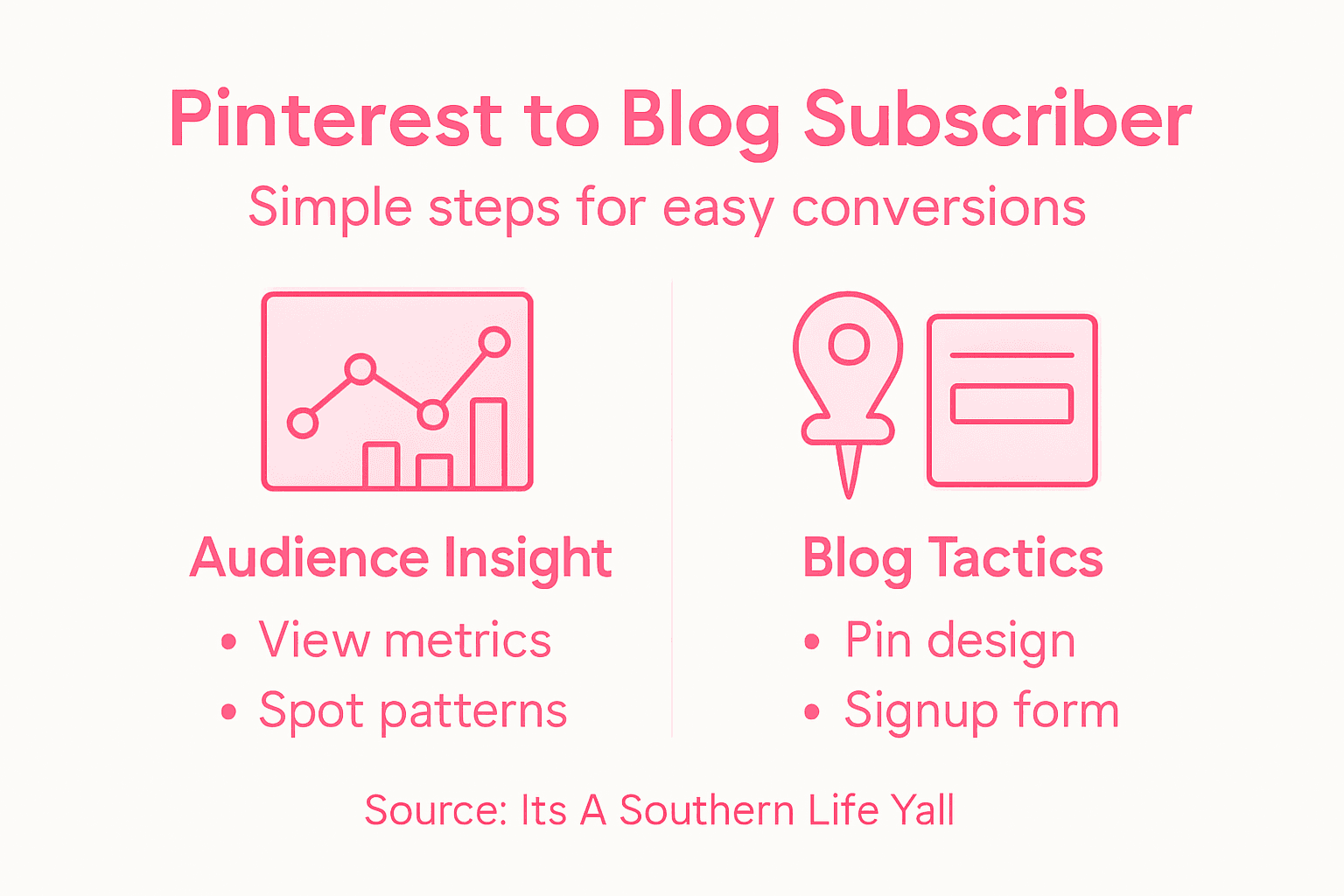
Pro tip: Create a consistent pin design template that includes your brand colors and fonts to make your content instantly recognizable across Pinterest.
Step 3: Design irresistible lead magnets for signups
Transforming casual Pinterest followers into dedicated blog subscribers requires creating lead magnets that speak directly to audience needs. Your signup offers must provide immediate value that solves a specific problem your target audience experiences.
Start by mapping out your audience’s most pressing challenges. Develop targeted resources like checklists, mini ebooks, templates, or video tutorials that address those exact pain points. For instance, if your blog focuses on home organization, create a downloadable closet decluttering checklist or a room-by-room simplification guide. Ensure your lead magnet design matches the visual aesthetic of your Pinterest graphics to maintain brand consistency and attract users who already appreciate your style.
Understanding audience lifestyle segments helps craft more compelling signup offers. Research what types of free resources your Pinterest followers engage with most frequently. Track which pins generate the most saves and clicks to understand what content resonates. Develop lead magnets that are not just informative but visually appealing and easy to consume quickly.
Pro tip: Create multiple lead magnet variations and A/B test them to discover which design and content approach generates the highest signup rates.
Here is a comparison of lead magnet types effective for Pinterest audiences:
| Lead Magnet Type | Strengths | Best For Pinterest Niches |
|---|---|---|
| Checklists | Quick to consume, actionable | Organization, health, productivity |
| Mini Ebooks | Detailed insights, value-rich | Education, self-improvement, DIY |
| Templates | Saves time, customizable | Design, planning, content creation |
| Video Tutorials | Easy to follow, highly visual | Crafts, beauty, lifestyle instruction |
Step 4: Integrate seamless signup forms and workflows
Turning Pinterest followers into dedicated blog subscribers requires strategically designed signup experiences. Your goal is to create a frictionless path that makes joining your community feel natural and exciting.
Position your signup forms strategically throughout your blog content where they feel like a helpful extension of the reader’s journey. Use visually appealing design elements that match your Pinterest graphics and require minimal information. Ask for only essential details like name and email address to reduce barrier to entry. Implement smart automation workflows that immediately deliver your lead magnet and send a personalized welcome email series introducing new subscribers to your most valuable content.
Visual cues and minimal form fields can significantly improve signup conversion rates. Create multiple signup opportunities embedded naturally within your blog posts specialized for Pinterest traffic. Consider using exit intent popups designed specifically for readers coming from Pinterest who might need an extra nudge to subscribe.
Pro tip: Test different form placements and designs to discover which combination generates the highest subscriber conversion rates for your specific audience.
Step 5: Test conversion strategies and refine for results
Successfully converting Pinterest followers requires ongoing experimentation and strategic audience behavior tracking. Think of this process like fine tuning a musical instrument every time you perform.
Implement systematic A/B testing across different elements of your conversion funnel. Test variations in lead magnet designs, signup form placements, welcome email sequences, and content delivery methods. Use analytics tools to track metrics like signup rates, email open rates, and click through percentages. Pay special attention to which strategies generate the most engaged subscribers who consistently interact with your blog content.
Continuous audience response analysis helps you adapt and improve your conversion approach. Create a structured spreadsheet to document test results, noting specific changes and their corresponding impact on subscriber acquisition. Review your data quarterly and be prepared to pivot your strategies based on emerging audience preferences and engagement patterns.
Pro tip: Set aside a small percentage of your marketing budget specifically for ongoing conversion strategy experimentation to maintain a dynamic and responsive approach.
Turn Your Pinterest Followers Into Loyal Blog Subscribers With Ease
Struggling to convert your Pinterest audience into engaged blog subscribers is a common challenge many creators face. This article highlights key pain points like understanding audience preferences, optimizing visual content, and designing irresistible lead magnets. If you want to stop feeling frustrated by low signup rates and instead build a thriving community, you need solutions that help you connect more deeply and provide true value.
At Its A Southern Life Yall, we offer practical strategies to transform chaotic home and digital spaces into organized, productive environments that speak directly to your followers’ needs. Explore our expert tips on home organization hacks, efficient time management tools, and proven blogging advice to refine your signup funnels, create compelling lead magnets, and optimize your content for maximum impact. Don’t wait to turn those Pinterest saves and clicks into long-term subscribers who love what you deliver.
Visit Its A Southern Life Yall today and start converting your audience with confidence by applying simple, effective strategies that work for busy families balancing life and creativity.
Frequently Asked Questions
How can I better understand my Pinterest audience’s preferences?
To understand your Pinterest audience, analyze your Pinterest analytics to identify which pins receive the most saves, repins, and clicks. Create a spreadsheet to document key insights like demographics and engagement patterns, and review this data quarterly to refine your content strategy.
What are the best ways to optimize my blog content for Pinterest users?
To optimize your blog content, create visually appealing pin graphics with high-resolution images and clear text overlays. Use Pinterest-recommended dimensions (1000×1500 pixels) and include descriptive keywords in your titles and descriptions to attract potential subscribers effectively.
How do I create effective lead magnets for my audience on Pinterest?
Develop lead magnets that directly address your audience’s specific challenges, such as checklists or mini ebooks. Ensure that these resources are visually appealing and align with your Pinterest aesthetics to encourage more signups.
What should I consider when integrating signup forms on my blog?
Position your signup forms strategically within your content, using visually appealing designs that match your Pinterest graphics. Keep the information required minimal—just the name and email address—to lower barriers to entry and increase conversions.
How can I track and test my conversion strategies for blog signups?
Implement A/B testing for various elements of your conversion funnel, such as lead magnet designs and signup form placements. Monitor metrics like signup and email open rates, and analyze the results quarterly to adjust your strategies based on audience feedback and engagement patterns.
Recommended
- How to Use Pinterest Group Boards to Explode Your Blog Traffic – It’s a Southern Life Ya’ll
- Tools You Can Use To Pin on Pinterest for Maximum Engagement 2026 – It’s a Southern Life Ya’ll
- Pinterest for Beginners: Setting Up Your Business Account for Success – It’s a Southern Life Ya’ll
- How to Start a Family Blog for Busy Parents in 2026 – It’s a Southern Life Ya’ll
- Partner Up & Get Paid | MyHair
Need a little more than a blog post? The Blog Starter has the opt-in and the follow-up already written for you.