

Shared calendar benefits for busy parents in 2026
You check your phone and realize you scheduled soccer practice at the same time as your spouse’s work meeting. Again. This chaos drains energy and creates unnecessary tension, but shared calendars can eliminate these conflicts and restore balance to your family life.
Table of Contents
- Why Shared Calendars Matter For Busy Families
- How Shared Calendars Improve Coordination And Reduce Mental Load
- Quantified Benefits And Real-World Impact
- Common Misconceptions About Shared Calendars
- Best Practices And Features For Effective Family Shared Calendars
- How To Set Up And Sustain A Shared Calendar System
- Conclusion: Embracing Shared Calendars For A Balanced Family Life
- Enhance Your Family’s Productivity With Proven Organization Systems
- Frequently Asked Questions
Key takeaways
| Point | Details |
|---|---|
| Reduced conflicts | Shared calendars provide real-time visibility, preventing double bookings and missed commitments. |
| Lower mental load | Distributing scheduling responsibility across family members relieves individual stress, especially for primary caregivers. |
| Better productivity | 72% of parents report increased productivity with shared scheduling tools. |
| Enhanced communication | Color-coding and weekly sync meetings improve coordination and family satisfaction. |
| Simplified adoption | Clear event ownership and consistent use habits maximize benefits and prevent confusion. |
Why shared calendars matter for busy families
Busy parents juggle work deadlines, school activities, medical appointments, and personal commitments simultaneously. When each family member maintains separate calendars, nobody sees the full picture. This fragmentation leads to scheduling conflicts, forgotten events, and constant last-minute scrambling.
Shared calendars solve this problem by creating one centralized schedule accessible to everyone. Your spouse can check the calendar before booking a dentist appointment. Your teenager sees when the car is available for driving practice. This visibility transforms how families coordinate daily life.
The benefits extend beyond preventing conflicts. When everyone accesses the same information, you spend less time sending reminder texts and making coordination phone calls. Your step-by-step family time management guide becomes easier to implement.
Key advantages include:
- Single source of truth eliminates confusion about who needs to be where
- Real-time updates prevent outdated information from causing problems
- Reduced communication overhead frees time for actual family activities
- Proactive conflict detection stops problems before they happen
Adopting a shared calendar represents the foundation of organized family life. It’s the first tool that truly helps busy parents regain control.
How shared calendars improve coordination and reduce mental load
Shared calendars function as a transparent awareness system. Everyone sees upcoming commitments, available time slots, and potential conflicts instantly. This visibility transforms scheduling from a guessing game into a straightforward planning process.

The mental load reduction matters particularly for mothers, who typically carry the majority of family coordination responsibilities. Shared calendars serve as a single source of truth accessible by all family members, reducing missed commitments and mental load. When scheduling responsibility distributes across the family, no single person bears the entire burden.
This distribution happens naturally. Your partner adds work meetings directly to the shared calendar. Your kids enter school events themselves. You’re no longer the sole keeper of family schedules, constantly fielding questions about availability.
Pro Tip: Set up automatic notifications for events added by other family members so you stay informed without constant calendar checking.
The cognitive benefits compound over time:
- Less time spent answering “What’s happening this week?” questions
- Fewer surprise conflicts discovered at the last minute
- Reduced anxiety about forgetting important commitments
- More mental space for meaningful activities instead of logistics
These improvements directly impact family satisfaction and stress levels. When coordination becomes effortless, you reclaim energy for what matters. Check out these family time management tips to maximize your results.
Quantified benefits and real-world impact
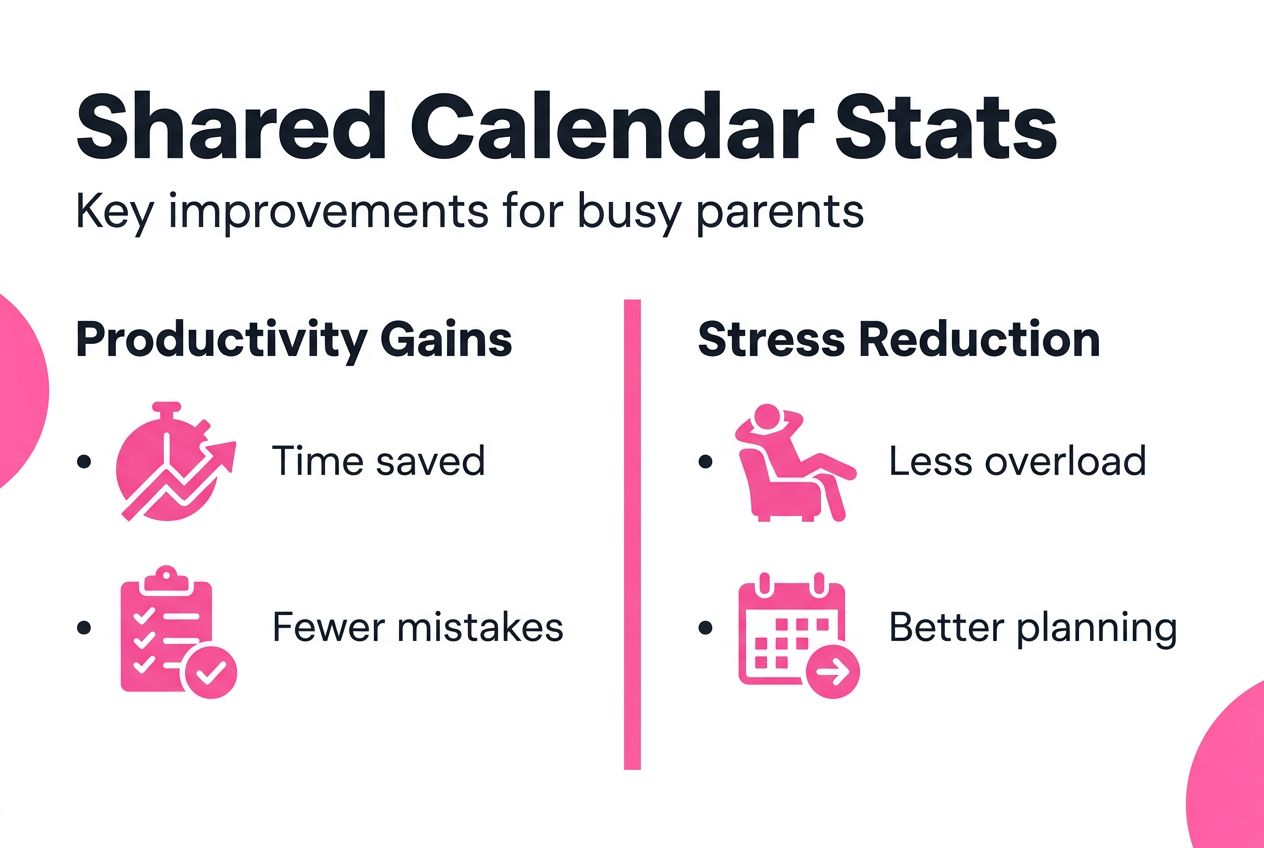
The data proves shared calendars deliver measurable improvements. 72% of parents report increased productivity after adopting shared scheduling tools. This productivity gain stems from reduced coordination time and fewer missed commitments.
| Benefit | Impact Measurement |
|---|---|
| Productivity increase | 72% of parents report gains |
| Conflict reduction | 45-60% fewer scheduling overlaps |
| Mental load relief | Significant stress indicator drops |
| Family satisfaction | Higher reported harmony scores |
| Commitment adherence | Improved follow-through rates |
Color-coding takes these benefits further. When each family member has a designated color, you scan the calendar and instantly understand who’s busy when. Weekly sync meetings where families review upcoming events together reduce conflicts by an additional 30%.
Real families report transformative results. One working mother shared:
“Our shared calendar eliminated constant texting about schedules. We finally stopped double-booking the car and missing each other’s important events. The mental relief is incredible.”
Using shared calendars reduces mental load and stress, correlating with higher family satisfaction. This connection between reduced scheduling chaos and improved family wellbeing appears consistently across user survey data on shared calendars.
The improvements extend to work-life balance:
- Parents protect personal time more effectively
- Family activities receive proper planning and attention
- Work commitments integrate smoothly with home life
- Everyone respects each other’s scheduled commitments
Explore more productivity hacks for families to complement your calendar system.
Common misconceptions about shared calendars
Many parents hesitate to adopt shared calendars because of persistent myths. Understanding the truth helps you move forward confidently.
-
Myth: Shared calendars create extra work. Truth: Initial setup requires time, but daily use actually reduces coordination effort. Clear event ownership prevents duplication and confusion.
-
Myth: Privacy concerns make shared calendars unsafe. Truth: Modern calendar apps offer granular privacy controls. You can share your child’s soccer schedule while keeping work meetings private.
-
Myth: Only tech-savvy families can use shared calendars. Truth: Many apps feature intuitive interfaces requiring minimal technical knowledge. Physical wall calendars work too.
-
Myth: Shared calendars complicate simple schedules. Truth: Even families with basic schedules benefit from centralized visibility. Simplicity improves when everyone knows the plan.
-
Myth: Kids won’t use the calendar consistently. Truth: Children respond well when given clear responsibilities and regular reminders. Make calendar updates part of weekly routines.
Pro Tip: Start small by adding only recurring events like work schedules and school activities, then gradually expand as your family adapts to the system.
Overcoming these misconceptions clears the path for successful implementation. Setting clear expectations about who adds what events and when to check the calendar prevents common frustrations. Compare different shared calendar tool comparisons to find what works for your family.
Best practices and features for effective family shared calendars
Maximizing your shared calendar’s effectiveness requires strategic feature use and consistent habits.
Color-coding transforms calendar scanning. Assign each family member a distinct color so you identify commitments at a glance. Use additional colors for event types like medical appointments, school activities, or family outings.
Integration with Google, Outlook, and Apple calendars allows a unified view minimizing double bookings. This integration means work calendars sync with family schedules automatically. You see everything in one place without manual transfers.
Key features to prioritize:
- Automatic notifications for new events and changes
- Mobile access for on-the-go schedule checking
- Multiple calendar view options (day, week, month)
- Event templates for recurring activities
- Attachment capabilities for important documents
| Feature | Benefit | Best For |
|---|---|---|
| Color-coding | Quick visual scanning | Large families |
| Cross-platform sync | Unified schedule view | Mixed device households |
| Smart notifications | Proactive conflict alerts | Busy schedules |
| Shared event editing | Distributed responsibility | Older children |
| Recurring events | Reduced entry work | Regular activities |
Establish weekly calendar sync meetings. Spend 15 minutes reviewing the upcoming week, identifying potential conflicts, and confirming commitments. This habit prevents surprises and ensures everyone stays informed.
Assign specific event-entry ownership. One parent handles medical appointments, another manages work schedules, and kids add their own activities. This distribution prevents duplication and clarifies responsibilities.
Learn more about calendar feature selection tips and family time scheduling best practices to optimize your system.
How to set up and sustain a shared calendar system
Successful implementation follows a clear process that builds habits gradually.
-
Choose your platform. Select one calendar app compatible with all family devices. Popular options include Google Calendar, Apple Calendar, or Outlook Calendar. Verify everyone can access it easily.
-
Create the shared calendar. Set up sharing permissions so all family members can view and edit events. Configure privacy settings to protect sensitive information.
-
Add recurring events first. Enter work schedules, school times, and regular activities. These form your schedule foundation and help everyone build trust in the system.
-
Assign clear ownership. Define who adds which types of events. Write down these responsibilities and post them where everyone sees them.
-
Schedule weekly sync meetings. Pick a consistent time when the family reviews next week’s calendar together. Sunday evenings work well for many families.
-
Set up notifications. Configure alerts for new events, changes, and upcoming commitments. Customize notification timing to suit individual preferences.
-
Address problems proactively. If someone forgets to add events, discuss solutions without blame. If the calendar gets cluttered, establish guidelines for what belongs there.
-
Review and refine monthly. Assess what’s working and what needs adjustment. Modify your approach based on family feedback.
Consistent use determines success. The calendar only works when everyone updates it regularly and checks it before making commitments. Build this habit by making calendar checking part of daily routines.
Common pitfalls to avoid include skipping the weekly sync meeting, allowing duplicate events from multiple entries, and failing to remove outdated information. Stay vigilant about calendar hygiene.
Your step-by-step calendar setup guide provides additional implementation details.
Conclusion: embracing shared calendars for a balanced family life
Shared calendars deliver tangible benefits that transform family coordination. Reduced scheduling conflicts, lower mental load, and improved communication create a calmer household where everyone knows what’s happening.
The 72% productivity increase reported by parents reflects real time savings. You spend less energy managing schedules and more time enjoying family activities. This shift fundamentally improves work-life balance.
Success requires consistent use and clear ownership. When everyone updates the calendar regularly and checks it before making commitments, conflicts virtually disappear. The system works because it distributes responsibility across the family.
Starting today means scheduling fewer conflicts tomorrow. Choose your platform, add recurring events, and schedule your first weekly sync meeting. Your family deserves the reduced stress and improved coordination that shared calendars provide.
Enhance your family’s productivity with proven organization systems
Ready to take your family organization further? Discover practical family productivity hacks that complement your shared calendar system. These strategies help busy parents maximize efficiency across all areas of home life.
Explore comprehensive home organization systems for families designed to reduce clutter and create peaceful spaces. When your physical environment supports your schedule, coordination becomes even smoother.
Get targeted productivity tips for parents that balance work demands with family priorities. Learn how to protect your time, set boundaries, and achieve the work-life balance you deserve.
Frequently asked questions
What are the main benefits of using a shared calendar for families?
Shared calendars reduce scheduling conflicts by providing real-time visibility into everyone’s commitments. They lower mental load by distributing coordination responsibility and improve communication through centralized information access. Most families report enhanced work-life balance and reduced stress.
How can families overcome privacy concerns with shared calendars?
Most calendar apps offer customizable privacy controls that let you share specific calendars while keeping others private. You can choose which events are visible to family members and which remain personal. This granular control protects sensitive information while maintaining coordination benefits.
What are some easy ways to encourage all family members to update the shared calendar?
Establish a weekly sync meeting where everyone reviews and updates the calendar together. Assign clear event-entry responsibilities so each person knows what they should add. Set automatic reminders that prompt calendar updates at convenient times throughout the week.
Can shared calendars work for families with low tech skills?
Many calendar apps feature intuitive interfaces with simple onboarding processes that require minimal technical knowledge. Physical shared calendars or printable templates provide effective alternatives for families less comfortable with digital tools. The key is choosing a format everyone can use confidently.
Recommended
- Time Management Tools for Parents – A Comparison 2025 –
- Block Scheduling: Transform Time for Busy Families –
- Content Calendars: Streamlining Blogging for Busy Parents –
- Time Blocking Guide for Parents –
Want a little more help with this? The Sunday Blueprint gives you the weekly sit-down where that shared calendar actually gets filled in.