

How to build a weekly meal plan for busy families
If you’ve ever stared into the fridge at 5 PM with no idea what to make for dinner while hungry kids circle like sharks, you’re not alone. Busy families face this daily struggle, bouncing between takeout menus and frozen pizza while dreaming of healthier options. A weekly meal plan changes everything by giving you a clear roadmap for breakfast, lunch, and dinner that saves time, reduces stress, and helps your family eat better. This guide walks you through creating a practical meal planning system that actually works for real life, not just Pinterest perfection.
Table of Contents
- Key takeaways
- Understanding why weekly meal planning matters for busy families
- What you need to prepare before building your weekly meal plan
- Step-by-step guide to building your weekly meal plan
- Troubleshooting common meal planning challenges and tips for success
- Organize your home and family life for stress-free meal planning
- Frequently asked questions about building weekly meal plans
Key Takeaways
| Point | Details |
|---|---|
| Reduces decision fatigue | A weekly planning session consolidates daily choices into one clear plan, easing mental load. |
| Prevents last minute stress | A clear menu prevents 5 PM panic and last minute scrambling. |
| Improves nutrition and cuts waste | Planning guides include vegetables, proteins, and whole grains while helping you buy only what you will use. |
| Uses templates and tools | Templates and tools streamline the process by organizing meals and the shopping list. |
Understanding why weekly meal planning matters for busy families
The average parent makes over 200 food decisions daily, from breakfast choices to snack requests to dinner debates. This constant decision-making drains mental energy and often leads to grabbing whatever’s fastest, which usually means less nutritious options. When you’re juggling work deadlines, school pickups, soccer practice, and homework help, thinking about what’s for dinner feels like one task too many.
Weekly meal planning flips this script entirely. Instead of making 21 separate meal decisions throughout the week, you make them all at once during a focused planning session. This structure eliminates the 5 PM panic and replaces it with confidence because you already know what’s cooking. Meal planning reduces food waste by helping you buy exactly what you need and use everything you purchase.
The health benefits extend beyond convenience. When you plan meals in advance, you naturally create more balanced menus with vegetables, proteins, and whole grains instead of defaulting to carb-heavy convenience foods. You can intentionally include variety throughout the week, ensuring your family gets diverse nutrients. Planning also lets you accommodate dietary restrictions, picky eaters, and food allergies without stress.
Financially, meal planning transforms your grocery budget. You shop with a specific list based on planned meals, which eliminates impulse purchases and reduces those expensive mid-week grocery runs. Studies show that meal prep saves busy parents 6 hours weekly, time you can spend with your family instead of standing in checkout lines. Understanding the advantages of meal planning helps you commit to the process.
The psychological relief matters too. Knowing you have a plan creates a sense of control in an otherwise chaotic schedule. Family members can check the meal plan and know what to expect, reducing the constant “what’s for dinner” questions. This predictability helps everyone, especially children who thrive on routine.
“Meal planning isn’t about perfection. It’s about having a framework that makes feeding your family easier, healthier, and less stressful throughout the week.”
The key is recognizing that meal planning serves your family’s unique needs. You’re not trying to create restaurant-quality meals every night. You’re building a sustainable system that delivers consistent, nutritious food with less daily stress. Exploring ways to reduce food waste naturally fits into this planning process.
What you need to prepare before building your weekly meal plan
Successful meal planning starts with gathering the right information and tools before you write down a single recipe. Think of this as your planning foundation that makes the actual meal selection process smooth and personalized to your family’s reality.

Start by documenting your family’s preferences, dietary needs, and schedule constraints. Create a simple list of meals everyone enjoys, foods to avoid due to allergies or dislikes, and any dietary restrictions you need to accommodate. Note which nights are busiest and need quick meals versus evenings when you have more cooking time. This information prevents you from planning elaborate dinners on soccer practice nights or scheduling foods your kids refuse to eat.
Choose your planning tools based on what you’ll actually use consistently. Options include printable meal planning templates, digital apps like Mealime or Plan to Eat, or a simple notebook dedicated to meal planning. Digital tools often include grocery list features and recipe storage, while paper planners let you see your whole week at a glance on the fridge. Looking at family meal planning examples shows different approaches that work for various family styles.
Pro Tip: Keep your meal planning tool in a consistent, visible location whether that’s magnetized to your fridge or bookmarked on your phone. Accessibility determines whether you’ll actually use it.
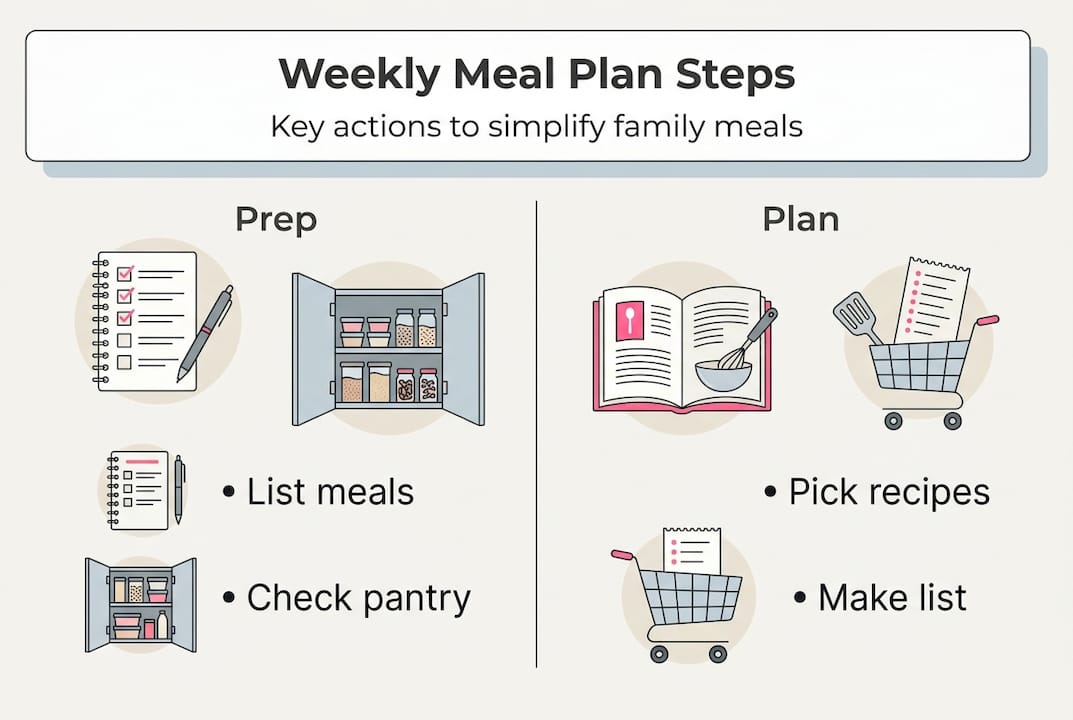
Assess your current pantry and refrigerator inventory before planning. Check what proteins are in your freezer, which grains and canned goods fill your pantry, and what produce needs using soon. This inventory prevents overbuying and helps you plan meals around ingredients you already own. Create a running list of pantry staples you want to keep stocked for easy meal assembly.
| Planning Element | Purpose | Example |
|---|---|---|
| Family preferences list | Ensures planned meals get eaten | Favorite proteins, disliked vegetables |
| Schedule overview | Matches meal complexity to available time | Soccer Tuesdays need 30-minute meals |
| Pantry inventory | Reduces waste and grocery costs | Chicken in freezer, pasta in pantry |
| Planning tool | Centralizes meal information | App, template, or notebook |
Plan meals around leftovers and versatile ingredients for maximum efficiency. If you’re roasting a whole chicken Sunday, plan to use leftover chicken in tacos Tuesday and chicken soup Thursday. When you buy a large bag of spinach, incorporate it into multiple meals throughout the week. This approach reduces waste and stretches your grocery budget further, which ties directly into meal planning on a budget strategies.
Establish a consistent weekly planning day and time. Many families find Sunday afternoons or Wednesday evenings work well for planning the upcoming week. Block 30 to 45 minutes on your calendar for this planning session. Consistency turns meal planning from a chore into an automatic habit, like brushing your teeth.
Step-by-step guide to building your weekly meal plan
Now that you’ve gathered your tools and information, follow this systematic approach to create your actual weekly meal plan. This process becomes faster with practice, eventually taking just 20 to 30 minutes weekly.
1. Review your weekly schedule and identify constraints. Look at your calendar for the upcoming week and note which days have activities, appointments, or commitments that affect meal timing or complexity. Mark busy nights that need quick meals, evenings when you’ll be home late, and any nights someone will miss dinner. This schedule review prevents planning elaborate meals on your busiest days.
2. Select your meals working backwards from dinner. Start with dinner since it’s typically the most complex meal, then add breakfast and lunch options. Choose 5 to 7 dinner options, allowing for one leftover night and possibly one eating-out night. Pick 3 to 4 breakfast rotations and 4 to 5 lunch ideas that can repeat or use dinner leftovers. Don’t overthink this, simple meals count as real meals.
3. Use themes or batch cooking to simplify decisions. Planning meals by themes like Meatless Monday, Taco Tuesday, or Slow Cooker Sunday reduces decision fatigue and creates family traditions. Alternatively, batch cook proteins or grains on Sunday to use throughout the week in different meals. Themes provide structure without rigidity.
4. Create your detailed grocery list organized by store section. Write down every ingredient needed for your planned meals, checking your pantry first to avoid duplicates. Organize the list by grocery store sections like produce, dairy, meat, and pantry items to make shopping efficient. Using grocery lists based on meal plans prevents impulse purchases that blow your budget.
5. Plan your prep steps and schedule prep time. Identify which tasks you can complete in advance like washing and chopping vegetables, cooking rice or quinoa, marinating proteins, or making sauces. Schedule a 1 to 2 hour prep session, typically Sunday afternoon or evening, to knock out these tasks. Prepped ingredients make weeknight cooking dramatically faster.
Pro Tip: Keep a “favorites” list of 15 to 20 meals your family loves. When you’re stuck during planning, pull from this list instead of searching for new recipes. Rotation prevents decision paralysis.
| Meal Planning Approach | Best For | Time Investment |
|---|---|---|
| Theme-based planning | Families who like structure and routine | 20 minutes weekly |
| Batch cooking method | Busy weeknights with limited cooking time | 2-3 hours on prep day |
| Flexible meal planning | Unpredictable schedules | 30 minutes weekly |
| Recipe rotation system | Reducing decision fatigue | 15 minutes weekly after setup |
Write your finalized plan somewhere visible to everyone. Post it on the refrigerator, share it in a family group chat, or keep it in a shared digital calendar. Visibility helps family members know what to expect and allows them to help with meal prep when they see what’s coming. This transparency also reduces the constant “what’s for dinner” questions.
The beauty of this system is its flexibility. You’re not locked into eating Tuesday’s planned meal on Tuesday. If your schedule shifts or you’re not in the mood for the planned dinner, swap it with another night’s meal. The point is having options ready, not creating a rigid schedule. Resources on meal planning for families offer additional strategies for making this process work for your household.
Remember that your first few meal plans will take longer as you establish your system. By week three or four, you’ll move through these steps quickly because you’ve built your framework and identified your family’s patterns. Focus on progress, not perfection.
Troubleshooting common meal planning challenges and tips for success
Even with a solid plan, you’ll encounter obstacles that test your meal planning commitment. Anticipating these challenges and having strategies ready helps you maintain the habit long term.
Schedule changes happen constantly with busy families. A meeting runs late, practice gets canceled, or someone gets sick. Build flexibility into your plan by keeping some meals that freeze well or can shift to another day. Maintain a short list of 3 to 4 backup meals using pantry staples that require no special shopping. These emergency options prevent the default to takeout when plans change.
Overplanning creates burnout faster than underplanning. You don’t need seven elaborate dinners requiring 12 ingredients each. Include simple meals like breakfast for dinner, sandwich night, or a rotisserie chicken with bagged salad. Keeping flexibility and backup meals prevents planning from feeling like a burden. Some nights, simple is exactly right.
Family resistance to planned meals often stems from lack of input. Hold a weekly family meeting where everyone suggests one meal they’d like that week. Let children choose between two options or assign them age-appropriate prep tasks. When family members contribute to the plan, they’re more invested in eating what’s prepared. This collaboration also teaches children valuable planning and cooking skills.
- Involve kids in age-appropriate meal prep tasks like washing vegetables or stirring ingredients
- Let family members veto one planned meal per week and suggest an alternative
- Create a family cookbook of everyone’s favorite meals for easy planning reference
- Celebrate small wins like successfully cooking all planned meals or trying a new recipe
Regularly review what’s working and what isn’t. After a few weeks of meal planning, assess which meals your family loved, which recipes took too long, and which ingredients you consistently waste. Adjust your planning based on these insights. Drop recipes that don’t work and add new favorites to your rotation. This evolution keeps meal planning fresh and relevant.
“The best meal plan is the one you’ll actually follow. Start simple, build consistency, and add complexity only when you’re ready.”
Use organizational tools beyond just meal planning to reduce overall household stress. When your home systems work smoothly, you have more mental energy for meal planning and cooking. Implementing home organization systems creates the calm environment that supports successful meal planning. Similarly, applying productivity hacks for families frees up time for meal prep and cooking.
Pro Tip: Keep a meal planning journal noting which recipes were hits, which flopped, and how long meals actually took to prepare. This reference makes future planning faster and more accurate.
The most important troubleshooting tip is giving yourself grace. Some weeks will go perfectly, others will fall apart by Wednesday. That’s normal life with a busy family. The goal isn’t perfection but having a system that works more often than it doesn’t. Even planning just three dinners weekly is better than planning none.
Organize your home and family life for stress-free meal planning
Meal planning works best when it’s part of a broader system for managing your household efficiently. Creating structure in other areas of family life supports your meal planning efforts and reduces overall stress.
Explore comprehensive home management systems that coordinate meal planning with other household responsibilities like cleaning schedules, homework routines, and activity calendars. When everything works together, you’re not constantly juggling competing priorities. Implementing effective home organization systems creates the physical and mental space needed for consistent meal planning.
Discover practical productivity hacks for families that free up time for meal prep and cooking. Small efficiency improvements in morning routines, homework time, or bedtime rituals add up to hours you can redirect toward feeding your family well. These systems work together to create a calmer, more organized household where healthy eating becomes the natural default rather than a constant struggle.
Frequently asked questions about building weekly meal plans
How do I start meal planning if I’m a beginner?
Begin with planning just three dinners for your first week using simple recipes you’ve made before. Use a basic template or even a piece of paper to write down the meals and needed ingredients. Gradually add more meals and complexity as you get comfortable with the process.
What if my family doesn’t like the meals planned?
Involve family members in choosing meals during your planning session so everyone has input. Keep some flexibility to swap meals between nights or have backup options using pantry staples. Over time, you’ll identify the meals everyone enjoys and can rotate those favorites.
How often should I update my weekly meal plan?
Plan weekly, typically on the same day each week to build consistency. Review and adjust your plan mid-week if schedules change or you need to swap meals. This weekly rhythm keeps plans relevant to your current schedule while maintaining the planning habit.
Can meal planning save money?
Yes, meal planning significantly reduces grocery costs by eliminating impulse purchases and preventing food waste. Shopping with a specific list based on planned meals means buying only what you need. You’ll also reduce expensive last-minute takeout orders when you have dinner plans ready.
What’s the best tool for meal planning?
The best tool is whatever you’ll actually use consistently. Try printable templates if you like paper and want it visible on your fridge. Use apps like Mealime or Paprika if you prefer digital organization with built-in grocery lists. A simple notebook works perfectly if you enjoy handwriting your plans.
Recommended
- Meal Prep saves busy parents 6 hours weekly –
- Meal Planning on a Budget: Wellness Recipes That Save Time and Cash –
- How to Feed a Family on a Budget –
- 7 Practical Examples of Family Meal Planning –
Want a little more help with this? Meal Genie does the building for you — tell it how many meals and who you’re feeding, and the plan and list come back done.