

Why Simplify Meals? Cut Prep Time 40% for Families
Busy families spend over 7 hours each week on meal preparation, adding to stress and time pressure during already packed days. This surprising time burden drives decision fatigue and rushed food choices. Simplifying meals can cut this time significantly while maintaining nutrition and family satisfaction. You’ll discover why meal simplification reduces stress, improves work-life balance, and creates more peaceful family routines.
Table of Contents
- Understanding The Stress Of Complex Meal Preparation
- How Simplifying Meals Reduces Stress And Saves Time
- Nutritional And Family Benefits Of Simplified Meals
- Common Misconceptions About Simplifying Meals
- Frameworks And Strategies To Simplify Meals Effectively
- Practical Benefits: Work-Life Balance, Cost Savings, And Reduced Waste
- How To Start Simplifying Your Family Meals Today
- Discover More Ways To Simplify Your Family Life
- Frequently Asked Questions About Simplifying Meals
Key Takeaways
| Point | Details |
|---|---|
| Time Savings | Simplifying meals reduces preparation time by up to 40%, freeing hours for family activities. |
| Mental Relief | Meal simplification lowers decision fatigue, especially during stressful evening hours. |
| Nutrition Maintained | Families preserve nutritional quality and traditions while streamlining preparation processes. |
| Batch Cooking Benefits | Preparing multiple meals at once saves 2-3 hours daily in active cooking time. |
| Waste Reduction | Better planning cuts food waste by 20%, saving money and supporting environmental goals. |
Understanding the Stress of Complex Meal Preparation
Complex meal preparation creates significant mental strain for busy parents. Decision fatigue reduces self-control by up to 40%, particularly in the evening when families need calm routines most. This cognitive exhaustion compounds existing stress from work and family responsibilities.
Meal decision fatigue peaks in late afternoon and early evening, making prior simplification critical to prevent last-minute stressful choices. When your mental energy depletes throughout the day, deciding what to cook becomes overwhelming. You face recipe complexity, ingredient availability, and family preferences simultaneously.
Families spend over 7 hours weekly on meal preparation activities. This includes planning, shopping, cooking, and cleanup time. These hours add substantial pressure to already tight schedules, especially for households juggling work commitments and children’s activities.
Decision overload leads to rushed or unhealthy meal choices. When overwhelmed, you default to convenience foods or repeat the same few dishes. This pattern increases guilt and frustration, creating a stress cycle that affects overall parental time management effectiveness.
Consider these common stressors:
- Choosing from endless recipe options each evening
- Managing different dietary preferences and restrictions
- Coordinating meal timing with conflicting schedules
- Maintaining ingredient inventories across multiple recipes
- Dealing with unexpected meal failures or missing ingredients
Pro Tip: Track your actual meal prep time for one week. You’ll likely discover hidden time drains that simplification can eliminate immediately.
How Simplifying Meals Reduces Stress and Saves Time
Simplification directly addresses the stress mechanisms identified earlier. Focusing on simple recipes reduces total cooking time by approximately 40% compared to complex multi-step preparations. This time reduction creates breathing room in your daily schedule.
Batch cooking delivers remarkable efficiency gains. Preparing multiple meals simultaneously saves 2-3 hours daily in active cooking time. You cook once but eat multiple times, transforming your time investment ratio dramatically.
Using meal templates reduces mealtime conflicts by 30%. When you establish predictable patterns like Taco Tuesday or Sheet Pan Thursday, family members know what to expect. This consistency eliminates daily negotiations and decision points.
Streamlined ingredient lists minimize shopping and prep effort. When recipes share common components, you buy fewer items and reduce food spoilage. Overlapping ingredients means less chopping, measuring, and organizing across different meals.
Key simplification strategies include:
- Rotating 5-7 core dinner formulas weekly
- Building meals around 3-5 versatile base ingredients
- Using one-pot or sheet pan cooking methods exclusively
- Preparing double batches to create built-in leftovers
- Establishing theme nights to eliminate daily decisions
Pro Tip: Start with just three meal planning templates you can rotate. Master these before adding complexity back into your routine.
The cumulative effect transforms your evening experience. Instead of arriving home to meal chaos, you execute a familiar routine efficiently. Your mental energy stays available for family connection rather than cooking stress.

Nutritional and Family Benefits of Simplified Meals
Simplification maintains or improves nutritional quality when done thoughtfully. Simplified meal plans typically use 3-5 staple, nutrient-dense ingredients as foundations. These core items like lean proteins, whole grains, and vegetables provide consistent nutrition across meals.
Children respond positively to meal simplification. Kids eat 15% more fruits and vegetables when meals follow consistent, simplified routines. Predictability reduces mealtime battles and increases willingness to try healthy foods.
Family traditions survive simplification successfully. Research shows 85% of families retain their meaningful meal traditions while streamlining preparation processes. You preserve Sunday roasts or holiday favorites while simplifying weeknight cooking.
Regular balanced meals boost overall family satisfaction. When meal stress decreases, family members enjoy eating together more. This improved experience strengthens relationships and creates positive food associations for children.
Nutritional advantages include:
- Consistent vegetable intake through repeated successful recipes
- Better portion control from planned meals versus rushed choices
- Reduced reliance on processed convenience foods
- More frequent family meals supporting healthy eating habits
- Easier accommodation of dietary needs through ingredient control
Simplification promotes mindful eating patterns. When cooking becomes less stressful, you focus on food quality and enjoyment. Your family develops healthier relationships with meals when pressure and chaos decrease.
Balanced nutrition doesn’t require complexity. A grilled protein, roasted vegetables, and whole grain delivers complete nutrition in 30 minutes. You can feed your family nutritiously without elaborate preparations or exotic ingredients.
Common Misconceptions About Simplifying Meals
Several myths prevent families from embracing meal simplification. Addressing these misconceptions helps you move forward confidently with streamlined cooking approaches.
Myth: Simplified meals become boring and repetitive quickly. Fact: Rotating 5-7 versatile ingredients with different seasonings and cooking methods maintains variety. Chicken prepared as grilled, stir-fried, or roasted tastes distinctly different. Simple preparations allow ingredient quality and seasoning to shine.
Myth: Simplification means abandoning family meal traditions. Fact: 85% of families maintain their cherished traditions while simplifying daily cooking. You preserve special occasion meals and cultural dishes while streamlining routine weeknight dinners. These aren’t mutually exclusive approaches.
Myth: Simplified meals lack adequate nutritional quality. Fact: Proper meal planning with nutrient-dense staples ensures balanced diets. Simple meals often contain more whole foods than complex recipes relying on processed ingredients. Nutrition comes from ingredient choices, not preparation complexity.
Additional concerns to address:
- Fear that family members will complain about simpler food
- Worry about losing cooking skills or creativity
- Concern that guests will judge simplified meal approaches
- Belief that healthy eating requires elaborate preparations
- Assumption that simplification means lowering food standards
“The best meal is the one that gets made. Complicated recipes gathering dust help no one, while simple nutritious meals served regularly transform family health and happiness.”
Your family likely prefers reliable, tasty simple meals over stressed attempts at culinary complexity. Most people choose familiar favorites repeatedly when dining out, proving simplicity satisfies.
Frameworks and Strategies to Simplify Meals Effectively
Effective meal simplification requires structure and strategy. Meal simplification frameworks classify meals by prep time, nutritional completeness, and ingredient overlap. This systematic approach helps you build efficient weekly menus.
Structured meal planning cuts prep time by 35% by streamlining shopping and cooking. When you plan meals considering ingredient reuse and preparation methods, efficiency multiplies. Your shopping trip becomes faster and more focused.
Batch cooking ranks as the top recommendation for busy families. Preparing 2-3 meals simultaneously saves those crucial 2-3 daily hours. Sunday afternoon cooking sessions can supply most weeknight dinners, eliminating daily cooking stress entirely.
| Strategy | Time Savings | Difficulty Level | Best For |
|---|---|---|---|
| Meal Templates | 30-40% reduction | Beginner | Daily meal decisions |
| Batch Cooking | 2-3 hours daily | Intermediate | Weekend meal prep |
| Theme Nights | 25-35% reduction | Beginner | Family routine building |
| Ingredient Overlap | 20-30% reduction | Beginner | Shopping efficiency |
Implementation steps for beginners:
- Choose 5-7 simple dinner formulas your family already enjoys.
- Create a rotating weekly schedule assigning each formula to specific nights.
- Build shopping lists around overlapping ingredients across multiple meals.
- Prep shared components like chopped vegetables or cooked grains in batches.
- Execute your meal plan for two weeks before making adjustments.
- Refine based on family feedback and your time observations.
Effective strategies also include rotating menus with 3-5 staple ingredients. These core items like chicken, rice, frozen vegetables, beans, and pasta form the foundation. You vary seasonings, cooking methods, and combinations to create different meals from the same base.
Meal templates reduce decisions dramatically. Family meal planning examples show how protein plus vegetable plus starch formulas adapt infinitely. This framework guides choices without requiring new decisions each day.
Pro Tip: Start your simplification journey with just Monday through Thursday. Reserve weekends for more elaborate cooking or dining out. This gradual approach prevents overwhelm while delivering immediate benefits.
Practical Benefits: Work-Life Balance, Cost Savings, and Reduced Waste
Meal simplification creates lifestyle improvements extending beyond kitchen efficiency. The time savings directly enhance work-life balance for busy families. Freeing 2-3 hours daily provides space for family activities, personal care, or simply relaxing together.
Better planning reduces household food waste by around 20% through ingredient reuse and accurate purchasing. When you plan meals around shared ingredients, less food spoils unused. This waste reduction saves substantial money while benefiting environmental sustainability.
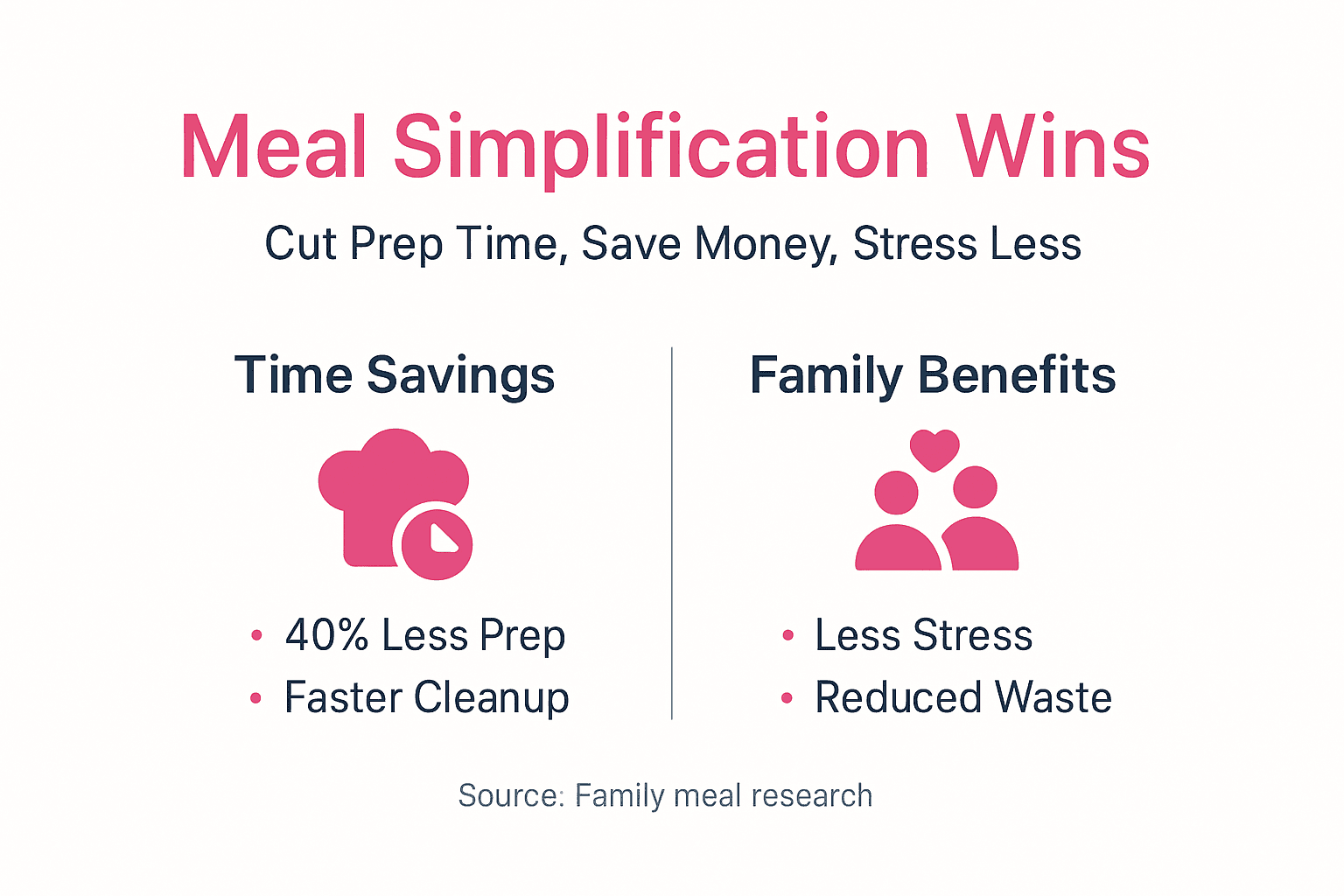
Reduced reliance on expensive convenience foods lowers grocery costs significantly. Simple home-cooked meals cost less per serving than restaurant meals or prepared foods. Your budgeting efforts benefit as food expenses decrease while nutrition improves.
Improved family routines create more peaceful home environments. When meal stress disappears, entire evenings become calmer. You arrive home knowing exactly what to prepare and having ingredients ready. This predictability reduces family tension dramatically.
Additional practical benefits include:
- More energy for helping with homework or playing with kids
- Reduced mental load from constant meal planning decisions
- Increased confidence in cooking abilities and kitchen efficiency
- Better sleep from reduced evening stress and earlier bedtimes
- More frequent family dinners strengthening relationships
The compound effect touches every aspect of family life. When one major stressor decreases, your capacity for everything else increases. Meal simplification often catalyzes broader organizational improvements throughout your home.
How to Start Simplifying Your Family Meals Today
Beginning meal simplification requires manageable first steps. Start by identifying 3-5 meals your family already loves that use simple preparations. These become your core rotation, eliminating the need for constant new recipes.
Implement these practical starting actions:
- List your family’s five most-requested simple meals currently in rotation.
- Analyze these meals to identify shared ingredients you can buy in bulk.
- Assign each meal to a specific weeknight, creating your first meal template.
- Shop once weekly for all planned meals, buying only listed ingredients.
- Prep shared components like chopped vegetables on your shopping day.
- Execute your plan for one full week without making changes.
- Gather family feedback and adjust one element at a time.
Batch cooking transforms your time investment. Choose one day weekly for cooking multiple meals. Simple family meals like casseroles, soups, and marinated proteins work perfectly for advance preparation.
Focus on versatile, nutrient-dense staple ingredients. Items like chicken thighs, canned beans, frozen vegetables, rice, and pasta adapt to countless preparations. These foundations maintain variety without requiring specialty ingredients for each meal.
Adjust menus based on family preferences regularly. After two weeks, identify which meals worked smoothly and which created friction. Replace problematic meals rather than abandoning the entire system. Refinement happens gradually through experience.
Pro Tip: Pair your meal simplification with broader home organization efforts. Decluttering your home and organizing your pantry multiplies the stress reduction benefits across your entire living space.
Start small to build sustainable habits. Simplifying just Monday through Thursday delivers significant benefits while maintaining weekend flexibility. This measured approach prevents overwhelm and increases long-term success rates.
Discover More Ways to Simplify Your Family Life
Meal simplification represents just one aspect of creating a more manageable family life. Our website offers comprehensive productivity hacks for families addressing time management across all household areas. These practical strategies help busy parents regain control of their schedules and reduce daily stress.
Explore our home organization systems to extend simplification beyond the kitchen. Organized spaces reduce decision fatigue and create peaceful environments throughout your home. When your physical environment supports efficiency, every task becomes easier.
Our guides provide actionable advice for families seeking work-life balance. Natural decluttering approaches help you create calm spaces without overwhelming processes. Start with manageable changes that create lasting positive impacts on your entire family routine.
Frequently Asked Questions About Simplifying Meals
What are easy first steps to simplify my family meals?
Begin by creating meal templates using 3-5 dishes your family already enjoys. Assign these to specific weeknights to eliminate daily decision-making. Incorporate batch cooking on weekends to prepare components for multiple meals at once.
How can I keep meals varied while simplifying?
Rotate 5-7 versatile ingredients using different seasonings, cooking methods, and combinations. Chicken prepared with Italian herbs, Asian sauces, or Mexican spices tastes completely different despite using the same base protein. Simple modifications maintain interest without adding complexity.
Does simplifying meals mean less nutritious food?
Simplified meals maintain balanced nutrition through careful ingredient selection. Focus on nutrient-dense staples like lean proteins, whole grains, and vegetables as foundations. Simple preparations often contain more whole foods than complex recipes relying on processed ingredients.
How much time can I realistically save by simplifying?
Meal simplification typically reduces preparation time by about 40% compared to complex cooking. Batch cooking saves an additional 2-3 hours daily by preparing multiple meals simultaneously. Total time savings often exceed 10 hours weekly for busy families.
Can meal simplification reduce grocery costs and waste?
Better planning through simplification reduces food waste by roughly 20%, saving substantial money monthly. Using fewer ingredients and buying versatile staples in bulk lowers grocery expenses. Reduced reliance on expensive convenience foods further decreases household food spending.