
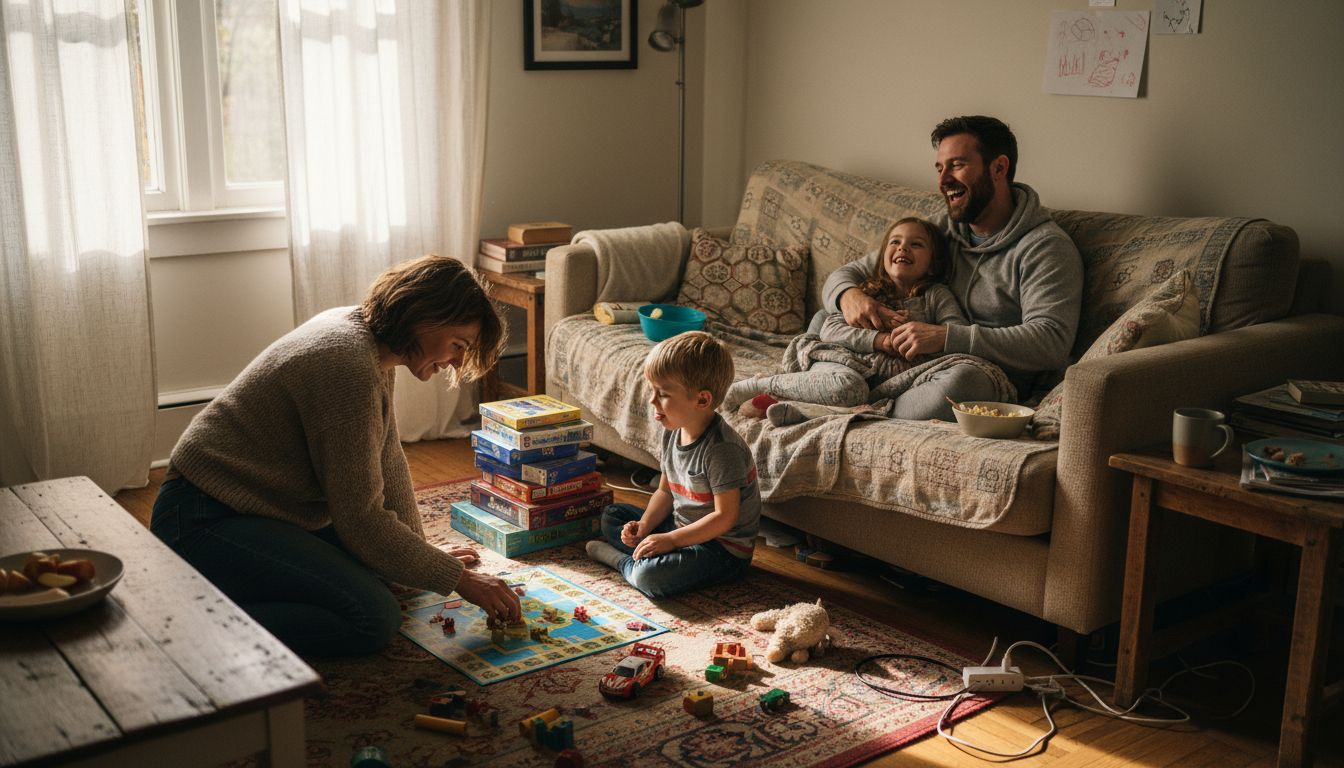
Why Schedule Family Time—Better Balance for Busy Homes
Most American parents say family time ranks above nearly every other priority, yet balancing it with busy work schedules can feel impossible. Between after-school activities, meetings, and household responsibilities, quality moments often get lost in the shuffle. Understanding what truly matters in family interactions—and challenging common misconceptions—can give families the clarity and practical tips they need to build stronger connections without adding stress. Discover how intentional scheduling turns everyday moments into lasting memories.
Table of Contents
- Defining Family Time And Common Misconceptions
- Types Of Family Time And Key Benefits
- How Scheduled Family Time Affects Child Development
- Emotional Health, Communication, And Stress Reduction
- Practical Scheduling Strategies For Busy Families
- Mistakes To Avoid And Flexible Alternatives
Key Takeaways
| Point | Details |
|---|---|
| Importance of Family Time | Family time is a priority for 73% of U.S. adults, emphasizing connection over mere physical presence. |
| Quality vs. Quantity | Quality family time is characterized by genuine interaction, not elaborate planning or constant structure. |
| Impact on Child Development | Consistent family interactions enhance emotional intelligence, social skills, and cognitive development in children. |
| Flexible Scheduling | Adopt a flexible scheduling approach to accommodate spontaneous moments and individual needs within the family. |
Defining Family Time and Common Misconceptions
Family time is more than just being physically present in the same space. In reality, it represents intentional moments of connection, shared experiences, and meaningful interaction between family members. According to recent Pew Research, approximately 73% of U.S. adults consider family time one of their most critical personal priorities, highlighting its profound significance in modern life.
Many families misunderstand what quality family time actually means. It is not about elaborate planned activities or expensive outings, but about creating genuine opportunities for communication, mutual understanding, and emotional bonding. Some common misconceptions include thinking family time must be perfect, structured, or constant. In reality, meaningful family moments can happen during simple daily interactions like cooking together, sharing a car ride, or having an unstructured conversation.
The most effective family time involves active engagement and genuine presence. This means putting away digital devices, listening without judgment, and showing authentic interest in each other’s experiences. Family time activities can range from structured game nights to spontaneous backyard conversations, but the core element remains consistent connection and emotional availability.
Pro tip: Start with just 15 minutes of focused, device-free interaction daily to build stronger family connections and create meaningful moments.
Here’s a comparison of common misconceptions about family time versus the realities that foster real connection:
| Misconception | Reality | Impact on Family Relationships |
|---|---|---|
| Must be perfect | Imperfect moments matter | Reduces pressure, encourages openness |
| Requires elaborate plans | Simple interactions suffice | Makes connection accessible daily |
| Needs constant structure | Flexibility encourages bonding | Adapts to changing needs and schedules |
| Must be expensive | Free activities are meaningful | Promotes genuine interactions |
Types of Family Time and Key Benefits
Family time encompasses various interaction types, each offering unique opportunities for connection and growth. Research from the University of Wyoming reveals that family quality time includes everyday moments, daily routines, and one-on-one special time, demonstrating that meaningful interactions are not limited to grand gestures or planned events.
The primary types of family time include:
- Everyday Moments: Casual interactions during meals, car rides, or household chores
- Structured Activities: Planned events like game nights, sports, or shared hobbies
- One-on-One Time: Individual parent-child interactions focusing on personal connection
- Routine-Based Interactions: Consistent daily practices like bedtime stories or morning routines
Family interactions provide profound benefits for mental and emotional well-being, including stress reduction, emotional support, and building resilience. These interactions help children develop critical social skills, improve academic performance, and create a strong emotional foundation. Regular family time teaches communication, empathy, and problem-solving skills that extend far beyond the immediate family unit.

Pro tip: Create a flexible family time calendar that includes both structured activities and spontaneous moments, ensuring variety and maintaining everyone’s enthusiasm.
How Scheduled Family Time Affects Child Development
Scheduled family time represents far more than simply filling calendar slots with activities. The critical role of family interactions in child development is fundamental to understanding how children learn and grow, with consistent interactions serving as the primary mechanism for social and emotional learning.
Child development experts recognize several key developmental domains enhanced by intentional family time:
- Emotional Intelligence: Learning empathy and emotional regulation
- Social Skills: Understanding communication and relationship dynamics
- Cognitive Development: Expanding problem-solving and critical thinking abilities
- Psychological Security: Building trust and attachment foundations
Consistent family interactions create a predictable environment where children feel safe exploring their emotions and developing critical life skills. By establishing regular communication patterns, parents provide children with a secure base from which they can confidently navigate social interactions, academic challenges, and personal growth. These scheduled interactions teach children valuable lessons about communication, respect, and interpersonal dynamics that extend far beyond immediate family relationships.
Pro tip: Rotate family time leadership among family members, allowing children to plan and facilitate activities to boost their confidence and engagement.
The following table summarizes how different types of family time contribute to child development:
| Type of Family Time | Main Benefit | Developmental Domain Enhanced |
|---|---|---|
| Everyday Routines | Builds emotional safety | Psychological security |
| Structured Activities | Teaches teamwork | Social and cognitive skills |
| One-on-One Time | Fosters confidence | Emotional intelligence |
| Routine Interactions | Instills trust | Attachment and communication |
Emotional Health, Communication, and Stress Reduction
Family dynamics are complex, with emotional health deeply interconnected with communication patterns and stress management. Healthy coping mechanisms require deliberate strategies that emphasize open communication and mutual understanding, creating a supportive environment where each family member feels heard and valued.
Key components of emotional wellness in family settings include:
- Active Listening: Giving full attention without interrupting
- Emotional Validation: Acknowledging feelings without judgment
- Conflict Resolution: Addressing disagreements constructively
- Vulnerability: Creating safe spaces for sharing personal experiences
Effective family communication relies on establishing trust through consistent, respectful interactions. This means moving beyond surface-level conversations and creating meaningful dialogue that allows family members to express their challenges, fears, and hopes. Technology and busy schedules often interrupt genuine connection, making intentional family time more crucial than ever for maintaining emotional resilience and reducing overall household stress.
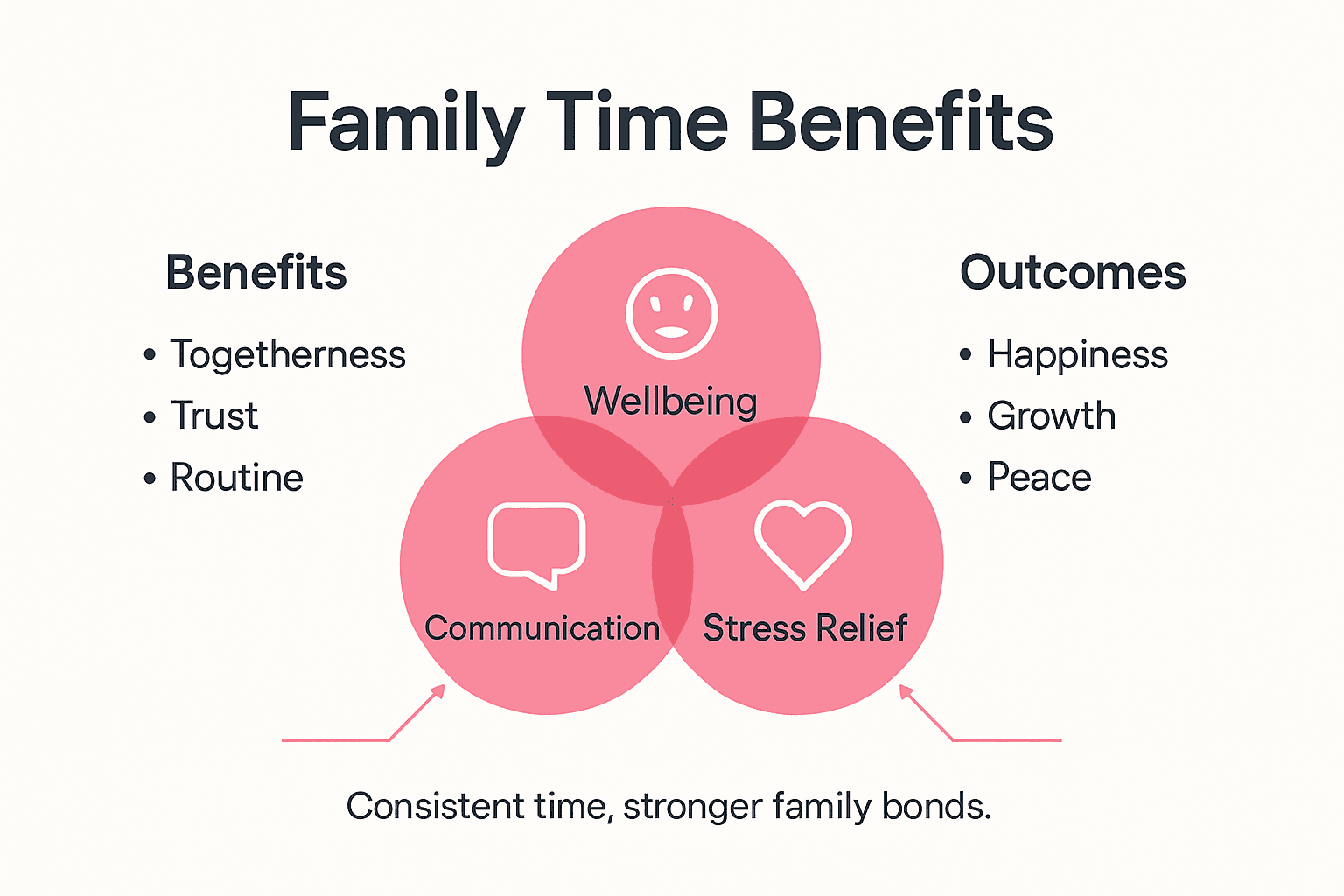
Pro tip: Implement a weekly family meeting where everyone gets uninterrupted time to share their feelings, challenges, and victories.
Practical Scheduling Strategies for Busy Families
Family scheduling requires a thoughtful, flexible approach that adapts to each family’s unique rhythm and challenges. Creating a personalized family schedule helps busy families organize priorities, routines, and individual desires, transforming chaotic household management into a collaborative planning process.
Effective scheduling strategies include:
- Centralized Calendar System: Use a shared digital or physical calendar
- Prioritization Techniques: Identify essential activities and non-negotiable commitments
- Flexibility Buffers: Build in transition time and unexpected event margins
- Collaborative Planning: Involve all family members in schedule creation
Strategic time management involves breaking down complex activities and balancing work with rest. This means implementing techniques like time blocking, setting clear daily priorities, and creating predictable routines that provide structure without becoming overly rigid. Successful family schedules recognize that each member has different needs and energy levels, requiring a dynamic approach that can adjust as circumstances change.
Pro tip: Conduct a weekly 15-minute family scheduling meeting where everyone reviews and updates the upcoming week’s calendar together.
Mistakes to Avoid and Flexible Alternatives
Family scheduling is an art of balance, not a rigid science. Avoiding unrealistic expectations and overly strict routines prevents family stress and potential burnout, allowing for more organic and meaningful connections.
Common scheduling mistakes families often encounter include:
- Overcommitting: Filling every moment with structured activities
- Micromanaging: Controlling every minute of family time
- Ignoring Individual Needs: Creating schedules without considering personal preferences
- Lack of Flexibility: Treating schedules as unchangeable mandates
Flexible alternatives focus on creating adaptable frameworks that honor each family member’s unique rhythm. This means building in buffer zones, allowing spontaneous moments of connection, and being willing to pivot when unexpected opportunities or challenges arise. Successful family schedules are living documents that breathe and move with the family’s evolving dynamics, not static constraints that create additional stress.
Pro tip: Create a “flex zone” in your family calendar where unplanned, spontaneous activities can naturally emerge without disrupting overall structure.
Take Control of Your Family Time and Create Meaningful Connections
Balancing busy family schedules while making time for genuine connection can feel overwhelming. This article highlights the challenge of scheduling intentional family time that nurtures emotional health and child development without adding stress or rigidity. You want to avoid common pitfalls like overcommitting and micromanaging your calendar. You need simple, flexible strategies that fit your unique family rhythm and make those precious moments count.
At Its a Southern Life Yall, we understand the importance of blending effective time management with peaceful, organized living. Our proven organization hacks and home management systems are designed to help busy families like yours reclaim control, reduce daily chaos, and create space for meaningful family interactions. Discover practical productivity tips and easy scheduling tools that make it simple to prioritize quality time without sacrificing your sanity.
Ready to transform your home life with balanced scheduling techniques that truly work? Explore our insights on creating family schedules and learn how to integrate flexible routines that support connection and growth. Don’t let your family’s most valuable moments slip away.
Frequently Asked Questions
What are the benefits of scheduling family time?
Scheduling family time enhances emotional wellness, improves communication, reduces stress, and helps children develop critical social skills. It allows families to create consistent interactions that support overall family dynamics.
How can busy families effectively schedule family time?
Busy families can utilize a centralized calendar system to plan meaningful activities, prioritize essential tasks, and incorporate flexibility into their schedules. Involving all family members in the scheduling process can also ensure everyone’s preferences are considered.
What types of activities can count as quality family time?
Quality family time includes a variety of interactions such as casual everyday moments like meal sharing, structured activities like game nights, one-on-one interactions, and routine-based practices such as bedtime stories. All these contribute to building strong family connections.
How often should families have scheduled family time?
Families should aim for regular scheduled family time, ideally on a daily basis. Even short periods of focused interaction can significantly enhance relationships, with 15 minutes of device-free time being a great place to start.
Recommended
- 7 Time Management Tips for Families to Balance Life – It’s a Southern Life Ya’ll
- Parental Time Management Types for Busy Families – It’s a Southern Life Ya’ll
- Time Blocking Guide for Parents – It’s a Southern Life Ya’ll
- 7 Family-Friendly Examples of Productivity Hacks That Work – It’s a Southern Life Ya’ll
Want a little more help with this? I made a free 30-Minute Reset that pairs right up with this post — y’all can grab it over on my Free Resources page.