

What is Calendar Blocking? Understanding Time Management
Trying to juggle work, family, and personal goals can feel like you are rolling a dozen marbles across a kitchen table. One slip and everything scatters. But most people do not realize that research from the University of Southampton shows structured time mapping can cut mental clutter and boost productivity by 23 percent. That means the secret to getting more done is not about adding hours to your day, but turning your calendar into your greatest ally in finding focus and balance.
Table of Contents
- Understanding The Concept Of Calendar Blocking
- The Importance Of Calendar Blocking For Families
- How Calendar Blocking Enhances Time Management Skills
- Key Principles Behind Effective Calendar Blocking
- Real-Life Applications Of Calendar Blocking In Family Life
Quick Summary
| Takeaway | Explanation |
|---|---|
| Calendar blocking enhances productivity. | By allocating specific time slots for tasks, individuals gain focus and control over their schedules. |
| Families benefit from collaborative scheduling. | A shared calendar framework reduces stress and improves communication among family members. |
| Teaching children time management is essential. | Involving kids in planning helps them develop responsibility and organizational skills for the future. |
| Flexibility is key in calendar blocking. | Building adaptability into planning prevents burnout and accommodates unexpected events effectively. |
| Accurate time estimation prevents overcommitment. | Understanding how long tasks genuinely take helps individuals create realistic schedules and reduce stress. |
Understanding the Concept of Calendar Blocking
Calendar blocking represents a strategic time management approach where individuals systematically allocate specific time periods for different tasks and activities. Unlike traditional scheduling methods, this technique transforms how people organize their daily responsibilities by creating intentional, dedicated time slots for focused work.
The Fundamental Philosophy Behind Calendar Blocking
At its core, calendar blocking recognizes that time is a finite resource that requires deliberate allocation. Research from the University of Southampton emphasizes the importance of mapping out weekly activities to enhance productivity and reduce mental clutter. The method operates on several key principles:
- Prioritizing tasks by assigning them specific time windows
- Creating structured boundaries between different types of work
- Minimizing context switching and potential distractions
The fundamental goal is to transform passive time management into an active, intentional process. By visualizing how each hour will be utilized, individuals gain greater control over their schedules and can more effectively balance professional and personal commitments.
How Calendar Blocking Differs from Traditional Scheduling
Traditional scheduling often involves creating a basic to-do list or rough timeline. Calendar blocking, however, takes a more granular approach. It requires individuals to:
- Estimate precise time requirements for each task
- Block out dedicated time slots in their digital or physical calendar
- Commit to working exclusively on the assigned task during its designated period
This method prevents the common pitfall of overcommitting and provides a clear visual representation of daily and weekly obligations.
To help clarify the key differences described between calendar blocking and traditional scheduling, the following table offers a side-by-side comparison of both methods.
| Aspect | Traditional Scheduling | Calendar Blocking |
|---|---|---|
| Approach | To-do lists or rough timelines | Systematic allocation of specific time slots |
| Time Estimation | Often approximate or general | Precise estimation for each task |
| Task Commitment | Flexible; multitasking common | Exclusive focus during blocked time |
| Visual Representation | Lacks clear visual structure | Provides clear blocks for each obligation |
| Effect on Overcommitment | Frequently leads to overcommitting | Helps prevent overcommitment and reduces stress |
| Distraction Management | Minimal, easy context switching | Intentional boundaries minimize distractions |
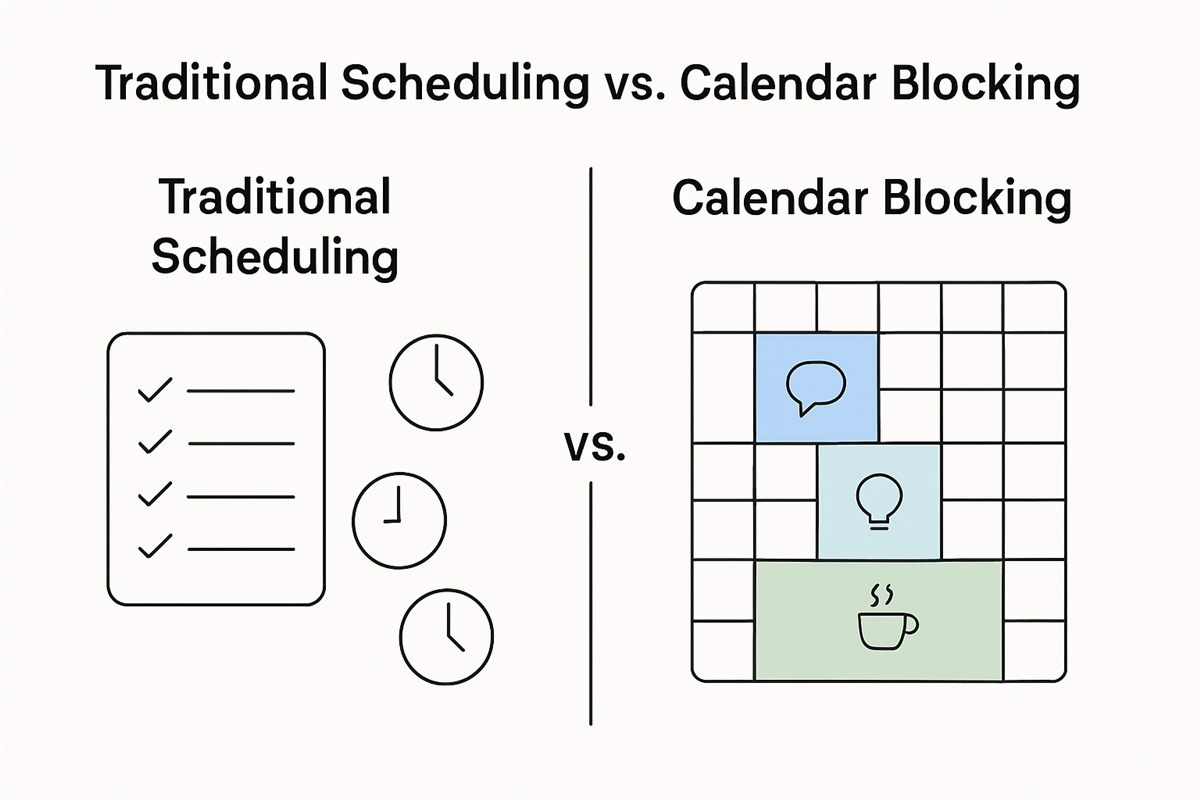 By treating time as a carefully managed resource, people can optimize their productivity and reduce stress.
For those interested in implementing this technique effectively, read more about time blocking strategies to transform your approach to daily planning and task management.
The Importance of Calendar Blocking for Families
Calendar blocking transforms family time management from chaotic multitasking into a structured, intentional approach that promotes harmony and reduces household stress. By implementing this strategic planning method, families can create a shared framework that balances individual and collective responsibilities while teaching valuable organizational skills.
Creating Family Cohesion Through Structured Planning
Effective family time management goes beyond simply tracking schedules. Research from Raising Families demonstrates that collaborative scheduling helps families develop stronger communication and mutual understanding. When every family member understands their commitments and time allocations, potential conflicts are minimized, and collective goals become more achievable.
Key benefits of family calendar blocking include:
- Reducing household tension by establishing clear expectations
- Providing visual clarity about each family member’s activities
- Enabling better coordination of shared responsibilities
Teaching Children Valuable Life Skills
Calendar blocking is more than a scheduling technique it is an educational tool for children. By involving kids in the planning process, families can help them develop critical time management and organizational skills that will serve them throughout their lives. Children learn to:
- Understand the concept of time allocation
- Prioritize tasks and responsibilities
- Develop a sense of personal accountability
Parents who model effective time management create a foundation for their children’s future success. Check out our guide on creating a family time blocking schedule to start implementing this powerful strategy in your household.
Ultimately, calendar blocking empowers families to transform potential chaos into coordinated, purposeful living. By treating time as a shared, valuable resource, families can achieve greater balance, reduce stress, and create more meaningful interactions.
How Calendar Blocking Enhances Time Management Skills
Calendar blocking is not merely a scheduling technique but a transformative approach to developing robust time management abilities. By systematically allocating time and creating intentional boundaries, individuals can cultivate skills that extend far beyond simple task completion.
Developing Cognitive Flexibility and Strategic Planning
Research from the University of Pennsylvania highlights how structured time blocking helps individuals develop critical cognitive skills. This method trains the brain to:
- Transition more effectively between different types of tasks
- Estimate time requirements more accurately
- Reduce mental fatigue associated with constant decision making
The strategic nature of calendar blocking encourages proactive thinking, moving individuals from reactive task management to purposeful, intentional planning. By visualizing time as a finite resource, people learn to prioritize activities that align with their most important goals.
Building Self Discipline and Personal Accountability
Implementing calendar blocking requires consistent practice and commitment. As individuals repeatedly honor their time blocks, they naturally develop stronger self discipline and personal accountability. This skill set becomes a powerful foundation for professional and personal success.
Key accountability benefits include:
- Creating consistent habits and routines
- Developing a realistic understanding of personal productivity
- Learning to set and maintain healthy boundaries
Learn more about planning your week effectively to maximize these transformative time management skills.
Ultimately, calendar blocking is more than a productivity hack it is a comprehensive approach to personal development. By treating time as a strategic asset and learning to manage it intentionally, individuals can unlock greater potential, reduce stress, and create more meaningful progress toward their goals.
Key Principles Behind Effective Calendar Blocking
Calendar blocking transcends simple time scheduling by incorporating strategic principles that transform how individuals approach productivity and personal management. Understanding these fundamental principles enables more intentional and successful implementation of this powerful time management technique.
Precision and Realistic Time Estimation
Research from Columbia University underscores the critical importance of accurate time allocation. Effective calendar blocking requires practitioners to develop a nuanced understanding of how long tasks genuinely take, moving beyond wishful thinking into practical planning. This precision involves:
- Breaking larger tasks into measurable, specific components
- Allowing buffer time between complex activities
- Acknowledging individual energy levels and productivity rhythms
Successful time blocking demands radical honesty about personal capabilities and limitations. By creating realistic time estimates, individuals prevent overcommitment and reduce potential stress from unachievable schedules.
Intentional Flexibility and Strategic Adaptation
While calendar blocking emphasizes structure, it simultaneously requires built in flexibility. Rigid adherence to a predetermined schedule can create unnecessary pressure and potential burnout. The most effective approaches recognize that unexpected events will occur and build adaptability into the planning process.
Key principles of flexible calendar blocking include:
- Reserving open blocks for unexpected tasks or emergencies
- Regularly reviewing and adjusting time allocations
- Maintaining a balance between structure and spontaneity
Explore our comprehensive guide on weekly planning to refine your calendar blocking strategy.
Ultimately, calendar blocking is not about perfection but about creating a personalized system that enhances productivity while maintaining individual well being. By embracing these principles, individuals can transform time management from a challenging task into an empowering personal strategy.
Here is a concise overview of the core principles for effective calendar blocking described in this section, highlighting key components and their explanations.
| Principle | Explanation |
|---|---|
| Precision & Realistic Time Estimation | Break tasks into specifics, allow buffer time, and consider productivity rhythms for accurate scheduling. |
| Intentional Flexibility & Adaptation | Reserve open blocks for unknowns, regularly adjust plans, and maintain a balance between structure and spontaneity. |
| Structured Boundaries | Assign dedicated time windows to minimize distractions and context switching. |
| Honest Self-Assessment | Base plans on a realistic understanding of capabilities and limitations to avoid overcommitment. |
Real-Life Applications of Calendar Blocking in Family Life
Calendar blocking transforms family dynamics by providing a structured approach to managing multiple schedules, responsibilities, and personal commitments. This technique goes beyond simple scheduling, creating a collaborative framework that helps families navigate complex daily routines with greater efficiency and harmony.
Coordinating Complex Family Schedules
Research from the University of Pennsylvania’s Graduate School of Education emphasizes the importance of creating a comprehensive family schedule that incorporates everyone’s activities. Effective calendar blocking allows families to:
- Synchronize multiple individual schedules
- Identify potential scheduling conflicts in advance
- Allocate shared responsibilities more equitably
By making the family schedule visible and accessible, parents can help children understand time management while simultaneously reducing household stress. The visual representation of each family member’s commitments creates transparency and mutual understanding.
Supporting Individual and Collective Goals
Family calendar blocking serves a dual purpose of supporting both individual aspirations and collective family objectives. This approach enables families to:
- Prioritize important family activities
- Create dedicated time for personal development
- Balance work, school, and leisure commitments
Explore strategies for breaking the paycheck-to-paycheck cycle to understand how strategic time management can impact overall family well being.
Ultimately, calendar blocking is more than a organizational tool it is a collaborative process that strengthens family communication, teaches valuable life skills, and creates a sense of shared purpose. By treating time as a collective resource, families can develop more meaningful connections and support each other’s personal and collective growth.

Ready to Experience Real Change With Calendar Blocking?
Are you tired of running from one commitment to another, feeling burnt out and overwhelmed, even after trying traditional time management systems? If calendar blocking feels like the missing piece for reclaiming your family’s time, you are not alone. Many busy families struggle to juggle household responsibilities, work, and personal goals. When you discover intentional time blocking, you begin to break free from constant chaos and start building a healthy routine that truly works. See how others are creating calm in their homes using our proven step-by-step tools.

Take your next step right now. Visit itsasouthernlifeyall.com to access practical organization hacks that pair perfectly with your new calendar blocking approach. Need an easy template to get started? Download your family time blocking schedule and watch your daily routine transform. Want to take your planning even further? Master your week with our weekly planning guide for families and make every minute count. Start today and say goodbye to schedule stress for good.
Frequently Asked Questions
What is calendar blocking?
Calendar blocking is a time management technique where individuals allocate specific time periods for different tasks and activities, creating intentional time slots for focused work to enhance productivity.
How does calendar blocking differ from traditional scheduling?
Unlike traditional scheduling, which may involve to-do lists or rough timelines, calendar blocking involves estimating precise time requirements for tasks and committing to work on them exclusively during their designated slots, reducing distractions and optimizing time use.
What are the benefits of calendar blocking for families?
Calendar blocking helps families reduce household stress, improve communication, and manage responsibilities effectively by creating a shared framework that balances individual commitments and collective goals.
How can calendar blocking develop time management skills?
Calendar blocking promotes skills like cognitive flexibility in transitioning between tasks, self-discipline through consistent practice, and personal accountability by encouraging realistic time estimates and the establishment of healthy boundaries.
Recommended
- How To Time Block Your Day
- Time Blocking Schedule
- How to Plan Your Week
- How to Organize Your Week
Article generated by BabyLoveGrowth
Want a little more help with this? The Sunday Blueprint puts calendar blocking to work in fifteen minutes every Sunday.