

How to Balance Work and Family for a Stress-Free Home Life
More than 60 percent of American families with children under 12 say time management is their top daily struggle. Juggling work commitments and family responsibilities often leaves parents searching for ways to bring greater order and calm into their homes. This guide walks you through real-world solutions to help working parents create shared priorities, streamline routines, foster open communication, and build a schedule that actually works for your unique American family.
Table of Contents
- Step 1: Establish Shared Family Priorities
- Step 2: Organize Home and Workspace for Efficiency
- Step 3: Create a Flexible Weekly Schedule
- Step 4: Implement Communication Routines With Family
- Step 5: Verify Balance With Regular Check-Ins
Quick Summary
| Key Point | Explanation |
|---|---|
| 1. Align family priorities | Schedule family meetings to discuss each member’s goals and values, creating a unified vision for your home life. |
| 2. Organize spaces for efficiency | Implement organization systems at home and work; designate areas for different activities to boost productivity. |
| 3. Create a flexible schedule | Design a weekly schedule that accommodates both work and family commitments while allowing for necessary adjustments. |
| 4. Establish communication routines | Set regular family meetings to ensure everyone feels heard; use active listening to strengthen relationships. |
| 5. Conduct regular check-ins | Schedule monthly reviews for individual and family assessments of balance, using visual tools to engage everyone. |
Step 1: Establish shared family priorities
Balancing work and family starts with creating a unified vision that everyone understands and supports. When families align their goals and expectations, they reduce stress and create a more harmonious home environment. This means sitting down together and honestly discussing what matters most to each family member.
Begin by scheduling a dedicated family meeting where everyone can share their perspectives. The U.S. Department of Education emphasizes that building effective family relationships requires intentional communication about shared priorities. During this conversation, encourage each person to express their personal goals, concerns, and hopes. You might create a visual chart or mind map that captures these priorities, making them tangible and memorable.
Consider establishing a few core family values that will guide your collective decision making. These might include principles like mutual respect, supporting each other’s dreams, maintaining open communication, or dedicating quality time together. By creating meaningful family traditions that reinforce these values, you’ll strengthen your family’s sense of unity and purpose.
Pro tip: Schedule a quarterly family priority review to ensure your goals remain aligned and adjust as your family’s needs evolve.
Step 2: Organize home and workspace for efficiency
Creating an organized home and workspace requires strategic planning that maximizes productivity while minimizing stress. Your physical environment dramatically impacts your ability to balance work and family responsibilities, so designing intentional spaces becomes crucial for maintaining harmony.

Start by implementing home organization systems that streamline your daily routines. The Department of Energy recommends a whole-house systems approach that optimizes workspace layouts and energy efficiency. This means creating designated zones for work, family activities, and personal time. Consider setting up a dedicated workspace that allows you to transition smoothly between professional tasks and family interactions. Use storage solutions like shelving, labeled containers, and multipurpose furniture to keep areas clean and functional.
Prioritize digital and physical decluttering to reduce mental load. Remove unnecessary items from your workspace, organize digital files into clear folder structures, and establish consistent filing systems. Create a family command center where everyone can track schedules, responsibilities, and important documents. This centralized approach helps everyone stay informed and reduces communication gaps.
Pro tip: Invest 15 minutes each evening preparing your workspace for the next day, laying out necessary materials and clearing unnecessary clutter to start each morning with clarity and purpose.
Here’s a summary comparing strategies for organizing home and workspace efficiency:
| Strategy | Main Benefit | Common Challenge | Useful Tool/Technique |
|---|---|---|---|
| Dedicated zones | Higher productivity | Limited space | Multipurpose furniture |
| Decluttering | Reduced stress | Emotional attachment | Storage containers |
| Digital organization | Saves time searching | Tech learning curve | File management apps |
| Family command center | Clear communication | Keeping info updated | Whiteboard or wall calendar |
Step 3: Create a flexible weekly schedule
Designing a flexible weekly schedule is your secret weapon for maintaining balance between work and family responsibilities. The goal is to create a framework that adapts to your family’s changing needs while providing enough structure to reduce daily stress and uncertainty.
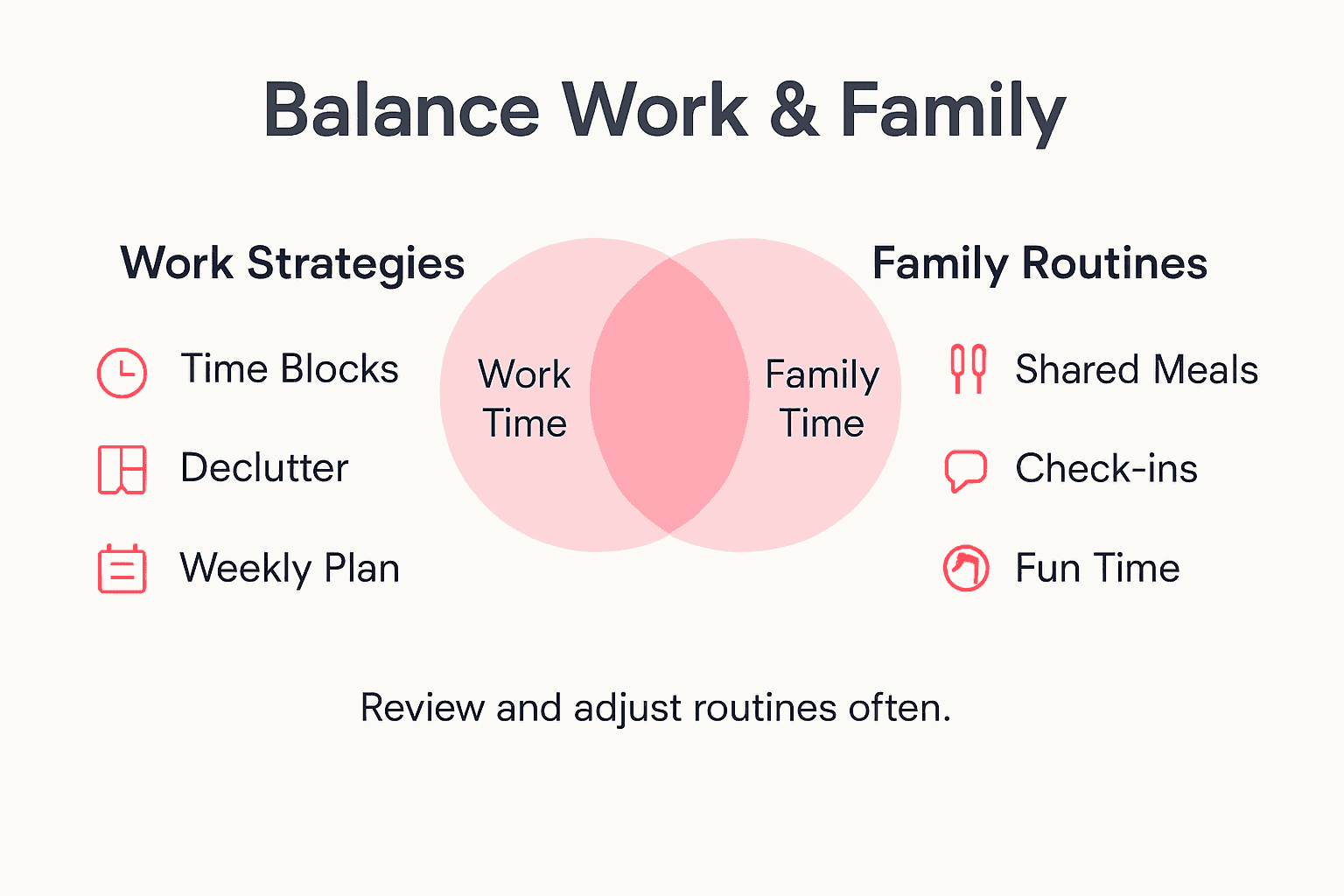
The U.S. Department of Commerce recommends exploring alternative work schedules that allow you to customize your weekly routine. Start by mapping out your family’s recurring commitments like work hours, school schedules, extracurricular activities, and personal responsibilities. Use time blocking techniques to allocate specific time slots for different types of activities. For instance, designate morning hours for focused work, afternoon time for family interactions, and evening hours for personal relaxation or household tasks.
Remember that flexibility is key. The National Institutes of Health emphasizes the importance of creating schedules that can adapt to unexpected changes. Build buffer time into your weekly plan and establish clear communication channels with family members and work colleagues about your availability. Consider using digital tools or a shared family calendar to track everyone’s schedules and make real-time adjustments when needed.
Pro tip: Review and adjust your weekly schedule every Sunday evening to ensure it remains aligned with your family’s evolving needs and priorities.
Step 4: Implement communication routines with family
Effective family communication is the cornerstone of a harmonious and stress-free home environment. Creating intentional communication routines helps everyone feel heard, understood, and connected despite busy schedules and competing responsibilities.
The University of Delaware recommends establishing consistent family communication practices that create predictable opportunities for meaningful conversations. Set a regular weekly family meeting where everyone gathers to discuss schedules, concerns, and upcoming events. This could be a Sunday evening dinner discussion or a Saturday morning breakfast check-in. During these meetings, practice active listening techniques where each family member gets uninterrupted time to share their thoughts. Use strategies like going around the table so everyone has a chance to speak, and encourage both children and adults to contribute.
Adopt multiple communication channels to suit different needs and personalities. Some family members might prefer face-to-face conversations, while others communicate better through shared digital calendars or messaging apps. The U.S. Department of the Interior emphasizes that daily intentional conversations are crucial for building trust and understanding. Create a mix of formal check-ins and spontaneous check-ups to keep communication fluid and responsive.
Pro tip: Establish a family communication agreement that outlines basic listening rules such as no interrupting, showing respect for different perspectives, and maintaining a judgment-free environment.
Step 5: Verify balance with regular check-ins
Maintaining work and family balance is an ongoing process that requires consistent monitoring and intentional adjustment. Regular check-ins help you stay proactive about your family’s well-being and catch potential imbalances before they become overwhelming challenges.
The National Institutes of Health recommends implementing systematic self-reflection and family assessment techniques to ensure you remain aligned with your priorities. Schedule monthly personal review sessions where you honestly evaluate how you are managing work responsibilities and family commitments. During these check-ins, ask yourself critical questions about your stress levels, quality of family time, and overall satisfaction with your current routine. Create a simple scoring system or journal to track your progress and identify areas needing improvement.
Extend these check-ins to your entire family by creating collaborative assessment opportunities. HeadStart family engagement strategies emphasize the importance of gathering feedback from all family members. Use these conversations to understand how everyone is experiencing the current balance, what is working well, and what might need adjusting. This approach transforms balance verification from a solo task into a team effort where everyone feels heard and invested in maintaining a healthy family dynamic.
Pro tip: Use a simple traffic light system during family check-ins green for good, yellow for caution, and red for needs immediate attention to make assessment more engaging and visual.
Below is a quick reference table for types of family check-ins and their purposes:
| Check-in Type | Frequency | Main Goal | Engagement Method |
|---|---|---|---|
| Personal review | Monthly | Self-reflection on roles | Private journaling |
| Family meeting | Weekly or monthly | Gather feedback | Group discussion |
| Collaborative review | Quarterly | Adjust shared priorities | Votes or rating systems |
Find Your Perfect Balance Between Work and Family
Struggling to create a peaceful, stress-free home while managing busy work and family schedules is a challenge many face. This article highlights core issues like establishing shared family priorities, organizing your home efficiently, and building flexible communication routines to ease daily stress. When your physical space and time management systems do not support your goals, frustration and overwhelm grow.
Discover how simple living strategies and proven organization hacks can transform your home environment and daily routine. Our expert tips on decluttering solutions and time management tools are designed to help busy families create clear priorities and reclaim quality family moments. Visit Transform Your Home and Life to access actionable advice that aligns with the practical steps outlined here. Explore guides on creating an efficient workspace and flexible schedules to finally bring balance and calm.
Don’t wait to improve your work-life harmony. Start implementing effective systems today by checking out our resources for productivity and home management at Its a Southern Life Y’all. Your stress-free home life is just a click away—take charge now.
Frequently Asked Questions
How can we effectively establish shared family priorities?
To establish shared family priorities, schedule a dedicated family meeting where everyone can express their personal goals and concerns. Use this time to create a visual chart that captures these priorities, ensuring a unified vision that everyone supports.
What steps can we take to organize our home for better work-life balance?
Start by implementing home organization systems that create designated zones for work, family, and personal time. Utilize storage solutions like labeled containers and multipurpose furniture to keep spaces functional and reduce clutter.
How do I create a flexible weekly schedule that accommodates family needs?
Design a flexible weekly schedule by mapping out recurring commitments such as work hours and extracurricular activities. Use time blocking to allocate specific time slots for work, family interactions, and personal relaxation, adjusting as needed each week.
What communication routines should we establish to improve family interactions?
Establish regular family meetings where everyone can discuss schedules and concerns. Incorporate active listening techniques to ensure that every family member has a voice in the conversation, fostering understanding and connection.
How can we verify that our work and family balance is maintained?
Implement regular check-ins to assess how well you’re managing work and family responsibilities. Use a simple scoring system or a traffic light method to identify which areas need attention, allowing you to adjust your strategies as needed.
What family traditions can help reinforce our shared values?
Creating meaningful family traditions can strengthen your family’s sense of unity. Consider activities like weekly game nights or yearly camping trips that reflect your core values and create lasting memories together.
Recommended
- 7 Practical Work-Life Balance Tips for Busy Families – It’s a Southern Life Ya’ll
- 7 Time Management Tips for Families to Balance Life – It’s a Southern Life Ya’ll
- How to Create a Peaceful Home for Your Family – It’s a Southern Life Ya’ll
- 7 Family-Friendly Examples of Productivity Hacks That Work – It’s a Southern Life Ya’ll
Want a little more help with this? The Home Rhythm Planner maps work and home into one week you can actually live with.