

Financial Literacy: Everything You Need to Know
Over half of adults worldwide cannot answer basic questions about their own finances. Money management skills are crucial for building stability and planning for the future, whether you’re single or raising a family. By understanding the key principles of financial literacy, you can make thoughtful decisions that support your goals, avoid common risks, and empower every member of your household to develop healthy money habits for life.
Table of Contents
- Defining Financial Literacy And Core Principles
- Key Financial Literacy Skills For Families
- Types Of Financial Knowledge And Tools
- Real-World Applications For Family Life
- Risks, Mistakes, And How To Avoid Them
Key Takeaways
| Point | Details |
|---|---|
| Importance of Financial Literacy | Financial literacy empowers individuals to make informed decisions that can transform their financial future, emphasizing skills in earning, saving, investing, protecting, and managing money. |
| Family Financial Education | Engaging children in money discussions and practical learning helps build a foundation for financial literacy, fostering responsible habits and shared financial goals within families. |
| Awareness of Financial Risks | Understanding common financial pitfalls, such as overspending and inadequate preparation, is crucial for families to develop resilience and avoid costly mistakes. |
| Real-World Application | Integrating financial lessons into daily family life through open conversations and collaborative decision-making enhances learning and builds lasting financial confidence. |
Defining Financial Literacy and Core Principles
Financial literacy is your roadmap to smart money management. It’s not just about understanding numbers, but about making informed decisions that can transform your financial future. According to the Financial Awareness Foundation, financial literacy means getting organized, planning strategically, and understanding key financial concepts that help you navigate your economic landscape.
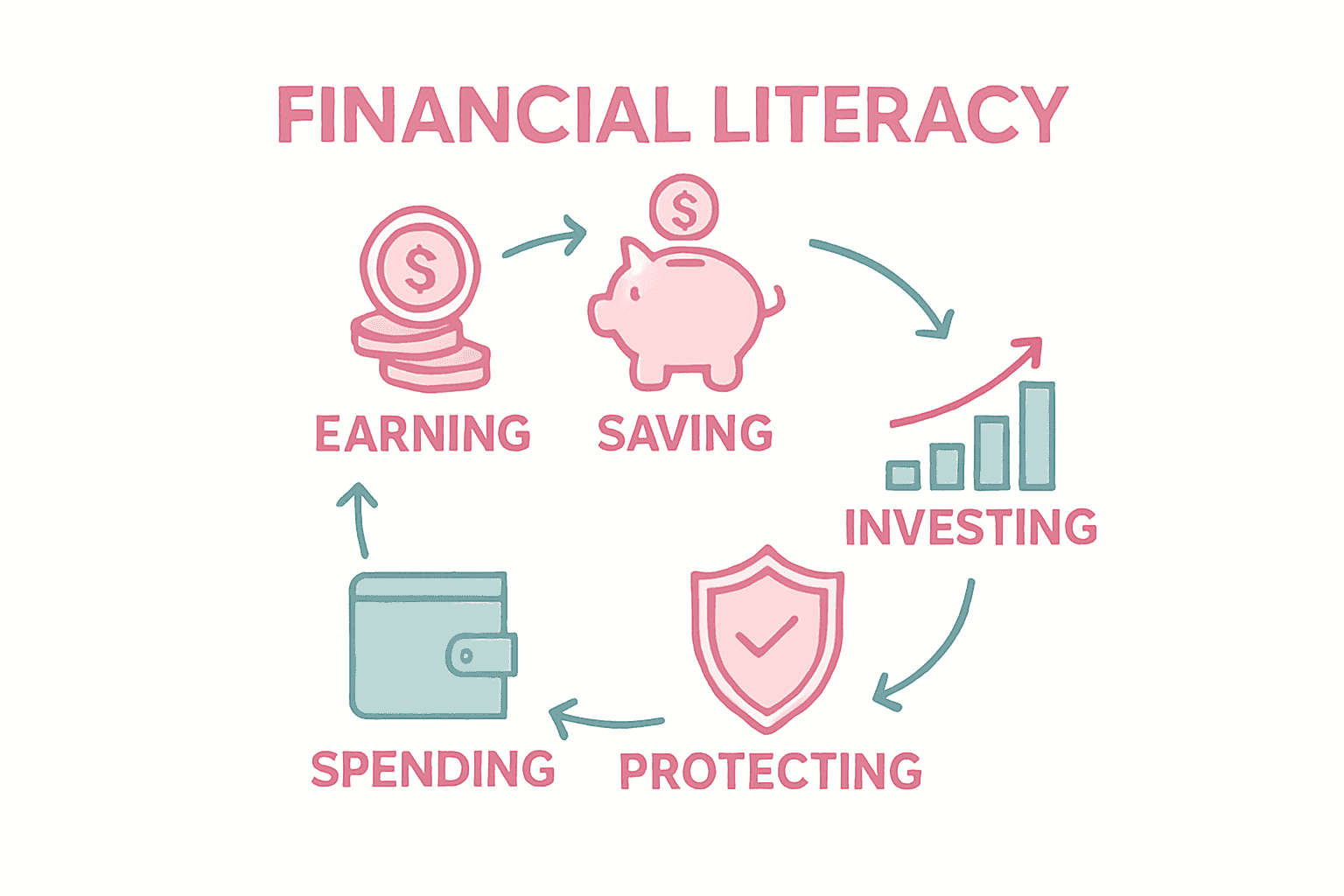
At its core, financial literacy involves mastering five fundamental principles: earning, saving, investing, protecting, and managing your money wisely. As readysetcollege.org highlights, these principles provide a critical framework for achieving financial independence. Let’s break these down:
- Earning: Understanding how to generate income and maximize your earning potential
- Saving: Developing strategies to set aside money consistently
- Investing: Learning how to grow your wealth over time
- Protecting: Safeguarding your financial assets and planning for unexpected challenges
- Spending: Making conscious, strategic decisions about how you use your money
When it comes to family finances, understanding what is a family budget becomes crucial. Financial literacy isn’t about being perfect with money—it’s about progress. It’s learning to make smarter choices, understanding financial tools, and building confidence in your money management skills.
 Think of it like learning a new language: the more you practice, the more fluent you become in managing your financial world.
Key Financial Literacy Skills for Families
Building financial literacy as a family isn’t just about dollars and cents—it’s about creating a foundation of shared financial understanding and smart money habits. Cook Center emphasizes that teaching financial skills starts with engaging children in meaningful money conversations and practical learning experiences.
Family financial literacy involves several critical skills that transform how households approach money management. These skills go beyond simple budgeting and include:
- Teaching children the value of saving
- Setting collaborative family financial goals
- Creating fun savings challenges
- Learning to distinguish between needs and wants
- Understanding basic investment concepts
As Family Wealth Counseling suggests, the most powerful financial education happens through real-life scenarios. This means involving kids in age-appropriate financial discussions, showing them how to track expenses, and leading by example. When parents model responsible financial behavior, children naturally absorb these critical life skills.

When you’re ready to take your family’s financial education to the next level, why use budgeting systems can provide structured strategies for teaching money management. Remember, financial literacy is a journey—not a destination. Each conversation, each lesson, and each shared experience builds a stronger, more financially confident family.
Types of Financial Knowledge and Tools
Understanding the diverse landscape of financial tools and knowledge is crucial for building a robust financial foundation. Suffolk Credit Union highlights several key areas families should focus on, including strategic budgeting methods that can transform how households manage money.
Financial knowledge encompasses a wide range of critical skills and tools. Here are some essential types:
- Budgeting Techniques
- 60-20-20 rule for expense allocation
- Tracking personal and family expenses
- Creating emergency fund strategies
- Banking Tools
- Savings account management
- Understanding interest rates
- Digital banking platforms
- Investment Basics
- Compound interest concepts
- Basic investment vehicle understanding
- Long-term financial planning
Credit.org emphasizes the importance of introducing these concepts early, especially to children and teens. Financial literacy isn’t about complex mathematical calculations—it’s about developing a mindset of smart money management and understanding how financial decisions today impact your future.
To take your financial knowledge to the next level, understanding family finance organization can provide structured insights into managing your family’s financial ecosystem. Remember, financial tools are just instruments—the real power lies in how thoughtfully and strategically you use them.
Real-World Applications for Family Life
Financial literacy isn’t just about understanding numbers—it’s about preparing your family for real-life financial challenges and opportunities. Credit.org highlights the importance of practical money lessons that transform theoretical knowledge into actionable skills for every family member.
Real-world financial applications touch every aspect of family life. Key strategies include:
- Earning Opportunities
- Part-time work for teens
- Understanding income and taxes
- Developing work ethic and financial independence
- Spending Wisdom
- Creating personal budgets
- Distinguishing needs from wants
- Making informed purchasing decisions
- Saving and Investing
- Setting aside money consistently
- Understanding compound growth
- Learning basic investment principles
WealthBuilders emphasizes that financial education is most effective when it’s integrated into daily family life. This means having open conversations about money, involving children in financial decisions, and modeling responsible financial behavior.
When you’re ready to make financial learning a family adventure, how to plan family activities can help you create engaging ways to teach money management. Remember, the most powerful financial lessons aren’t learned from textbooks—they’re experienced together, around the family dinner table.
Risks, Mistakes, and How to Avoid Them
Financial literacy isn’t about being perfect—it’s about understanding potential pitfalls and developing strategies to navigate them wisely. Credit.org highlights that teaching children about financial risks is a critical component of building long-term financial resilience.
Common financial risks families encounter include:
- Overspending Traps
- Impulse purchasing
- Living beyond income
- Neglecting budget boundaries
- Preparedness Challenges
- Insufficient emergency funds
- Lack of insurance protection
- No financial safety nets
- Planning Mistakes
- Ignoring long-term financial goals
- Avoiding investment opportunities
- Failing to track expenses
Annuity.org emphasizes that protecting financial assets requires proactive planning and consistent education. The most effective risk management involves understanding potential vulnerabilities and creating strategic buffers against unexpected financial challenges.
To transform potential mistakes into learning opportunities, failing forward can help you flip your fails into wins on your financial journey. Remember: every financial misstep is a chance to build wisdom, not a permanent setback.

Take Control of Your Family’s Financial Future Today
The article highlights a common challenge many families face: moving beyond just understanding financial literacy concepts like earning, saving, and budgeting, to actually organizing and managing these principles in daily life. If you are feeling overwhelmed by how to create effective family budgets, involve your kids in money management, or protect your finances from common pitfalls, you are not alone. The pain points of inconsistent savings habits, lack of clear financial goals, and the stress of financial disorganization are all barriers to peace of mind and financial confidence.
Imagine transforming that stress into clarity and action. We specialize in simple, proven strategies like why use budgeting systems and understanding family finance organization to help busy families regain control. Our straightforward home management and budgeting solutions empower you to build strong financial habits without the overwhelm. Start your journey now to create an organized, confident financial life that brings your whole family closer.
Frequently Asked Questions
What is financial literacy?
Financial literacy is the ability to understand and use various financial skills effectively, including personal financial management, budgeting, and investing. It equips individuals with the knowledge to make informed financial decisions that can improve their financial well-being.
What are the five core principles of financial literacy?
The five core principles of financial literacy are earning, saving, investing, protecting, and managing money wisely. Mastering these principles helps individuals achieve financial independence and make smarter financial choices.
How can families teach financial literacy to children?
Families can teach financial literacy to children by having meaningful money conversations, setting collaborative financial goals, and involving them in age-appropriate financial discussions. Real-life scenarios and fun savings challenges can also enhance their understanding of financial concepts.
What common financial risks should families be aware of?
Common financial risks families should be aware of include overspending, insufficient emergency funds, lack of insurance protection, and failing to plan for long-term financial goals. Understanding these risks can help families prepare and develop strategies to mitigate them.
Recommended
- Understanding the Role of Financial Literacy for Families
- 7 Steps to Teaching Teens About Money: Where to Start
- Family Finance Organization Guide
- How to Start a Budget (When you don’t know where to start)
- Understanding What Is Emotional Literacy: A Guide – Angela Legh
Want a little more help with this? Grab my free Finance & Life Planner over on the Free Resources page — and when you’re ready to go deeper, the First Budget in 30 Minutes will carry you the rest of the way.