

What is a content calendar? A guide for busy parents
Juggling soccer practice, meal prep, school projects, and your own goals can feel like spinning plates blindfolded. Many parents try managing everything in their heads or scattered notes, only to miss deadlines and feel constantly behind. A content calendar offers a simple framework to organize both family schedules and personal projects in one visual system. This guide explains exactly what a content calendar is, why it transforms how busy families operate, and how you can build one that actually works for your household.
Table of Contents
- What Is A Content Calendar?
- How A Content Calendar Improves Family Scheduling And Productivity
- Popular Tools And Methods For Creating Content Calendars
- Step By Step Guide To Setting Up Your Content Calendar
- Boost Your Family Productivity With Expert Tips
- Frequently Asked Questions
Key takeaways
| Point | Details |
|---|---|
| Content calendars organize time | A planning tool that maps family events, tasks, and content creation in one visual schedule |
| Reduces scheduling conflicts | Seeing everything in advance prevents double bookings and last minute chaos |
| Flexible tools available | Choose from digital apps, printable templates, or physical planners based on your preferences |
| Weekly reviews maintain effectiveness | Regular updates keep your calendar accurate and aligned with changing family needs |
What is a content calendar?
A content calendar is an organized schedule of planned content and activities helping individuals manage time and tasks efficiently. Think of it as a master blueprint showing what needs to happen, when it needs to happen, and who’s responsible. Unlike a basic calendar that only tracks appointments, a content calendar includes context like preparation steps, deadlines, and related materials.
For busy parents, this tool serves double duty. You can track family obligations while also managing any content you create, whether that’s blog posts, social media updates, or school volunteer communications. The calendar becomes your command center for household operations.
Typical elements include:
- Specific dates and times for events or publishing
- Topics or themes for planned activities
- Preparation deadlines and milestones
- Assigned responsibilities for family members
- Reminders for supplies or advance tasks
- Notes on resources or references needed
The real power comes from visualization. When you see Tuesday’s dentist appointment next to Thursday’s permission slip deadline and Saturday’s birthday party, you naturally build in buffer time. You spot potential conflicts before they become problems. This bird’s eye view reduces the mental load of remembering everything while improving your ability to plan realistic schedules.
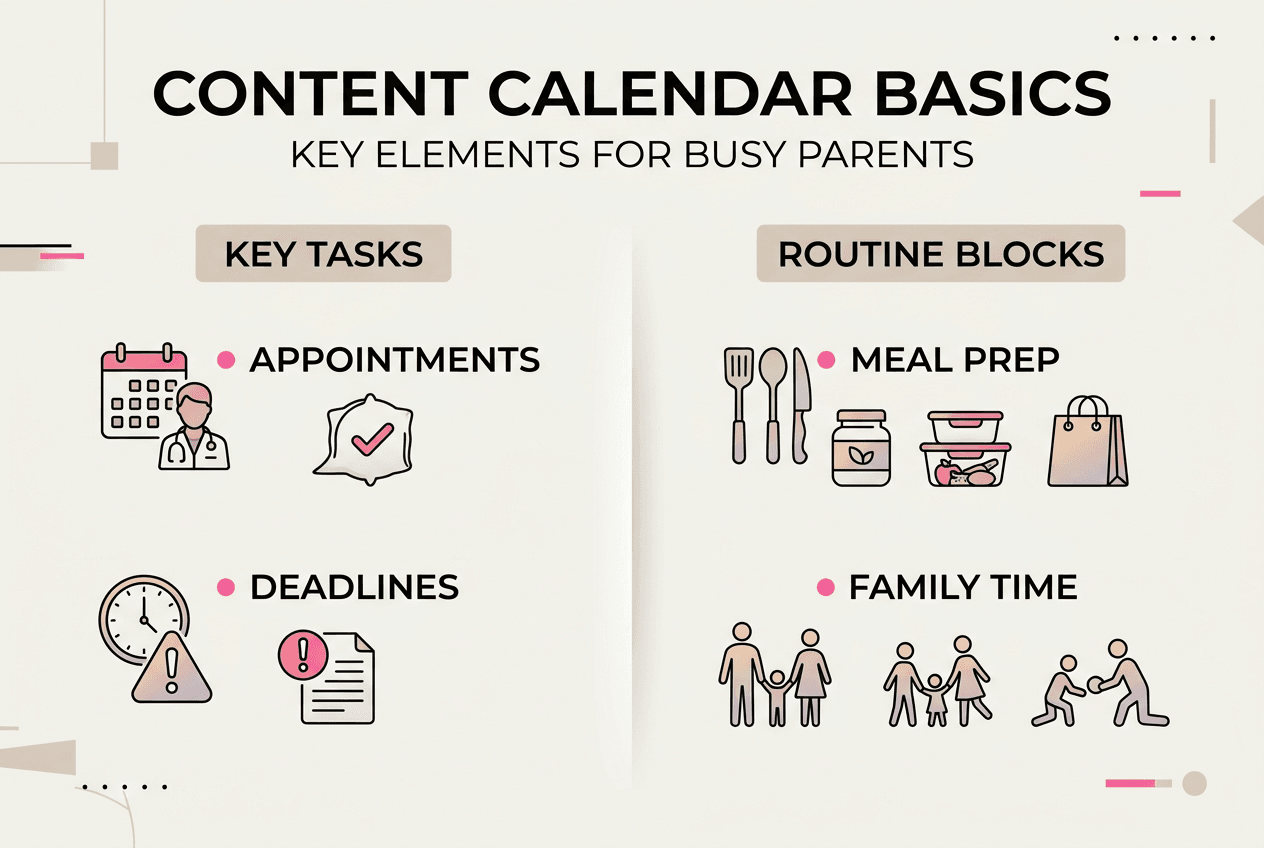
Parents managing both household duties and creative projects find content calendars especially valuable. You might block Monday mornings for blog writing, Wednesday afternoons for meal prep, and Friday evenings for family game night. Everything exists in one system rather than competing for attention across multiple apps or sticky notes.
How a content calendar improves family scheduling and productivity
Mapping out family appointments, school events, and extracurricular activities alongside content tasks creates clarity that scattered systems never achieve. When parents can see the full picture of their week, they make smarter decisions about what fits and what doesn’t. You stop overcommitting because the visual evidence shows you’re already at capacity.
Organized scheduling systems help families stay on track with appointments, school events, and personal goals. The calendar becomes your decision making tool. Before saying yes to another commitment, you check what’s already scheduled. Before planning a big project, you identify windows of available time.

Visualizing deadlines and priorities in one place prevents conflicts that derail your day. You notice that picture day falls the same week as the science fair, so you prepare outfits and project materials in advance. You see that three birthday parties cluster in one weekend, allowing you to batch gift shopping. These small insights compound into significant time savings.
The system also supports habit formation and consistent routines. When you schedule recurring blocks for meal planning, exercise, or creative work, these activities become non negotiable parts of your week rather than things you’ll do if time magically appears. Consistency builds momentum.
Pro Tip: Set a weekly family calendar review every Sunday evening to update plans, add new commitments, and adjust schedules together. This 15 minute investment prevents surprises and ensures everyone knows what’s coming.
The ultimate benefit is saving time by preventing last minute scrambles and double bookings. You’re not frantically searching for soccer cleats Tuesday morning because you knew about practice when planning Monday evening. You’re not realizing at bedtime that tomorrow requires cupcakes for the class party. The calendar gives you the gift of preparation, which translates directly into reduced stress and increased productivity. You spend less energy reacting to chaos and more energy moving forward on goals that matter.
Popular tools and methods for creating content calendars
Digital tools offer powerful features for tech comfortable families. Google Calendar syncs across devices, allows color coding by family member, and sends automatic reminders. Trello provides a visual board layout where you can drag tasks between columns as they progress from planning to completion. CoSchedule specializes in content creation workflows, making it ideal if you blog or manage social media alongside family duties.
Physical planners and printable calendars work beautifully as low tech alternatives. Many parents prefer the tactile experience of writing by hand, which research suggests improves memory and commitment. Printable templates let you customize layouts for your family’s specific needs without monthly subscription fees. You can hang a large wall calendar in a central location where everyone sees upcoming events.
Various tools exist from digital apps to simple printable planners, each offering different features to suit personal preferences. The right choice depends on your family’s workflow and comfort with technology.
| Tool Type | Cost | Best For | Key Advantage |
|---|---|---|---|
| Google Calendar | Free | Tech savvy families | Device syncing and sharing |
| Trello | Free to $10/month | Visual thinkers | Drag and drop flexibility |
| Physical planner | $15 to $40 | Hands on planners | No screen time required |
| Printable templates | Free to $20 | Budget conscious | Customizable layouts |
Digital tools excel at:
- Automatic reminders you can’t miss
- Easy rescheduling with drag and drop
- Sharing calendars with partners or family
- Accessing from anywhere via smartphone
Physical planners shine for:
- Distraction free planning sessions
- Better memory retention through writing
- No technology barriers or learning curves
- Visible placement as household reference
Pro Tip: Choose a tool you will consistently use and update rather than the most feature rich option. A simple system you maintain beats a complex one you abandon.
Some families use hybrid approaches, maintaining a digital calendar for reminders while keeping a wall planner for family visibility. Experiment to find what reduces friction in your specific household. The time management tools for parents comparison can help you evaluate options based on your priorities.
Step by step guide to setting up your content calendar
Building an effective content calendar requires thoughtful setup, but the process is straightforward when broken into clear steps. Effective implementation involves planning, setting goals, choosing tools, and regular review to maintain momentum.
-
Define your family’s key dates and content priorities. Start by listing all recurring commitments like work schedules, school hours, sports practices, and regular appointments. Add annual events such as birthdays, holidays, and school breaks. If you create content, identify your publishing goals and frequency. This inventory shows what must appear on your calendar before adding anything optional.
-
Select a calendar tool that fits your lifestyle. Review the options discussed earlier and choose based on your tech comfort, budget, and family preferences. Consider whether you need mobile access, sharing capabilities, or prefer a physical format. Download the app, purchase the planner, or print templates. Spend time exploring basic features so you understand how to add, edit, and view entries.
-
Populate your calendar with recurring events and deadlines. Enter everything from your inventory, setting items to repeat as appropriate. Include preparation time before major events. For content creation, block specific time slots rather than just noting deadlines. If you publish blog posts Tuesdays, schedule writing time the previous weekend. Build the skeleton of your calendar with non negotiable commitments.
-
Set reminders and buffer times for flexibility. Configure notifications that give you adequate warning, whether that’s 24 hours for appointments or a week for project deadlines. Add buffer blocks between back to back commitments so you’re not constantly rushing. Leave some open space each week for unexpected needs or opportunities. Overscheduling defeats the purpose of organized planning.
-
Review and adjust weekly for ongoing effectiveness. Schedule a consistent time to update your calendar, add new commitments, and remove completed items. Involve family members in this review so everyone understands upcoming responsibilities. Adjust your system as you discover what works and what doesn’t. Your calendar should evolve with your family’s changing needs rather than becoming a rigid structure you fight against.
The setup process might take a few hours initially, but you’ll refine your approach quickly. Most families find their rhythm within two to three weeks of consistent use. The key is starting simple and adding complexity only as needed.
Boost your family productivity with expert tips
Now that you know how to create and use a content calendar, explore additional strategies designed specifically for busy families. Our collection of examples of productivity hacks for families provides practical techniques you can implement immediately to streamline daily routines and reclaim precious time.
Dive deeper into comprehensive home management systems that work alongside your content calendar to organize every aspect of household operations. From meal planning frameworks to cleaning schedules, these systems create sustainable routines that reduce decision fatigue.
Discover our complete productivity tips for parents guide covering time management, energy optimization, and work life balance strategies tailored to the unique challenges parents face. These resources complement your calendar by helping you make the most of the time you’ve organized.
Frequently asked questions
What distinguishes a content calendar from a regular calendar?
A regular calendar tracks when things happen, while a content calendar includes the context of what needs to happen and how to prepare. Content calendars show deadlines, preparation steps, assigned responsibilities, and related resources in addition to dates and times. This extra detail transforms simple scheduling into actionable project management.
Can a content calendar be used for family scheduling only?
Absolutely, and many families use content calendars exclusively for household management without any content creation component. The term originated in marketing, but the organizational principles apply perfectly to coordinating family activities, meal planning, and home projects. You’re simply scheduling life content rather than published content.
What are common mistakes to avoid when using a content calendar?
The biggest mistake is overcomplicating your system with features you don’t need, which leads to abandonment. Other pitfalls include failing to schedule regular review times, not building in buffer space between commitments, and trying to plan too far in advance. Keep it simple, leave breathing room, and focus on the next two to four weeks rather than mapping out six months.
How often should I update my content calendar?
Weekly updates work best for most families, with daily quick checks to confirm what’s immediately ahead. A thorough weekly review lets you add new commitments, adjust for changes, and prepare for the coming week without becoming burdensome. Some families add a monthly planning session for bigger picture scheduling.
Are digital or paper calendars better for busy parents?
Neither is universally better, as the ideal choice depends on your habits and preferences. Digital calendars excel at reminders, syncing, and quick updates from anywhere. Paper calendars provide better visibility for the whole family and eliminate screen distractions during planning. Many parents successfully use both, with digital for personal reminders and paper for household coordination. Choose what you’ll actually maintain consistently.
Recommended
- Content Calendars: Streamlining Blogging for Busy Parents –
- How to Start a Family Blog for Busy Parents in 2026 –
- Time Blocking Guide for Parents –
- Time Management Tools for Parents – A Comparison 2025 –
Want a hand with this part? The Blog Starter gives you the calendar and the first month of posts already mapped out.